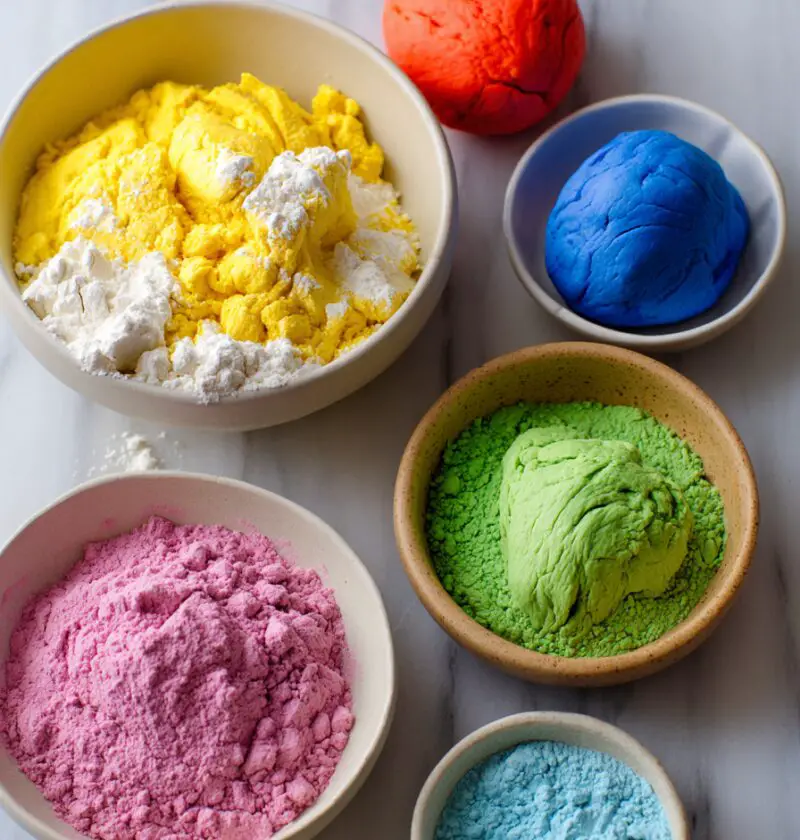
Playdough Recipe Without Cream Of Tartar (Soft, Easy, and Kid-Approved!)
If you’ve ever gone to make playdough and realized you’re out of cream of tartar, this soft and simple Playdough Recipe Without Cream Of Tartar is going to feel like a little miracle—no specialty ingredients, just pantry staples, and you’ll have squishy, non-toxic dough ready in minutes.
As a 50-year-old mom-turned-grandma and long-time home cook, I’ve made more batches of homemade playdough than I can count—some great, some…straight to the trash. This particular homemade playdough without cream of tartar was born one rainy afternoon when my grandkids showed up, the store-bought stuff was dry as sand, and my spice jar of cream of tartar was basically empty crumbs. I started testing no cream of tartar playdough variations with vinegar, lemon juice, and even baking powder, and this version has become our go-to: soft, stretchy, and easy to color.
It uses simple playdough ingredients—no cream of tartar needed—like flour, salt, oil, and a gentle acid (vinegar or lemon juice) to keep it tender and smooth. It’s a budget-friendly playdough recipe for kids no cream of tartar that holds up beautifully for days when stored correctly. If you’ve got a stovetop and a mixing spoon, you’re in business.
Why You’ll Love This Playdough Recipe Without Cream Of Tartar
- No cream of tartar needed – Uses pantry staples you almost certainly already have.
- Soft and squishy texture – This soft playdough without cream of tartar stays pliable, not crumbly.
- Kid-safe and non-toxic – It’s a homemade non toxic playdough, no cream of tartar, with ingredients you can actually pronounce.
- Budget-friendly craft – So much cheaper than store-bought, especially if you’re making multiple colors.
- Customizable colors and scents – Add food coloring, essential oils, or spices for themed sensory play.
- Quick to make – From measuring to kneading, you’re usually done in about 10–15 minutes.
- Great for sensory activities – Perfect for preschool, homeschool, or rainy-day creative time.
- Flexible base recipe – Works as a playdough recipe with vinegar instead of cream of tartar, or with lemon juice, or using baking powder.
- Easy for kids to help – Little ones can stir (with supervision) and knead, which they love.
Ingredients
For this playdough recipe no cream of tartar, we’ll make one large batch you can divide into 2–4 colors.
- 2 cups all-purpose flour (spooned and leveled)
- 1 cup fine table salt
(fine salt gives a smoother texture than coarse kosher salt) - 2 tablespoons baking powder
(this is our secret helper in place of cream of tartar) - 2 tablespoons vegetable oil
(canola, sunflower, or any neutral oil works—avoid strong olive oil flavor) - 1 ½ cups water
(room temperature or slightly warm) - 2 tablespoons white vinegar or lemon juice
(both work as a gentle acid; lemon gives a light scent) - Gel or liquid food coloring, as desired
(gel gives brighter color with less liquid—Wilton or AmeriColor are great) - Optional add-ins:
- 1 teaspoon glycerin (for extra shine and stretch)
- 1 teaspoon vanilla, peppermint, or lemon extract (for a fun scent)
- 1–2 tablespoons cocoa powder for brown “chocolate” playdough (not for eating, but smells lovely!)
Ingredient Tips
- Flour: Regular all-purpose flour works best. Whole wheat flour can be used, but the dough will be grainier and darker.
- Salt: Besides texture, the salt acts as a preservative. Don’t reduce it too much or your dough may spoil faster.
- Baking powder: This playdough recipe using baking powder helps tenderize and mimic what cream of tartar usually does.
- Vinegar vs lemon juice: If you want neutral scent, go with vinegar; if you’d like a light, fresh aroma, choose lemon juice.
- Coloring: Start with a tiny amount. You can always add more, especially for bold, bright tones.

Directions
This is a simple stovetop playdough without cream of tartar. The heat helps the dough set up into that classic, stretchy texture kids love.
-
Mix the dry ingredients
In a medium bowl, whisk together the flour, salt, and baking powder until everything looks evenly combined. This step keeps lumps from forming later and gives you smoother playdough. -
Combine the wet ingredients (without color yet)
In a large, nonstick saucepan, add the water, vegetable oil, and vinegar (or lemon juice). Stir to blend. If you’re using vanilla or another extract for scent, add it here as well. -
Add the dry mixture to the pot
Slowly pour the dry ingredients into the saucepan, whisking or stirring as you go. At first, it will look like a thin pancake batter—that’s what we want. Make sure there are no big flour pockets hiding in the corners. -
Cook over medium-low heat
Place the pan over medium-low heat and start stirring with a sturdy silicone spatula or wooden spoon. Keep the mixture moving, scraping the bottom and sides of the pot so nothing sticks or burns. You’ll see it thicken from a paste to a soft, lumpy dough in 3–5 minutes. -
Watch for the “ball stage”
The dough is ready when it pulls away from the sides of the pot and starts clumping around your spoon, forming a rough ball. It should look like very thick mashed potatoes and feel a bit tacky but not runny. If you pinch a piece and it holds together, you’re done. If it still feels like thick batter, cook another minute. -
Cool slightly before kneading
Turn the warm dough out onto a clean countertop or silicone mat. Let it cool for 3–5 minutes—cool enough to handle but still warm. Warm dough kneads more easily and becomes smoother faster. -
Knead until smooth and stretchy
Once it’s safe to touch, start kneading the dough like bread. Fold and press, fold and press, for 2–3 minutes. If it feels sticky, sprinkle a teaspoon of flour over the top and knead it in. If it feels dry or crumbly, work in ½ teaspoon oil at a time until it softens. -
Divide for color
When the dough is smooth and uniform, divide it into 2–4 pieces, depending on how many colors you want. Keep the pieces you’re not working with wrapped in plastic or under a bowl so they don’t dry out. -
Add color (and optional scents)
Take one dough piece, press a little well into the center, and add a few drops of food coloring. Fold the dough over the color and knead. It’ll look streaky at first, then turn even. Keep going until you like the shade. Add more drops as needed. This is also the moment to knead in spices like cinnamon or cocoa powder for themed playdough. -
Cool completely before play or storage
Let the colored dough balls cool completely on the counter. Once cool, they’re ready for little hands—or ready to store for later.
Servings & Timing
- Yield: About 3–3 ½ cups of playdough (enough for 2–4 kids to share comfortably)
- Prep Time: 5–10 minutes (measuring, mixing)
- Cook Time: 5–7 minutes on the stovetop
- Total Time: About 15–20 minutes, including kneading and coloring
Fun Variations to Try
You can treat this base easy playdough without cream of tartar like a blank canvas. Here are a few ideas:
- Lemonade Stand Dough – Use lemon juice instead of vinegar and a few drops of yellow food coloring for bright, sunshiney dough.
- Peppermint Snow Dough – Skip the coloring, add peppermint extract, and knead in a tablespoon of cornstarch at the end for extra silky white dough.
- Cocoa “Chocolate” Dough – Add 2–3 tablespoons of cocoa powder and a bit of extra water if needed; it smells amazing (but still not a snack!).
- Glitter Galaxy Dough – Stir in fine cosmetic-grade glitter and use dark blue or black food coloring for a starry-night sensory experience.
- Herbal Garden Dough – Knead in dried lavender buds or finely crushed dried rosemary for a nature-inspired, scented dough.
- Edible-Inspired Soft Dough – For toddlers who still mouth everything, you can make a softer, more edible playdough without cream of tartar by using slightly more water and skipping strong scents; still not a snack, but less worrisome if a tiny taste happens.
Storage & Make-Ahead Tips
Homemade salt dough without cream of tartar stores surprisingly well if you treat it right.
-
Room temperature storage:
Store the cooled playdough in an airtight container or zip-top bag, pressing out extra air. Keep it in a cool, dry cupboard. It usually lasts up to 2 weeks at room temp. -
Refrigerator storage:
For longer life, place the dough in an airtight container or bag and store in the fridge. It can last 3–4 weeks this way. Let it sit at room temperature for 15–20 minutes before play so it softens up, or warm it in your hands. -
Freezer option:
You can freeze portions of playdough for up to 2 months. Wrap tightly in plastic wrap and place in a freezer bag. Thaw overnight in the fridge, then bring to room temperature and knead until smooth again. -
Reviving dry dough:
If your playdough starts to feel dry or crumbly, knead in a few drops of oil or a tiny bit of water (¼ teaspoon at a time) until it comes back to life. -
Make-ahead advice:
This playdough recipe without cream of tartar is perfect to make the night before a party, classroom activity, or rainy-day playdate. Prep the dough, color it, and store in small containers or bags by color so kids can open their own “play packs.”
Notes from My Kitchen
- Different flours, different textures: I tried this with gluten-free all-purpose blends; they do work, but the dough is softer and may need an extra tablespoon or two of flour to firm up.
- Cooking time really matters: Undercooked dough stays sticky. If you’re unsure, cook an extra 30–60 seconds. The heat sets the starches and salts and makes it easier to handle.
- Pan choice: A nonstick saucepan or a well-seasoned pan makes your life easier. Scrubbing scorched dough from a thin metal pot is no one’s idea of fun.
- Color first, then glitter: If you’re adding glitter, always color the dough first. Glitter tends to highlight streaks if the color isn’t fully mixed.
- Taste-testing toddlers: For little ones who still like to “sample” everything, keep salt levels the same (it discourages big bites) but skip strong scents like peppermint that can make it smell like food.
- Baking for keepsakes: While this is mainly a playdough recipe for kids no cream of tartar, you can bake small shapes at a very low temp (around 200°F / 93°C for 1–2 hours) to harden them, similar to classic salt dough ornaments. Just keep them thin and be patient.
FAQs
1. Can I make this playdough completely no-cook?
You can, but the texture won’t be as smooth or stretchy. The stovetop version gives much better results than a no-cook no cream of tartar playdough.
2. Is this playdough safe if my child eats some?
It’s non-toxic and made with kitchen ingredients, but it’s very salty and not meant as food. A tiny taste is usually fine, but always supervise and discourage eating it.
3. My dough is sticky—what did I do wrong?
It was probably slightly undercooked or has too much water. Knead in a tablespoon of flour at a time until it firms up, or return it to the pot and cook for another minute, stirring constantly.
4. Can I use apple cider vinegar instead of white vinegar?
Yes. Apple cider vinegar works in this playdough recipe with vinegar instead of cream of tartar, but it may slightly tint very light colors. For pure white or pastels, I prefer plain white vinegar or lemon juice.
5. How do I make bright, vibrant colors?
Use gel food coloring instead of liquid, and add a little at a time while kneading. Deeper reds, blues, and purples often need more color than you expect.
6. Can I double or triple this recipe?
Absolutely. This homemade playdough without cream of tartar doubles well. Just use a bigger pot and stir constantly, since larger batches thicken faster on the bottom.
7. Why are we using baking powder instead of cream of tartar?
Baking powder already contains an acid (often cream of tartar) and a base, which helps tenderize and stabilize the dough. It’s a simple way to mimic traditional recipes when you’re out of straight cream of tartar.
8. How long will this playdough last before I need to toss it?
If stored well, it usually lasts 2–4 weeks. If you ever notice an off smell, mold spots, or a strange texture, it’s time for a fresh batch.
Conclusion
This Playdough Recipe Without Cream Of Tartar is exactly the kind of low-stress, high-reward project I wish I’d had when my kids were little: quick, dependable, and made from things already sitting in the pantry. It’s soft, colorful, kid-safe, and flexible enough to turn into holiday dough, “bakery” dough, or glittery galaxy dough with just a few fun twists.
If you try this easy playdough without cream of tartar, let me know how it goes—leave a comment with your kids’ favorite color combos or any clever variations you come up with. And if you enjoyed this, you might like exploring more kid-friendly kitchen projects and homemade craft recipes next time you’re looking for a screen-free afternoon.
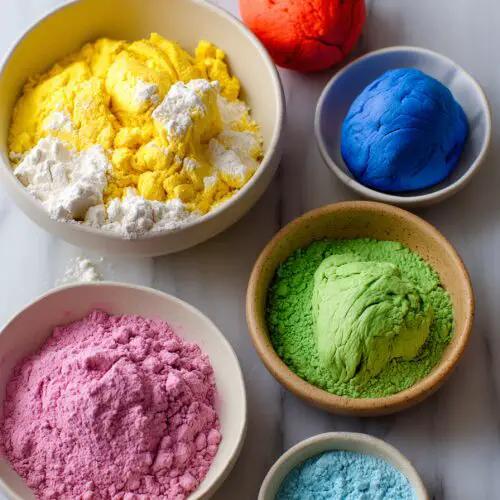
Playdough Recipe Without Cream Of Tartar
Ingredients
- 2 cups all-purpose flour spooned and leveled
- 1 cup fine table salt fine salt gives a smoother texture than coarse kosher salt
- 2 tablespoons baking powder helps mimic cream of tartar’s tenderizing effect
- 2 tablespoons vegetable oil canola, sunflower, or any neutral oil; avoid strong-flavored olive oil
- 1 1/2 cups water room temperature or slightly warm
- 2 tablespoons white vinegar or lemon juice vinegar for neutral scent; lemon juice for a light citrus aroma
- food coloring gel or liquid, as desired; gel gives brighter color with less liquid
- 1 teaspoon glycerin optional, for extra shine and stretch
- 1 teaspoon vanilla, peppermint, or lemon extract optional, for a fun scent
- 1 tablespoon cocoa powder optional, 1–2 tablespoons for brown “chocolate” playdough; not for eating
Instructions
- In a medium bowl, whisk together the all-purpose flour, fine table salt, and baking powder until evenly combined. This helps prevent lumps and makes smoother playdough.2 cups all-purpose flour, 1 cup fine table salt, 2 tablespoons baking powder
- In a large nonstick saucepan, add the water, vegetable oil, and white vinegar or lemon juice. Stir to blend. If using glycerin or an extract for scent, add them now and stir to combine.2 tablespoons vegetable oil, 1 1/2 cups water, 2 tablespoons white vinegar or lemon juice, 1 teaspoon glycerin, 1 teaspoon vanilla, peppermint, or lemon extract
- Slowly pour the dry ingredients into the saucepan, whisking or stirring as you go. The mixture should look like a thin pancake batter. Make sure there are no pockets of dry flour.2 cups all-purpose flour, 1 cup fine table salt, 2 tablespoons baking powder
- Place the pan over medium-low heat and stir continuously with a sturdy silicone spatula or wooden spoon, scraping the bottom and sides so nothing sticks or burns. The mixture will thicken from a paste to a soft, lumpy dough in about 3–5 minutes.
- Continue cooking until the dough pulls away from the sides of the pot and clumps around the spoon, forming a rough ball. It should look like very thick mashed potatoes and feel tacky but not runny. If it still feels like thick batter, cook for another minute, stirring constantly.
- Turn the warm dough out onto a clean countertop or silicone mat. Let it cool for 3–5 minutes, until it is warm but safe to handle.
- Knead the warm dough like bread, folding and pressing for 2–3 minutes until smooth and stretchy. If the dough feels sticky, knead in a teaspoon of flour at a time. If it feels dry or crumbly, knead in 1/2 teaspoon of oil at a time until it softens.
- Divide the smooth dough into 2–4 pieces, depending on how many colors you want. Keep the pieces you are not working with wrapped or covered so they do not dry out.
- For each piece, press a small well into the center and add a few drops of food coloring. Fold the dough over the color and knead until the color is evenly distributed, adding more drops as needed for brighter shades. If using cocoa powder or dry spices, knead them in at this stage, adding a splash of water if needed to maintain a soft texture.food coloring, 1 tablespoon cocoa powder
- Let the colored dough balls cool completely at room temperature. Once cool, they are ready for play or can be stored in airtight containers or zip-top bags.
Notes
Reviving: If dough becomes dry or crumbly, knead in a few drops of oil or 1/4 teaspoon water at a time until soft again. Sticky dough is usually undercooked or too wet—knead in extra flour a tablespoon at a time or return to the pot and cook briefly.
Safety: Made with common kitchen ingredients and non-toxic, but very salty and not intended as food. Supervise young children and discourage eating. High salt content also helps preserve the dough.
Tips: Nonstick or well-seasoned pans make cleanup easier. Cook fully to avoid sticky dough. For toddlers who taste everything, keep the salt (to discourage big bites) but skip food-like scents such as strong peppermint. You can bake thin shapes at 200°F (93°C) for 1–2 hours to harden them like salt dough ornaments.