Iced Oatmeal Cookies Recipe
If you love soft, chewy cookies with cozy spice and a sweet vanilla glaze, this Iced Oatmeal Cookies Recipe is about to earn a permanent spot in your baking rotation.
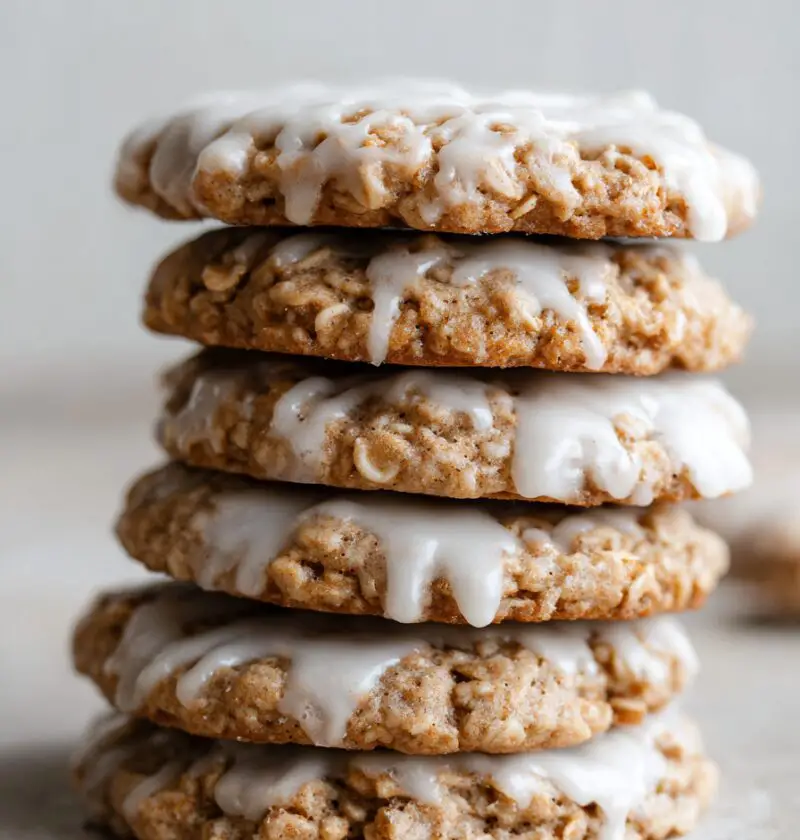
These classic iced oatmeal cookies taste like something straight from a small-town bakery—crinkly tops, crisp edges, tender centers, and a simple vanilla icing glaze that sets into a pretty, slightly crackled shell. They’re old-fashioned in the best way, with hearty old fashioned oats, cinnamon, and a hint of nutmeg that make them perfect for holiday cookie trays, lunchbox treats, or a quiet evening snack with tea.
As a 50-year-old mom who has packed more school lunches and holiday tins than I can count, I can tell you: this is one of those homemade iced cookies everyone “just grabs one more” of. They’re comforting, they keep well, and they check every box for chewy oatmeal cookies fans.
Why You’ll Love This Iced Oatmeal Cookies Recipe
- Chewy centers, lightly crisp edges – The texture hits that sweet spot between soft oatmeal cookies and sturdy bakery style cookies.
- Old-fashioned flavor – Made with old fashioned oats, cinnamon, and nutmeg, they taste like the iced dessert cookies many of us grew up with.
- Simple pantry ingredients – No fuss; just butter, sugar, oats, flour, eggs, and common spices you probably already have.
- Quick and easy cookie recipe – The dough comes together in about 15 minutes, with no mixer drama and no complicated steps.
- Perfect for holidays and gifting – They look pretty on a holiday cookie tray and pack well in tins and gift boxes.
- Customizable spice profile – You can go heavy on cinnamon for cinnamon spice cookies or add extra nutmeg for warm, nutmeg spiced cookies.
- Kid-friendly but “grown-up” enough – Sweet but not cloying, with a vanilla icing glaze that appeals to kids and adults.
- Make-ahead friendly – The dough and the baked cookies both freeze well, so you can bake whenever you have time.
- Great oat cookie snacks – They’re sturdy enough for lunchboxes and on-the-go snacks, without crumbling into dust.
Ingredients
Let’s walk through the ingredients for the cookies and the vanilla icing glaze. I’ll include a few substitution notes I’ve tested over the years.
For the Iced Oatmeal Cookies
-
1 cup (2 sticks / 226 g) unsalted butter, softened
- Room temperature butter helps create a smooth, creamy base. If you only have salted butter, reduce the added salt slightly.
-
1 cup (200 g) packed light brown sugar
- Brown sugar adds moisture and that caramel note you want in chewy oatmeal cookies. Dark brown sugar works too but will give a deeper flavor.
-
1/2 cup (100 g) granulated sugar
- Balances sweetness and structure so the cookies don’t spread too much.
-
2 large eggs, at room temperature
- Room temperature eggs blend more evenly with the butter and sugar; just set them out 20–30 minutes ahead.
-
2 teaspoons pure vanilla extract
- A good-quality vanilla makes a big difference in both the dough and the icing glaze flavor.
-
1 3/4 cups (220 g) all-purpose flour
- Spoon and level it rather than scooping straight from the bag, which can pack the flour and make the cookies dry.
-
1 teaspoon baking soda
- Gives the cookies lift and that classic crinkled top.
-
1 teaspoon ground cinnamon
- For cozy cinnamon spice cookies. You can increase to 1 1/2 teaspoons if you like a stronger spice.
-
1/4 teaspoon ground nutmeg
- Nutmeg is strong; a little goes a long way. Freshly grated is especially fragrant.
-
3/4 teaspoon fine sea salt
- Balances sweetness and enhances all the flavors. Table salt is fine; just use a little less if it’s extra-fine.
-
2 3/4 cups (250 g) old fashioned oats
- Use old fashioned rolled oats, not quick oats or steel-cut. They give body and that classic oatmeal cookie chew.
For the Vanilla Icing Glaze
-
2 cups (240 g) powdered sugar
- Sift it if it looks clumpy; a smooth icing makes prettier iced cookies.
-
3–4 tablespoons milk (whole or 2%)
- Start with 3 tablespoons; add more as needed for a thick but pourable glaze.
-
1 teaspoon pure vanilla extract
- Adds warmth and depth to the icing.
-
Pinch of salt
- Just a pinch keeps the glaze from being one-note sweet.

Directions
You don’t need any special equipment here—just a couple of bowls, a whisk, and a handheld mixer or stand mixer.
-
Preheat and prep your pans
Preheat your oven to 350°F (175°C). Line two large baking sheets with parchment paper or silicone baking mats. This helps the cookies bake evenly and keeps the bottoms from browning too fast. -
Cream the butter and sugars
In a large mixing bowl, beat the softened butter, brown sugar, and granulated sugar together on medium speed for 2–3 minutes, until light and fluffy. This step traps tiny air pockets that help give you those soft oatmeal cookies instead of dense ones. -
Add eggs and vanilla
Beat in the eggs one at a time, mixing just until combined after each addition. Add the vanilla extract and mix again. If the mixture looks slightly curdled, don’t worry—that usually smooths out once the dry ingredients go in. -
Whisk the dry ingredients
In a separate bowl, whisk together the flour, baking soda, cinnamon, nutmeg, and salt. This spreads the leavening and spices evenly so you don’t get any bitter pockets. -
Combine wet and dry
Add the dry ingredients to the butter mixture and mix on low speed just until no dry flour remains. Scrape down the bowl. It’s okay if the dough looks a bit thick—remember, we still have the oats to add. -
Stir in the oats
Add the old fashioned oats and stir by hand with a sturdy spatula or wooden spoon. The dough will be thick and a little sticky. If you’re using a mixer, keep it on low and mix until the oats are evenly distributed. -
Chill briefly (optional but helpful)
For thicker bakery style cookies, cover the bowl and chill the dough for 20–30 minutes. If you’re in a hurry, you can skip this, but chilling reduces spread and makes scooping easier. -
Scoop and shape
Use a 1 1/2 tablespoon cookie scoop or rounded tablespoon to portion the dough onto the prepared baking sheets, spacing them about 2 inches apart. Gently roll each portion into a ball with your hands for a more even circular shape. -
Bake the cookies
Bake one sheet at a time for 10–12 minutes, until the edges are lightly golden and the centers look just set but still soft. They’ll continue cooking on the hot pan, so pull them before they look “done-done.” -
Cool completely before icing
Let the cookies cool on the baking sheet for 5 minutes, then transfer to a wire rack to cool completely. It’s important that they’re fully cool so the vanilla icing glaze sets properly instead of melting off. -
Make the vanilla icing glaze
In a medium bowl, whisk together the powdered sugar, 3 tablespoons milk, vanilla, and a pinch of salt. The glaze should be thick but drizzle easily from a spoon. If it’s too thick, add milk 1 teaspoon at a time; if it’s too thin, add a little more powdered sugar. -
Ice the oatmeal cookies
Place the cooled cookies on a sheet of parchment for easy cleanup. Use a spoon to drizzle or “dip and drag” the tops in the glaze, letting excess drip back into the bowl. You want a thin, even layer for classic iced oatmeal cookies—enough to cover the top but still show some cookie underneath. -
Let the glaze set
Leave the iced cookies on the rack for 30–45 minutes, or until the vanilla icing glaze is dry to the touch. It will firm up into that pretty, crackled finish you see in bakery style cookies. Then they’re ready to stack, store, or—let’s be honest—taste-test.
Servings & Timing
- Yield: About 32–36 medium cookies (depending on scoop size)
- Prep Time: 15–20 minutes
- Chill Time (optional): 20–30 minutes
- Bake Time: 10–12 minutes per batch
- Total Time: About 45–60 minutes, including cooling and icing
If you’re planning these for a party or holiday cookie tray, I like to bake them earlier in the day, then glaze them once the kitchen quiets down a bit. That way you’re not trying to ice cookies while also pulling dinner from the oven—ask me how I learned that lesson.
Variations
You know what? Once you have a solid Iced Oatmeal Cookies Recipe like this, it’s easy to play. Here are some of my favorite twists:
- Maple Iced Oatmeal Cookies – Swap 1–2 tablespoons of the milk in the icing with pure maple syrup for a cozy, fall-inspired glaze.
- Cranberry Orange Oatmeal Cookies – Fold in 1 cup dried cranberries and 1 tablespoon orange zest to the dough before baking.
- Chocolate Chip Iced Oatmeal Cookies – Add 1 cup mini chocolate chips to turn them into a fun mashup of classic oatmeal cookies and chocolate chip cookies.
- Gluten-Free Version – Use a 1:1 gluten-free all-purpose flour blend and certified gluten-free old fashioned oats; bake time may vary by 1–2 minutes.
- Spiced Holiday Oat Cookies – Add 1/4 teaspoon ground cloves and 1/4 teaspoon allspice to lean into holiday cinnamon spice cookies.
- Less Sweet “Breakfast-ish” Cookies – Reduce granulated sugar to 1/4 cup, skip the icing, and add 1/2 cup chopped nuts for a heartier oat cookie snack.
Storage & Reheating
These homemade iced cookies actually taste even better on day two, once the flavors have settled a bit.
-
Room Temperature:
Store iced oatmeal cookies in an airtight container at room temperature for 4–5 days. Place a sheet of parchment between layers so the vanilla icing glaze doesn’t stick. -
Refrigerator:
Not necessary, but if your kitchen runs warm, you can refrigerate them for up to 7 days. Bring to room temperature before serving for the best texture. -
Freezer (Baked Cookies):
Freeze fully cooled, iced cookies in a single layer on a baking sheet, then transfer to a freezer bag once firm. They keep well for up to 3 months. Thaw on the counter—no reheating needed. -
Freezer (Cookie Dough):
Scoop the dough into balls, freeze on a tray, then store in a freezer bag for up to 2–3 months. Bake from frozen at 350°F, adding 1–2 extra minutes. You can ice them after they’re completely cool. -
Make-Ahead Tip:
If you’re prepping for a holiday cookie tray, you can bake the cookies one weekend, freeze them, and glaze the day you plan to serve. The icing sets nicely even on previously frozen cookies.
Notes
-
On texture:
If you like very soft oatmeal cookies, pull them from the oven when the centers still look pale and slightly underbaked. For firmer, more “grab-and-go” cookies, let them bake until the edges are more golden. -
On oats:
Old fashioned oats are key here. Quick oats tend to absorb moisture faster and can create a drier, more crumbly cookie. If you must use quick oats, reduce to 2 1/2 cups and watch the bake time. -
On spice balance:
I tested these several times, and my family preferred a milder nutmeg profile. If you’re a big nutmeg spiced cookies fan, feel free to bump it up to 1/2 teaspoon. Just remember, nutmeg packs a punch. -
On icing thickness:
A runny glaze will sink into the cookie, while a very thick icing will sit in clumps. You want a slow ribbon when you lift the whisk—think thick cream, not heavy paste. -
On pan choice:
Dark metal pans can brown the bottoms faster. If that’s what you have, try lowering the oven temperature to 340°F and checking a minute sooner. -
On batch size:
For smaller families, you can bake half the dough and freeze the rest as dough balls. That way you’ll have fresh-baked iced dessert cookies whenever the craving hits.
FAQs
Can I use quick oats instead of old fashioned oats?
Yes, but the texture will be slightly different—less hearty and a bit drier. Use about 2 1/2 cups quick oats and keep an eye on the bake time.
Why are my oatmeal cookies spreading too much?
Your butter may have been too soft or the dough too warm. Chilling the dough for 20–30 minutes usually helps, and make sure your baking sheets are cool between batches.
Can I make this Iced Oatmeal Cookies Recipe without a mixer?
Absolutely. Use a sturdy whisk and wooden spoon; just cream the butter and sugars thoroughly by hand until fluffy. It’s a little arm workout, but it works.
How do I keep the cookies chewy and not dry?
Don’t overbake—pull them when the centers still look slightly soft, and store them in an airtight container. A slice of bread in the container can help maintain moisture.
Can I make the icing flavored (like lemon or almond)?
Yes. Swap the vanilla for 1/2–1 teaspoon almond extract, or add 1–2 tablespoons fresh lemon juice in place of some of the milk for a bright twist.
Are these cookies good for a holiday cookie tray?
They’re perfect. They stack well, travel nicely, and the classic glazed tops look beautiful alongside more colorful cookies like gingerbread or sprinkle cookies.
Can I reduce the sugar?
You can lower the granulated sugar by about 1/4 cup without hurting the structure much, but too big a cut will change both texture and spread. You can also make the icing a bit thinner if you want less sweetness overall.
Can I add nuts or raisins?
Yes—stir in up to 1 cup of add-ins like chopped pecans, walnuts, or raisins after you add the oats. Just don’t go too heavy or the cookies may not hold together as well.
Conclusion
This Iced Oatmeal Cookies Recipe brings together everything I love about old-fashioned baking: simple ingredients, cozy spices, and a result that feels like a warm hug with a little vanilla icing glaze on top. They’re reliable enough for weekday snacks and special enough for holiday trays and gift boxes.
If you make these chewy oatmeal cookies, let me know how they turn out—leave a comment, rate the recipe, or share your twist (maple? orange? extra nutmeg?). And if you’re in a cookie mood, you might also enjoy my other classics like ginger molasses cookies or soft sugar cookies, which pair beautifully with a plate of these iced oatmeal beauties.
Iced Oatmeal Cookies
Ingredients
- 1 cup unsalted butter 2 sticks / 226 g, softened to room temperature
- 1 cup light brown sugar 200 g, packed; dark brown sugar may be substituted
- 1/2 cup granulated sugar 100 g
- 2 large eggs at room temperature
- 2 teaspoons vanilla extract pure
- 1 3/4 cups all-purpose flour 220 g, spooned and leveled
- 1 teaspoon baking soda
- 1 teaspoon ground cinnamon increase to 1 1/2 teaspoons for a stronger spice flavor
- 1/4 teaspoon ground nutmeg freshly grated if possible
- 3/4 teaspoon fine sea salt use slightly less if using very fine table salt
- 2 3/4 cups old fashioned rolled oats 250 g; not quick oats or steel-cut oats
- 2 cups powdered sugar 240 g, sift if clumpy
- 3-4 tablespoons milk whole or 2%; start with 3 tablespoons and add as needed
- 1 teaspoon vanilla extract for the glaze
- salt pinch, for the glaze
Instructions
- Preheat your oven to 350°F (175°C). Line two large baking sheets with parchment paper or silicone baking mats to promote even baking and prevent over-browning on the bottoms.
- In a large mixing bowl, beat the softened butter, brown sugar, and granulated sugar together on medium speed for 2–3 minutes, until light and fluffy. This incorporates air and helps create soft, chewy cookies.1 cup unsalted butter, 1 cup light brown sugar, 1/2 cup granulated sugar
- Beat in the eggs one at a time, mixing just until combined after each addition. Add the vanilla extract and mix again. The mixture may look slightly curdled; it will smooth out once the dry ingredients are added.2 large eggs, 2 teaspoons vanilla extract
- In a separate bowl, whisk together the all-purpose flour, baking soda, cinnamon, nutmeg, and salt until well combined and the spices are evenly distributed.1 3/4 cups all-purpose flour, 1 teaspoon baking soda, 1 teaspoon ground cinnamon, 1/4 teaspoon ground nutmeg, 3/4 teaspoon fine sea salt
- Add the dry ingredients to the butter mixture and mix on low speed just until no streaks of dry flour remain. Scrape down the sides and bottom of the bowl as needed. The dough will be thick.
- Add the old fashioned oats and stir by hand with a sturdy spatula or wooden spoon (or on low speed) until the oats are evenly distributed and the dough is thick and slightly sticky.2 3/4 cups old fashioned rolled oats
- For thicker, more bakery-style cookies, cover the bowl and chill the dough for 20–30 minutes. This helps control spreading and makes the dough easier to scoop. You may skip this step if short on time.
- Use a 1 1/2 tablespoon cookie scoop or a rounded tablespoon to portion the dough onto the prepared baking sheets, spacing the mounds about 2 inches apart. Gently roll each portion into a ball for more even, circular cookies.
- Bake one sheet at a time for 10–12 minutes, or until the edges are lightly golden and the centers look just set but still soft. The cookies will continue to cook and firm up on the hot pan, so remove them before they appear fully done.
- Allow the cookies to cool on the baking sheet for 5 minutes, then transfer them to a wire rack to cool completely. Make sure they are fully cool before glazing so the icing sets instead of melting.
- In a medium bowl, whisk together the powdered sugar, 3 tablespoons of milk, vanilla extract, and a pinch of salt until smooth. The glaze should be thick but drizzle easily from a spoon. If it is too thick, add more milk 1 teaspoon at a time; if it is too thin, whisk in a little more powdered sugar.2 cups powdered sugar, 3-4 tablespoons milk, 1 teaspoon vanilla extract, salt
- Place the cooled cookies on a sheet of parchment paper. Using a spoon, drizzle the glaze over the tops, or dip the tops of the cookies into the glaze and gently drag them across the side of the bowl to remove excess. Aim for a thin, even layer that mostly covers the top while still allowing some cookie to show.
- Leave the glazed cookies on the rack for 30–45 minutes, or until the icing is dry to the touch and has formed a firm, slightly crackled shell. Once set, the cookies can be stacked, stored, or served.