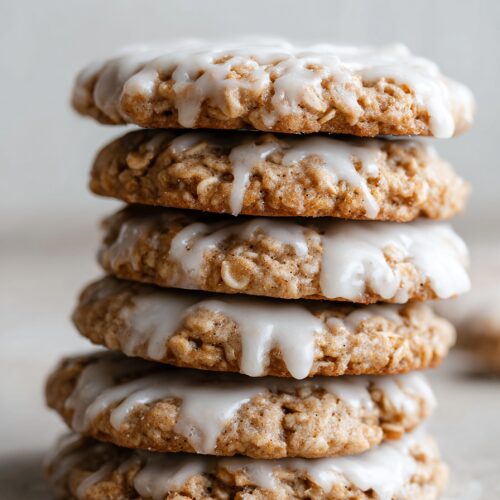
Iced Oatmeal Cookies
Soft, chewy iced oatmeal cookies with cozy cinnamon and nutmeg, crisp edges, and a sweet vanilla glaze. Perfect for holidays, gifting, lunchboxes, or an evening snack with tea.
Ingredients
- 1 cup unsalted butter 2 sticks / 226 g, softened to room temperature
- 1 cup light brown sugar 200 g, packed; dark brown sugar may be substituted
- 1/2 cup granulated sugar 100 g
- 2 large eggs at room temperature
- 2 teaspoons vanilla extract pure
- 1 3/4 cups all-purpose flour 220 g, spooned and leveled
- 1 teaspoon baking soda
- 1 teaspoon ground cinnamon increase to 1 1/2 teaspoons for a stronger spice flavor
- 1/4 teaspoon ground nutmeg freshly grated if possible
- 3/4 teaspoon fine sea salt use slightly less if using very fine table salt
- 2 3/4 cups old fashioned rolled oats 250 g; not quick oats or steel-cut oats
- 2 cups powdered sugar 240 g, sift if clumpy
- 3-4 tablespoons milk whole or 2%; start with 3 tablespoons and add as needed
- 1 teaspoon vanilla extract for the glaze
- salt pinch, for the glaze
Instructions
- Preheat your oven to 350°F (175°C). Line two large baking sheets with parchment paper or silicone baking mats to promote even baking and prevent over-browning on the bottoms.
- In a large mixing bowl, beat the softened butter, brown sugar, and granulated sugar together on medium speed for 2–3 minutes, until light and fluffy. This incorporates air and helps create soft, chewy cookies.1 cup unsalted butter, 1 cup light brown sugar, 1/2 cup granulated sugar
- Beat in the eggs one at a time, mixing just until combined after each addition. Add the vanilla extract and mix again. The mixture may look slightly curdled; it will smooth out once the dry ingredients are added.2 large eggs, 2 teaspoons vanilla extract
- In a separate bowl, whisk together the all-purpose flour, baking soda, cinnamon, nutmeg, and salt until well combined and the spices are evenly distributed.1 3/4 cups all-purpose flour, 1 teaspoon baking soda, 1 teaspoon ground cinnamon, 1/4 teaspoon ground nutmeg, 3/4 teaspoon fine sea salt
- Add the dry ingredients to the butter mixture and mix on low speed just until no streaks of dry flour remain. Scrape down the sides and bottom of the bowl as needed. The dough will be thick.
- Add the old fashioned oats and stir by hand with a sturdy spatula or wooden spoon (or on low speed) until the oats are evenly distributed and the dough is thick and slightly sticky.2 3/4 cups old fashioned rolled oats
- For thicker, more bakery-style cookies, cover the bowl and chill the dough for 20–30 minutes. This helps control spreading and makes the dough easier to scoop. You may skip this step if short on time.
- Use a 1 1/2 tablespoon cookie scoop or a rounded tablespoon to portion the dough onto the prepared baking sheets, spacing the mounds about 2 inches apart. Gently roll each portion into a ball for more even, circular cookies.
- Bake one sheet at a time for 10–12 minutes, or until the edges are lightly golden and the centers look just set but still soft. The cookies will continue to cook and firm up on the hot pan, so remove them before they appear fully done.
- Allow the cookies to cool on the baking sheet for 5 minutes, then transfer them to a wire rack to cool completely. Make sure they are fully cool before glazing so the icing sets instead of melting.
- In a medium bowl, whisk together the powdered sugar, 3 tablespoons of milk, vanilla extract, and a pinch of salt until smooth. The glaze should be thick but drizzle easily from a spoon. If it is too thick, add more milk 1 teaspoon at a time; if it is too thin, whisk in a little more powdered sugar.2 cups powdered sugar, 3-4 tablespoons milk, 1 teaspoon vanilla extract, salt
- Place the cooled cookies on a sheet of parchment paper. Using a spoon, drizzle the glaze over the tops, or dip the tops of the cookies into the glaze and gently drag them across the side of the bowl to remove excess. Aim for a thin, even layer that mostly covers the top while still allowing some cookie to show.
- Leave the glazed cookies on the rack for 30–45 minutes, or until the icing is dry to the touch and has formed a firm, slightly crackled shell. Once set, the cookies can be stacked, stored, or served.
Notes
For softer cookies, pull them from the oven when the centers still look pale and slightly underbaked; for firmer, more portable cookies, bake until the edges are deeper golden. Old fashioned oats give the best chewy texture—if using quick oats, reduce to about 2 1/2 cups and watch the bake time. A properly thick glaze should fall off the whisk in a slow ribbon; too thin will soak into the cookies, too thick will clump. Dark metal baking pans brown faster, so consider baking at 340°F and checking early. You can bake half the dough and freeze the rest as scooped dough balls for fresh cookies later.
Nutrition
Calories: 140kcal
Love this recipe?Follow us at @thenandnowspace for more