Einbecker Mai Urbock Homebrew Recipe
If you’ve been craving a strong, malty German lager that tastes like spring in a glass, this Einbecker Mai Urbock Homebrew Recipe is my go‑to golden Maibock clone—deeply malty, beautifully balanced, and perfect for that “first warm day” backyard evening.
I’ve brewed a lot of lagers over the last 25 years, but this Einbecker Mai Urbock homebrew is one I come back to every April. It’s an authentic German bock homebrew inspired by the classic Einbecker Bock style—pale, strong, clean, and just a little bit dangerous because it drinks so smoothly. Think toasted bread, honey, and soft floral hops wrapped up in a crisp, refreshing finish.
This traditional Mai Bock clone is a strong spring lager recipe that’s meant to be sipped slowly with good food and better company. It’s not “healthy” in the diet sense (it’s a bock, after all), but it is made with real, simple ingredients: German malt, noble hops, and a clean lager yeast. No shortcuts, no gimmicks—just old‑school brewing that lets the ingredients shine.
I usually tap this in early May for a small porch party with bratwurst, pretzels, and way too much potato salad. If you love malty German lager recipes and want an authentic Einbecker style Maibock at home, this Einbecker Mai Urbock Homebrew Recipe will make you very, very happy.
Why You’ll Love This Einbecker Mai Urbock Homebrew Recipe
You know what? Brewing a traditional bock beer homebrew can sound intimidating, but this one is straightforward if you follow the steps. Here’s why this recipe earns a permanent spot in my brewing notebook:
- Classic Einbecker character at home – A pale bock beer clone with that firm malt backbone and gentle noble hop spice, just like the German original.
- Perfect for spring gatherings – A strong spring lager recipe that pairs with grilled sausages, roast chicken, or a simple cheese board.
- Beautiful golden color – You get that deep golden Maibock lager hue—almost like liquid sunshine in your glass.
- Balanced malt sweetness – Rich and bready without being sticky or cloying, thanks to a well‑planned mash schedule and hop profile.
- Proven process for clean lagers – Step‑by‑step guidance on fermentation temperatures, lagering, and oxygen control for a professional‑tasting beer.
- Scales easily – Brew a classic 5‑gallon batch or bump it to 10 gallons for a big spring party.
- Beginner‑friendly with room to nerd out – If you’re newer to lagers, just follow the basic mash and ferment steps; if you’re experienced, you’ll appreciate the water and mash notes.
- Authentically German ingredients – German malt, noble hops, and traditional lager yeast keep this close to a true Einbecker inspired homebrew recipe.
Ingredients
This Einbecker Mai Urbock homebrew is developed for a 5‑gallon (19 L) finished batch, all‑grain, with an assumed brewhouse efficiency of around 70%. Target OG: 1.066–1.068. Target FG: 1.012–1.014. ABV: ~7.0–7.2%.
If you’re brewing with extract, don’t worry—I’ll note substitutions.
Grain Bill (All‑Grain Version)
- 10.0 lb (4.54 kg) German Pilsner malt (Weyermann or Bestmalz – clean, bready base)
- 3.0 lb (1.36 kg) German Vienna malt (adds toasty, cracker‑like maltiness)
- 1.0 lb (0.45 kg) German Munich malt (light) (boosts rich bread crust notes)
- 0.25 lb (113 g) Caramunich I (or similar ~30–40L) (just a touch of caramel depth and head retention)
Tip: For Maibock, keep specialty malts low. You want elegant, layered malt, not caramel bomb.
Extract Version (Alternative)
Replace the all‑grain bill with:
- 6.6 lb (3 kg) light Pilsner liquid malt extract (late addition if possible for better color)
- 2.0 lb (0.9 kg) Munich liquid malt extract
- 0.5 lb (227 g) Caramunich I (steeped at 150–155°F / 65–68°C for 20–30 minutes before the boil)
Hops
We’re aiming for ~28–32 IBU—firm bitterness but not harsh, staying true to a German strong lager clone.
- 1.25 oz (35 g) Hallertau Mittelfrüh – 4% AA – 60 minutes (classic floral, spicy bitterness)
- 0.50 oz (14 g) Tettnang – 4% AA – 20 minutes (gentle spice and herbal notes)
- 0.50 oz (14 g) Hallertau Mittelfrüh – 10 minutes (aroma and flavor top‑off)
You can use all Hallertau or all Tettnang if that’s what you have—this traditional bock beer homebrew is forgiving on hop variety as long as you stick to noble hops.
Yeast
- 2 packs Wyeast 2124 Bohemian Lager, WLP830 German Lager, or SafLager W‑34/70 (dry)
- Make a proper starter for liquid yeast (2–3 L for 5 gallons), or pitch 2 rehydrated packs of dry yeast.
A clean, attenuative lager strain is key for an authentic German bock homebrew. This is not the place for fruity esters or funky yeast character.
Water
If you can, build your water to a soft, slightly sulfate‑leaning profile:
- Calcium: 40–60 ppm
- Sulfate: 40–60 ppm
- Chloride: 50–70 ppm
If this sounds too geeky, here’s the simple version:
Use carbon‑filtered water, avoid high bicarbonate, and don’t oversalt. Maibock should taste clean and smooth, with malt front and center.
Directions
This Einbecker Mai Urbock Homebrew Recipe uses a single infusion mash with an optional step for extra malt character. If you’re not into multi‑step mashes, don’t stress—your beer will still be fantastic.
-
Crush and prep your grain
Mill your malt to a medium crush—husks mostly intact, grits broken, not pulverized. A too‑fine crush can cause stuck sparges, especially with a big grain bill like this strong spring lager recipe. -
Heat strike water and mash in
Heat about 4 gallons (15 L) of water to ~163°F (73°C). Add the grain slowly while stirring to avoid dry pockets, aiming for a mash temperature of 150–152°F (65–67°C). This range keeps the Maibock dry enough to be drinkable while preserving a plush malt body. -
Mash rest (60–75 minutes)
Hold at 150–152°F for at least 60 minutes. Check conversion with an iodine test if you’re the detail‑oriented type, or just give it a full 75 minutes for peace of mind. Stir once or twice; use this time to sanitize, prep hops, and maybe start some pretzel dough if you’re an overachiever. -
Optional malt‑boost step
If you want a touch more malty depth, raise the mash to 158°F (70°C) for 10–15 minutes at the end. You can do this with a little boiling water or gentle heat if your system allows. This encourages more dextrins for a rounder mouthfeel. -
Mash out and lauter
Raise the mash to 168°F (76°C) for 10 minutes if you can, then vorlauf (recirculate) until your runnings are mostly clear. Gently sparge with 168°F water until you collect about 6.5 gallons (24.5 L) pre‑boil, or enough to hit your system’s normal volume. -
Boil hard – 90 minutes
Bring the wort to a rolling boil and set your timer for 90 minutes. Maibocks benefit from a longer boil to drive off DMS (that cooked corn aroma) and develop a richer malt profile.- At 60 minutes remaining: Add 1.25 oz Hallertau Mittelfrüh.
- At 20 minutes: Add 0.50 oz Tettnang and your yeast nutrient + whirlfloc/Irish moss.
- At 10 minutes: Add the final 0.50 oz Hallertau Mittelfrüh.
-
Chill quickly and oxygenate
Chill the wort to 46–50°F (8–10°C) using an immersion chiller or plate chiller. The faster the chill, the cleaner the lager. Once chilled, transfer to a sanitized fermenter and oxygenate the wort—either by shaking vigorously for a few minutes or, even better, using pure O₂ with a stone for 45–60 seconds. -
Pitch yeast cool and start fermentation
Pitch your healthy lager yeast starter (or rehydrated dry yeast) at 46–50°F (8–10°C). Ferment in the 48–52°F (9–11°C) range for about 7–10 days. Keep it steady—swingy temps are the enemy of clean lagers. -
Diacetyl rest
When you’re about 5–8 points from your expected final gravity (usually day 7–10), raise the temperature gradually to 60–62°F (15–17°C) and hold for 2–3 days. This clears up diacetyl (that buttery note) and finishes fermentation cleanly. -
Slow cool and lager
After the diacetyl rest, slowly drop the temperature 3–5°F per day until you reach 34°F (1°C). Hold at this temp for at least 4 weeks, and up to 8 for a super smooth, authentic Einbecker style Maibock. This is where the magic happens—patience really pays off. -
Package and carbonate
Kegging is easiest for a German Maibock homebrew. Carbonate to about 2.3–2.5 volumes of CO₂—lively but not fizzy like a pilsner. If bottling, prime as usual and let the bottles sit at 65–70°F for 2–3 weeks, then chill condition. -
Serve and enjoy
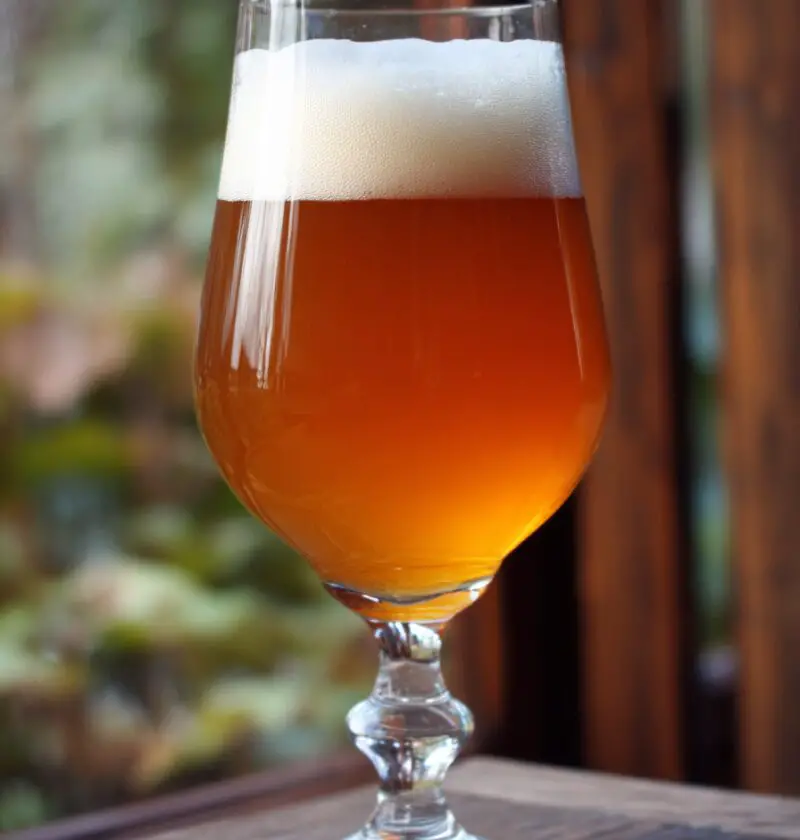
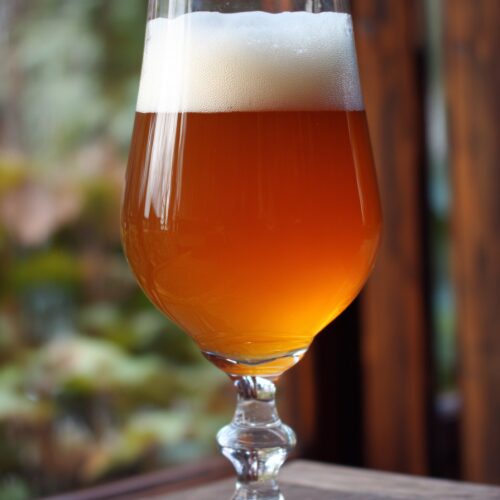
Pour into a clean, nucleated glass if you have one. Look for a tight white head, deep golden color, and aromas of fresh bread, light honey, and gentle floral hops. This is your homemade Einbecker Mai Urbock—strong yet refined.
Servings & Timing
- Yield: About 5 gallons (19 L), or roughly 48 twelve‑ounce beers
- Brew Day Time: 5–6 hours (including mash, boil, and cleanup)
- Primary Fermentation: 10–14 days
- Diacetyl Rest: 2–3 days
- Lagering Time: 4–8 weeks
- Total Time: Around 6–9 weeks from grain to glass
Yes, it’s a commitment—but good lagers take time, and this spring seasonal bock recipe is absolutely worth the wait.
Variations
Once you’ve brewed the base Einbecker Mai Urbock homebrew, it’s fun to play a little:
- Slightly Darker “Fest” Bock – Swap 0.5 lb Pilsner for 0.5 lb dark Munich and add 2–3 oz of Carafa Special II for a deeper amber color.
- Stronger “Urbock” Punch – Increase Pilsner by 1 lb and Vienna by 0.5 lb to push OG to ~1.072 for a bigger, richer German strong lager clone.
- Hoppier Modern Maibock – Add an extra 0.5 oz Hallertau at flameout for more floral hop aroma without changing bitterness much.
- Soft, Malt‑Forward Version – Keep hops as is but bump mash temp to 153–154°F for a fuller, softer mouthfeel.
- Session “Mini‑Bock” – Reduce all malts by about 25% to hit ~5.5% ABV but keep the same hop schedule and ratios.
Storage & Reheating (Well…Serving)
Beer doesn’t get “reheated,” but storage matters a lot for this style.
- Keg Storage: Keep your kegged Einbecker Mai Urbock homebrew at 34–38°F (1–3°C). It’ll stay in peak shape for 2–3 months, gradually smoothing out even more.
- Bottled Storage: Store bottles at cellar temps (50–55°F / 10–13°C) for long‑term. For short‑term, the fridge is fine. Avoid warm storage—strong lagers can pick up sherry‑like oxidation if they sit warm too long.
- Make‑Ahead Tip: Brew this traditional Mai Bock clone at least 6–8 weeks before you want to serve it—like early March for a May party.
- Serving Temp: Serve at 45–48°F (7–9°C). Too cold and you mute all that beautiful malt; too warm and the alcohol can feel hot.
Notes
A few personal lessons after brewing versions of this Einbecker inspired homebrew recipe for years:
- Pitch rate matters more than gear. You don’t need a fancy system, but you do need healthy yeast. Under‑pitching is how you get off‑flavors and sluggish fermentation in a strong lager.
- Don’t chase clarity too early. Maibocks can look a bit hazy during early lagering—give it time. After 4–6 weeks, they usually drop crystal clear without heroic measures.
- Be honest with your boil vigor. A lazy simmer doesn’t drive off enough DMS for this much Pilsner malt. You want a confident, rolling boil—steam on the windows kind of boil.
- Taste during lagering. Pull a tiny sample every week. It’s a great way to learn what “green lager” tastes like and how it smooths out over time.
- Take notes. Jot down mash temps, fermentation temps, and tasting notes. Little differences—like finishing at 1.012 versus 1.014—change how this malty German lager recipe feels on the palate.
FAQs
1. Can I brew this Einbecker Mai Urbock Homebrew Recipe without temperature control?
You’ll get the best results with a fermentation chamber or fridge and an inkbird‑style controller, but if you have a cool basement that stays around 50°F, you can still get a decent Maibock—just expect a bit more ester character.
2. How important is lagering time for this German Maibock homebrew?
It’s very important; give it at least 4 weeks cold, and you’ll taste the difference in smoothness, clarity, and overall balance.
3. Can I use American hops instead of noble hops?
You can, but you’ll lose that classic Einbecker Bock style character—if you absolutely must, choose something mild and clean like Sterling or Mt. Hood.
4. My beer finished sweeter than expected—what happened?
Likely a combination of high mash temp, under‑attenuative yeast, or under‑pitching; next time, keep mash around 150–152°F and make a larger starter or pitch more dry yeast.
5. Why is my Maibock a bit darker than expected?
Longer boils, darker malt brands, and extract brewing can all deepen the color slightly; it’s still in style as long as it’s golden to light amber and not brown.
6. Can I pressure ferment this strong lager?
Yes—light pressure (5–10 psi) during fermentation can help clean up some esters, but keep the temperature in the lager range if you want a traditional profile.
7. Is this recipe suitable for a first lager?
It’s a great first lager if you’re comfortable hitting mash temps and can control fermentation temperature; the steps are simple, but the beer will reward your patience and attention.
8. How long does this spring seasonal bock recipe age well?
Kept cold and dark, it’ll drink beautifully for 3–6 months, gradually gaining a touch of honeyed, rounded character—after that, it’s still drinkable but not at its peak.
Conclusion
This Einbecker Mai Urbock Homebrew Recipe is my idea of a perfect spring project: a rich, golden Maibock lager with deep malt flavor, graceful strength, and that unmistakable German bock soul. It asks for time and a little care, but it pays you back with every smooth, malty sip.
If you brew it, I’d truly love to hear how it turned out—drop a comment with your tweaks, gravities, and tasting notes. And if you enjoy this kind of authentic German bock homebrew, you might also like brewing a darker traditional bock or a lighter Helles for summer. Cheers to long brew days, patient lagering, and that first perfect pour.
Einbecker Mai Urbock Homebrew (Maibock Lager)
Ingredients
- 10 lb German Pilsner malt Weyermann or Bestmalz preferred; clean, bready base malt
- 3 lb German Vienna malt adds toasty, cracker-like maltiness
- 1 lb German Munich malt (light) boosts rich bread crust notes
- 0.25 lb Caramunich I around 30–40L; adds light caramel depth and head retention
- 6.6 lb light Pilsner liquid malt extract EXTRACT VERSION: late addition if possible for better color
- 2 lb Munich liquid malt extract EXTRACT VERSION
- 0.5 lb Caramunich I EXTRACT VERSION: steep at 150–155°F (65–68°C) for 20–30 minutes before the boil
- 1.25 oz Hallertau Mittelfrüh hops about 4% AA; 60-minute bittering addition
- 0.5 oz Tettnang hops about 4% AA; 20-minute flavor addition
- 0.5 oz Hallertau Mittelfrüh hops 10-minute aroma addition
- 2 packs Wyeast 2124 Bohemian Lager or 2 packs WLP830 German Lager or 2 packs SafLager W-34/70; make a 2–3 L starter for liquid yeast
- Yeast nutrient add with 20-minute hop addition, per manufacturer’s rate
- Whirlfloc or Irish moss add with 20-minute hop addition, per manufacturer’s rate
- Brewing water about 4 gallons (15 L) strike water plus sparge to collect ~6.5 gallons (24.5 L) pre-boil; use carbon-filtered, low-bicarbonate water
- Water salts (optional) aim for Ca 40–60 ppm, sulfate 40–60 ppm, chloride 50–70 ppm; adjust cautiously
- Oxygen shake fermenter vigorously or use pure O₂ with a diffusion stone for 45–60 seconds
Instructions
- Weigh and crush all-grain malts (Pilsner, Vienna, Munich, Caramunich I) to a medium crush with husks mostly intact. Avoid an overly fine crush to reduce the risk of a stuck sparge. For the extract version, skip milling and plan to steep the specialty Caramunich I later.10 lb German Pilsner malt, 3 lb German Vienna malt, 1 lb German Munich malt (light), 0.25 lb Caramunich I, 0.5 lb Caramunich I
- Heat about 4 gallons (15 L) of strike water to approximately 163°F (73°C). Add the crushed grain while stirring to prevent dry pockets. Stabilize the mash at 150–152°F (65–67°C) to balance fermentability and malt body.10 lb German Pilsner malt, 3 lb German Vienna malt, 1 lb German Munich malt (light), 0.25 lb Caramunich I, Brewing water
- Hold the mash at 150–152°F (65–67°C) for 60–75 minutes. Stir once or twice during the rest. Optionally check conversion with an iodine test, or simply give it the full 75 minutes.
- For extra malt depth and a rounder mouthfeel, raise the mash temperature to 158°F (70°C) for 10–15 minutes at the end of the main rest using boiling water or gentle heat if your system allows.
- Raise the mash to about 168°F (76°C) for 10 minutes if possible, then vorlauf until the runnings are mostly clear. Collect wort into the kettle while gently sparging with 168°F (76°C) water until you have about 6.5 gallons (24.5 L) of pre-boil wort or your system’s normal pre-boil volume.Brewing water
- For the extract version, steep 0.5 lb (227 g) Caramunich I in about 2.5–3 gallons (9.5–11.5 L) of water at 150–155°F (65–68°C) for 20–30 minutes, then remove the grains. Bring to a near boil, then add Munich LME and part of the Pilsner LME. Reserve some Pilsner LME for late addition (last 10–15 minutes) to keep color lighter.6.6 lb light Pilsner liquid malt extract, 2 lb Munich liquid malt extract, 0.5 lb Caramunich I
- Bring the wort to a strong rolling boil and boil for 90 minutes to drive off DMS and build malt richness. At 60 minutes remaining, add 1.25 oz (35 g) Hallertau Mittelfrüh hops. At 20 minutes remaining, add 0.5 oz (14 g) Tettnang hops along with yeast nutrient and Whirlfloc/Irish moss. At 10 minutes remaining, add the final 0.5 oz (14 g) Hallertau Mittelfrüh hops. For extract, add any reserved late-addition Pilsner LME with 10–15 minutes left in the boil, stirring well.6.6 lb light Pilsner liquid malt extract, 1.25 oz Hallertau Mittelfrüh hops, 0.5 oz Tettnang hops, 0.5 oz Hallertau Mittelfrüh hops, Yeast nutrient, Whirlfloc or Irish moss
- At the end of the boil, chill the wort rapidly to 46–50°F (8–10°C) using an immersion or plate chiller. Minimize exposure to air and potential contaminants. Once chilled, transfer the wort to a sanitized fermenter, leaving most of the trub behind.
- Oxygenate the chilled wort thoroughly. Either shake or rock the fermenter vigorously for several minutes, or inject pure O₂ through a sanitized diffusion stone for about 45–60 seconds to ensure a healthy fermentation for this higher-gravity lager.Oxygen
- Pitch a large, healthy amount of lager yeast at 46–50°F (8–10°C). Use a well-built 2–3 L starter for liquid yeast or pitch two properly rehydrated packs of dry yeast (e.g., SafLager W-34/70). Ferment at 48–52°F (9–11°C) for about 7–10 days, keeping temperature as steady as possible.2 packs Wyeast 2124 Bohemian Lager
- When fermentation is nearly complete (about 5–8 specific gravity points above your expected final gravity of 1.012–1.014), raise the temperature gradually to 60–62°F (15–17°C). Hold at this temperature for 2–3 days to allow the yeast to clean up diacetyl and other off-flavors.
- After the diacetyl rest, gradually reduce the temperature by about 3–5°F (2–3°C) per day until you reach 34°F (1°C). Lager the beer at this temperature for at least 4 weeks and up to 8 weeks. This extended cold conditioning will smooth the flavor, drop out haze, and refine the classic Maibock profile.
- Once lagering is complete and the beer is clear and stable, package into a keg or bottles. If kegging, carbonate to about 2.3–2.5 volumes of CO₂ for a lively but not overly fizzy beer. If bottling, add priming sugar as usual, then condition the bottles at 65–70°F (18–21°C) for 2–3 weeks before chilling.
- Serve the Einbecker-style Maibock at 45–48°F (7–9°C) in a clean glass. Expect a tight white head, deep golden color, and aromas of fresh bread, light honey, and gentle floral noble hops. Sip slowly and enjoy.