Texas Style Smoked Brisket Recipe
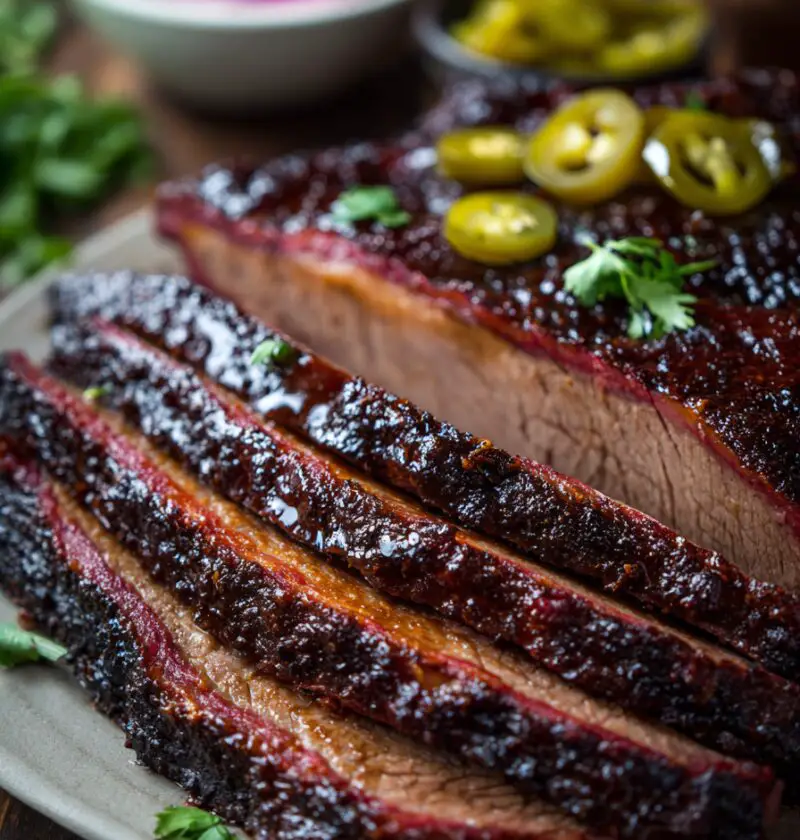
If there’s one Texas Style Smoked Brisket Recipe worth making at home, it’s this one—simple, peppery, deeply smoky, and cooked low and slow until the beef turns meltingly tender with that beautiful black bark every backyard pitmaster dreams about.
A Brisket Worth Waiting For
There’s something almost magical about a true Texas Style smoked brisket. It starts as a big, tough cut of beef brisket, and after hours in the smoker, it becomes rich, juicy, sliceable, and downright unforgettable. That’s the beauty of Texas BBQ—humble ingredients, careful timing, and a little patience.
I’ve been cooking barbecue for years, and I’ll tell you right now: brisket can feel intimidating the first time. It’s a commitment. It asks for your Saturday. But goodness, it gives back. This Brisket Recipe is based on classic Central Texas tradition, where the meat does most of the talking. No sugary glaze, no heavy sauce, no fuss. Just beef, salt, black pepper, smoke, and time. Maybe that sounds too simple, but that’s exactly why it works.
I love serving this for summer holidays, family reunions, football weekends, and those easygoing backyard BBQ afternoons when everybody wanders toward the smoker every hour to “check on things.” If you’ve ever wanted to make authentic Texas Brisket at home, this is a solid place to start. It’s warm, smoky, hearty, and one of the great classics of American barbecue.
Why You’ll Love This Recipe
- Classic Texas Style flavor with a simple salt-and-pepper rub
- Deep smoky bark and a beautifully juicy brisket interior
- Great for feeding a crowd at a backyard BBQ
- Uses straightforward ingredients—nothing fancy or hard to find
- Works well for beginners with a little patience and planning
- Delivers that authentic low and slow texture Texas BBQ is known for
- Easy to customize with wood choice, rub additions, or wrapping method
- Leftovers make amazing sandwiches, tacos, and breakfast hash
- A true smoker recipe that feels special but stays approachable
Ingredients
For this Texas Style Smoked Brisket Recipe, you only need a handful of ingredients, but each one matters.
- 1 whole packer beef brisket, 12 to 15 pounds
(Look for USDA Choice or Prime if your budget allows; more marbling usually means more tender brisket.) - 1/4 cup kosher salt
(Diamond Crystal is great; if using Morton kosher salt, use a little less because it’s saltier by volume.) - 1/4 cup coarse black pepper, 16-mesh preferred
(This is the classic brisket rub for traditional Texas BBQ.) - 2 teaspoons garlic powder
(Optional, but it adds a nice savory note without changing the Texas profile too much.) - 2 teaspoons onion powder
(Optional; helpful if you like a slightly fuller rub.) - 1/2 cup yellow mustard or beef tallow, as a binder
(Optional—many pitmasters use one, some use nothing at all.) - 2 to 4 cups beef broth or water, for spritzing if needed
- Butcher paper or heavy-duty foil, for wrapping
(Pink butcher paper is the favorite for preserving bark while helping the brisket through the stall.) - 1 to 2 cups melted beef tallow, optional
(Wonderful for wrapping and boosting moisture.)
Ingredient Tips That Really Matter
Choose a brisket with flexible bend when you pick it up—if it bends easily in the package, that usually means better fat distribution. You want a good fat cap, but not one that’s excessively thick. For smoked meat like this, the quality of the beef shows, because the ingredient list is short. Also, coarse black pepper gives you that classic bark; fine pepper won’t create the same texture.

Directions
1. Trim the brisket
Set your cold brisket on a large cutting board and trim the fat cap down to about 1/4 inch. Remove any hard fat that won’t render well, especially between the flat and the point. Square up any thin edges so they don’t burn. It doesn’t need to be perfect; you’re aiming for even cooking, not a beauty contest.
2. Season it simply
Pat the brisket dry with paper towels. If you want, rub the surface lightly with yellow mustard or a thin layer of beef tallow to help the seasoning stick. Mix the kosher salt, coarse black pepper, garlic powder, and onion powder, then coat the brisket evenly on all sides. Press the rub in gently. Let it sit at room temperature for 30 to 45 minutes while you prep the smoker.
3. Fire up the smoker
Preheat your smoker to 225°F to 250°F. This is the sweet spot for slow smoked brisket. Use post oak if you want the most traditional Texas BBQ flavor, though hickory or pecan also work beautifully. Pellet smokers, offset smokers, drum smokers, and kamado cookers can all make excellent wood smoked brisket with good temperature control.
4. Put the brisket on cold side up—or fat side according to your smoker
Place the brisket in the smoker with the point facing the hotter part of the cooker. In many smokers, that means fat side up, but not always. If your heat source comes from below, fat side down can protect the meat better. Here’s the thing: people argue about this part like it’s politics at Thanksgiving. What matters most is protecting the flat from direct heat.
5. Smoke low and slow
Cook the brisket at 225°F to 250°F for about 6 to 8 hours, or until the bark is dark mahogany and the internal temperature reaches around 165°F to 175°F in the thickest part. During this stage, avoid opening the smoker too often. If the surface looks dry, spritz lightly with beef broth or water every 60 to 90 minutes after the first few hours.
6. Wrap during the stall
When the brisket hits the stall—usually in the 160s and it seems like the temperature stops climbing—wrap it tightly in pink butcher paper or foil. If you like a richer finish, drizzle a little melted beef tallow over the brisket before wrapping. Butcher paper helps keep the bark in better shape, while foil cooks a bit faster and traps more moisture. Neither is wrong; they simply give slightly different results.
7. Finish cooking until probe tender
Return the wrapped brisket to the smoker and continue cooking until the internal temperature reaches about 195°F to 205°F. More important than the exact number, though, is feel. A thermometer probe should slide into the flat and point with little resistance, like room-temperature butter. That’s when you know your pit smoked brisket is ready.
8. Rest it—don’t skip this
Remove the brisket from the smoker and let it rest, wrapped, for at least 1 hour. Two to 4 hours is even better if you can manage it. You can hold it in a dry cooler or an unlit oven. This rest lets juices settle and the meat relax, which means better slices and a more tender brisket.
9. Slice against the grain
Unwrap the brisket and separate the point from the flat if needed. Slice the flat against the grain into pencil-thick slices. The grain changes direction in the point, so turn it before slicing. If you’ve done it right, each slice should bend over your finger without falling apart, but still pull apart with a gentle tug. That’s the sweet spot for classic brisket.
10. Serve and watch it disappear
Serve warm on a platter with pickles, sliced onions, white bread, potato salad, beans, or coleslaw. Sauce is optional. Honestly, good BBQ brisket barely needs it.
Servings & Timing
- Yield: 10 to 14 servings, depending on brisket size and side dishes
- Prep Time: 30 to 45 minutes
- Cook Time: 10 to 14 hours
- Rest Time: 1 to 4 hours
- Total Time: About 12 to 18 hours, including resting
A general planning rule is about 1 to 1.25 hours per pound at 225°F to 250°F, though every brisket has a mind of its own. And yes, they really do.
Variations
- Garlic-Pepper Brisket: Add extra garlic powder and a touch of smoked paprika for a bolder bark.
- Coffee Rub Brisket: Mix 1 tablespoon finely ground coffee into the rub for a deep, earthy note.
- Spicy Texas Brisket: Add cayenne or chipotle powder if you like heat with your smoked beef.
- Foil Boat Method: Instead of wrapping fully, place the brisket in a foil boat to protect the bottom while preserving the top bark.
- Pellet Smoker Version: Use a smoke tube along with your pellet grill if you want a stronger wood smoked flavor.
- No-Trim Shortcut: Ask your butcher to trim the brisket for you if you’re new to handling large cuts.
Storage & Reheating
Leftover brisket stores very well, which is one more reason I make a big one whenever I can.
- Refrigerator: Store sliced or whole leftover brisket in an airtight container for up to 4 days. Keep some of the juices with it so it stays moist.
- Freezer: Wrap tightly in plastic wrap and foil, or vacuum seal, and freeze for up to 3 months.
- Reheating: Reheat covered in a 275°F oven with a splash of beef broth until warmed through. If vacuum sealed, you can warm it gently in simmering water.
- Thawing: Thaw overnight in the refrigerator for best texture.
- Make-Ahead Advice: Smoke the brisket a day ahead, refrigerate it whole, then reheat gently before slicing. In some ways—this surprises people—it can slice even better the next day.
Notes
A few things I learned after many briskets, a couple of near disasters, and one memorable windy Sunday when the smoker temp bounced around like a toddler on a sugar rush:
First, don’t chase a specific internal number too hard. Use temperature as a guide, but let tenderness be your real signal. Second, if your bark looks perfect before wrapping, you’re in great shape. If it still looks pale, give it more time unwrapped. Bark matters. It’s flavor, texture, and identity all rolled into one.
Also, brisket likes consistency. If your smoker runs steady, your odds of success go way up. A dual-probe thermometer like a ThermoWorks Smoke, MEATER, or Thermapen plus a grate probe can make a huge difference. Little tools like that save stress.
And one more thing—slice only what you need. Leaving the rest of the brisket whole helps it stay juicier longer.
FAQs
What is the best cut for a Texas Style Smoked Brisket Recipe?
A whole packer brisket is best because it includes both the flat and the point, giving you a better mix of lean and rich meat.
What wood is best for Texas brisket?
Post oak is the traditional choice for authentic Texas BBQ, but hickory and pecan are also excellent and easy to find.
How long does smoked brisket take to cook?
Most briskets take 10 to 14 hours at 225°F to 250°F, plus resting time. Larger briskets may take longer.
Why is my brisket tough?
It usually needs more time. Brisket becomes tender when the collagen fully breaks down, and that takes patient low and slow cooking.
Should I wrap my brisket?
Yes, most home cooks benefit from wrapping during the stall. It helps push through the plateau and keeps the meat from drying out.
Butcher paper or foil—which is better?
Butcher paper usually preserves bark better, while foil holds more moisture and speeds cooking. If you want a firmer bark, go with paper.
How do I keep brisket juicy?
Don’t over-trim, don’t rush the cook, and let it rest well before slicing. Resting is a big part of getting a juicy brisket.
Can I make this in a pellet smoker?
Absolutely. A pellet smoker is one of the easiest ways to make Texas Brisket at home, especially if you’re still getting comfortable with fire management.
Conclusion
This Texas Style Smoked Brisket Recipe keeps things honest and delicious: quality beef brisket, a classic rub, steady smoke, and plenty of time. The result is everything you want from a true barbecue recipe—dark bark, rich flavor, and slices of tender, smoky meat that feel like a celebration.
If you try this recipe, I’d love to hear how it turned out for you. Leave a comment, share your smoker setup, or tell me what sides you served with it—and if you’re hungry for more, look up my favorite backyard BBQ classics and smoked side dishes next.