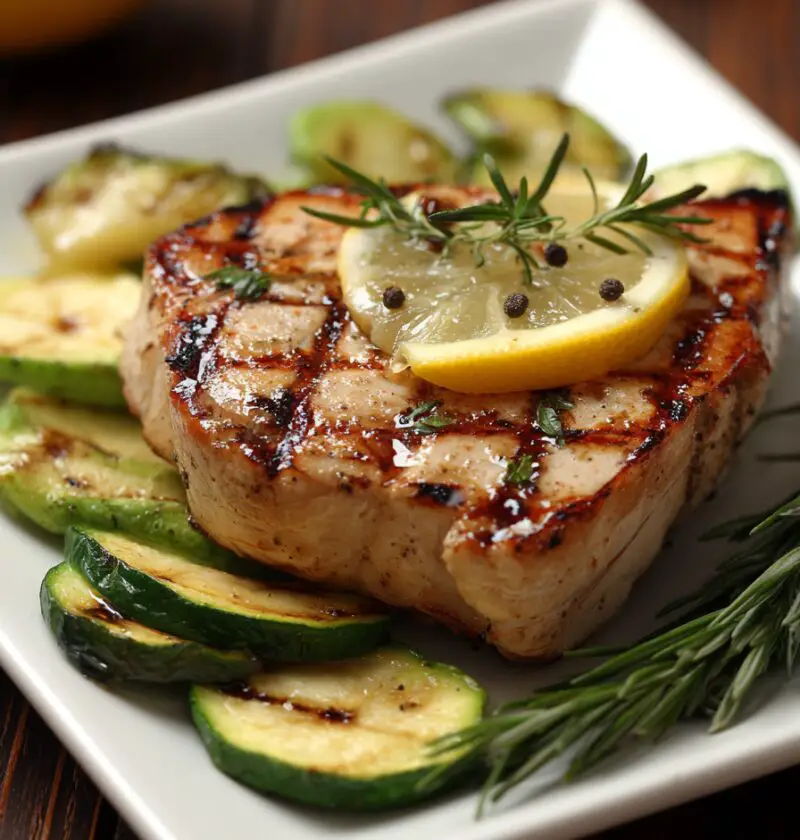
Swordfish Steak Recipe
If you’re craving a restaurant-quality seafood dinner without fuss, this Swordfish Steak Recipe is juicy, lemony, and full of Mediterranean flavor—perfect for a healthy, quick weeknight seafood dinner that still feels a little special.

A Cozy, Coastal Swordfish Steak Recipe You’ll Make Again and Again
Swordfish is one of those “bridge” fish—sturdy like a steak, but light and fresh like seafood. This swordfish steak recipe leans on a simple lemon garlic marinade, a quick sear, and a bright finish, so you get that grilled swordfish steak flavor whether you’re using a grill pan indoors, a cast-iron skillet, or your outdoor grill.
I started making this when my kids were teenagers and insisted they “didn’t like fish.” They changed their minds very quickly once they met lemon garlic swordfish. Swordfish is meaty, mild, and not “fishy,” which makes it perfect for picky eaters and anyone new to cooking seafood at home. It’s also naturally low carb, high in protein, and rich in healthy fats—so yes, this is a healthy swordfish recipe you can feel good about serving on a Tuesday night or for a relaxed dinner party.
This version has a Mediterranean swordfish steak vibe: olive oil, lemon, garlic, fresh herbs, and a pinch of smoked paprika. You can grill it, pan sear it, or bake it—whatever works for your kitchen and your mood that night. And because we’re using a straightforward swordfish steak marinade, you can prep it ahead, let it soak up all that flavor, and then cook it in about 10 minutes.
Why You’ll Love This Swordfish Steak Recipe
- Juicy, steak-like texture that even “non-fish” eaters enjoy
- Ready in about 30 minutes, including marinating time
- Uses simple pantry staples—olive oil, lemon, garlic, herbs
- Works with grilling, pan seared swordfish, or baked swordfish steak
- Naturally low carb and high protein for a satisfying, healthy seafood dinner recipe
- Perfect for busy weeknights but impressive enough for guests
- Easy to customize with different swordfish steak seasoning blends
- Great for meal prep—leftovers reheat surprisingly well
- Pairs with almost anything: salads, roasted veggies, rice, or cauliflower mash
Ingredients
Here’s exactly what you’ll need for this easy swordfish steak recipe. This makes about 4 servings.
- 4 fresh swordfish steaks (6–8 oz each, about 1 to 1 ½ inches thick)
- Look for firm, moist flesh with no strong “fishy” smell; fresh swordfish fillet should look slightly glossy, not dry.
- ¼ cup extra-virgin olive oil
- Use a good-quality one here, since it’s the backbone of your swordfish steak marinade.
- 3 tablespoons freshly squeezed lemon juice (about 1 large lemon)
- 1 tablespoon lemon zest (from the same lemon, if possible)
- 3 cloves garlic, finely minced or grated
- 1 teaspoon kosher salt (plus more to taste)
- ½ teaspoon freshly ground black pepper
- ½ teaspoon smoked paprika
- ½ teaspoon dried oregano (or 1 teaspoon fresh, finely chopped)
- ½ teaspoon dried thyme (or 1 teaspoon fresh, finely chopped)
- ¼ teaspoon red pepper flakes (optional, for a gentle kick)
- 2 tablespoons chopped fresh parsley (for garnish)
- Lemon wedges, for serving
Optional but nice additions:
- 1 tablespoon capers, drained (for a briny, Mediterranean finish)
- 1 tablespoon unsalted butter (to melt over hot steaks for extra richness)
If you’re watching sodium, you can reduce the salt slightly and lean on lemon and herbs for brightness. For a dairy-free version, just skip the butter garnish—this recipe is already naturally dairy free.
Directions
-
Pat the swordfish dry
Place the swordfish steaks on a plate or cutting board. Pat them very dry with paper towels. This little step helps you get a better sear and keeps the fish from steaming. If the steaks have dark bloodlines you don’t care for, you can trim those off, though they’re perfectly safe to eat. -
Make the lemon garlic marinade
In a medium bowl or glass measuring cup, whisk together the olive oil, lemon juice, lemon zest, garlic, salt, pepper, smoked paprika, oregano, thyme, and red pepper flakes (if using). Taste a tiny drop—you want a bold, bright flavor since it has to season the whole steak. -
Marinate the swordfish
Place the swordfish steaks in a shallow dish or a zip-top bag. Pour the marinade over them, making sure each piece is well coated. Let the swordfish marinate in the refrigerator for 15–20 minutes. Don’t go much longer than 30 minutes; the acid from the lemon can start to “cook” the outside, similar to ceviche. Flip the steaks once during marinating if they’re in a dish. -
Choose your cooking method
You can cook this swordfish steak recipe three ways—grill, pan sear, or bake. The internal target temperature is the same for all: remove at 135–140°F (57–60°C) for juicy, just-cooked-through fish that will carryover-cook slightly as it rests. -
For grilled swordfish steak
Preheat a gas or charcoal grill to medium-high heat (about 400–425°F). Clean and oil the grates well so the fish doesn’t stick. Remove the swordfish from the marinade, letting the excess drip off, and place them on the grill. Grill for 4–5 minutes per side, depending on thickness, until opaque and just barely flaky at the center. Don’t fuss with them too much—let them develop those lovely grill marks before flipping. -
For pan seared swordfish
Heat a large cast-iron or heavy stainless-steel skillet over medium-high heat. Add just enough olive oil to coat the bottom. When the oil is hot and shimmering, add the marinated swordfish steaks (again, let the extra marinade drip off). Sear for 4–5 minutes per side. You’re looking for a golden crust on the outside and a moist, slightly opaque center. If the garlic in the marinade starts to brown too fast, reduce the heat to medium. -
For baked swordfish steak
Preheat your oven to 400°F (200°C). Place the marinated steaks on a lightly oiled baking dish. Spoon a bit of the remaining marinade over the top, but don’t drown them—too much liquid will steam rather than roast. Bake for 10–12 minutes, depending on thickness, until the fish flakes at the edges and looks just opaque in the center. -
Finish and garnish
Transfer the cooked swordfish steaks to a serving platter. If you’re using butter, place a small pat on each steak while it’s still hot so it melts into a quick, silky sauce. Sprinkle with chopped fresh parsley and scatter capers on top, if you like that briny note. Serve immediately with lemon wedges for squeezing over the top. -
Check doneness like a pro
If you have an instant-read thermometer, you’re aiming for 135–140°F in the thickest part. If not, gently press the center with your finger or a fork: it should feel firm but still springy, not rock hard. The middle should be just opaque and moist—swordfish dries out when cooked too long, so it’s better to pull it off a minute early than a minute late.
Servings & Timing
- Yield: 4 servings
- Prep Time: 10 minutes
- Marinating Time: 15–20 minutes
- Cook Time: 8–12 minutes (depending on method and thickness)
- Total Time: About 30–35 minutes
Perfect for a quick swordfish recipe on a busy weeknight, but it also works beautifully for a relaxed weekend dinner with a glass of white wine.
Easy Variations to Keep It Interesting
You know what? Once you nail the basic swordfish steak recipe, you can tweak it all kinds of ways:
- Garlic Herb Butter Swordfish – Skip the paprika and red pepper flakes; finish the hot steaks with a generous spoonful of garlic herb butter instead.
- Citrus & Herb Mediterranean Swordfish Steak – Add orange juice and zest to the marinade along with the lemon, plus a pinch of cumin.
- Chili-Lime Swordfish – Swap lemon for lime, add chili powder and a pinch of cumin for a Tex-Mex spin.
- Caprese-Style Swordfish – After cooking, top the steaks with sliced fresh tomatoes, basil, and a drizzle of balsamic glaze.
- Low Carb Swordfish with Veggie Sheet Pan – Bake swordfish on a sheet pan surrounded by zucchini, cherry tomatoes, and red onion for a full meal.
- Greek-Style Swordfish Skewers – Cut the swordfish into cubes, marinate, and thread onto skewers with bell peppers and red onion, then grill.
Storage & Reheating
Swordfish is best fresh, but leftovers can still be lovely if you treat them gently.
- Storing:
- Cool leftover swordfish to room temperature (no more than 1–2 hours out).
- Store in an airtight container in the refrigerator for up to 2 days.
- Freezing:
- Cooked swordfish can be frozen, tightly wrapped, for up to 2 months, but the texture may firm up slightly once thawed.
- Reheating:
- Reheat low and slow—either covered in a 275°F oven for 8–10 minutes, or gently in a covered skillet over low heat with a splash of water or broth.
- You’re just warming it through; overheating will dry it out.
- Make-ahead tips:
- You can make the marinade up to 24 hours ahead and store it in the fridge.
- You can also prep sides like salad, roasted veggies, or rice earlier in the day so you only have to cook the swordfish at mealtime.
Notes from My Kitchen to Yours
- Thickness matters: Thicker steaks (1 ¼ to 1 ½ inches) stay juicier and are more forgiving. If yours are thinner, check for doneness on the early side.
- Don’t over-marinate: Lemon is wonderful, but it’s also assertive. More than 30 minutes in an acidic marinade can start to make the surface of the fish mushy.
- Cast iron is your friend: For pan seared swordfish, a well-seasoned cast-iron skillet gives gorgeous browning. Heat it well before adding the fish so you don’t get sticking.
- Salt timing: If your swordfish was previously frozen, it can be a bit wetter. Pat it very dry and don’t be afraid to season the surface lightly with extra salt just before cooking.
- Serving ideas: This swordfish steak recipe is lovely with a simple arugula salad, roasted asparagus, garlicky green beans, couscous, or cauliflower rice. I also like a quick yogurt sauce on the side—Greek yogurt, lemon, garlic, dill, and a pinch of salt.
- Smell test: Fresh swordfish should smell like the ocean, not “fishy.” If you’re buying at the fish counter, don’t be shy—ask to smell it before it gets wrapped.
FAQs
1. How do I know when swordfish is done?
The flesh should be opaque and just beginning to flake with a fork. For the most accurate check, use an instant-read thermometer and pull it at 135–140°F in the thickest part.
2. Can I make this swordfish steak recipe in the oven only?
Yes, baked swordfish steak turns out beautifully. Just follow the baking directions at 400°F for about 10–12 minutes, adjusting for thickness.
3. Is swordfish healthy?
Swordfish is high in protein and healthy fats, and low in carbs, making it great for low carb or Mediterranean-style eating. Like all large fish, it can contain some mercury, so most guidelines suggest enjoying it occasionally rather than daily, especially for children and pregnant people.
4. Can I use frozen swordfish steaks?
Absolutely. Thaw completely in the refrigerator overnight, then pat very dry before marinating. Frozen swordfish works well, as long as it’s good quality and not watery.
5. What’s the best pan for pan seared swordfish?
I recommend a heavy cast-iron or stainless-steel skillet; they hold heat well and help you get a nice sear. Nonstick will work in a pinch but usually won’t brown as deeply.
6. Why did my swordfish turn out dry?
Most likely, it was overcooked or too thin. Use a thermometer when you can, aim for thicker steaks, and remember that the fish will continue to cook slightly after you take it off the heat.
7. Can I marinate the swordfish overnight?
Not with this lemon-based marinade. The acid will start to “cook” the fish and change its texture. If you need to prep ahead, make the marinade in advance and combine with the fish 15–20 minutes before cooking.
8. What can I use instead of swordfish?
You can swap with other firm, meaty fish like tuna steaks, halibut, or mahi-mahi. Cooking times may vary slightly, so keep an eye on doneness.
Conclusion
This Swordfish Steak Recipe brings that coastal, grilled swordfish steak flavor right into your kitchen with just a handful of simple ingredients and about half an hour of your time. It’s an easy swordfish steak that feels special enough for company, but relaxed enough for a Wednesday night when you’re in yoga pants and fuzzy socks.
If you make this lemon garlic swordfish, I’d love to hear how it turned out—leave a comment, share your favorite variation, or tell me what you served on the side. And if you’re in the mood for more seafood dinner recipes, try pairing this with a simple shrimp appetizer or a fresh Mediterranean salad next time.
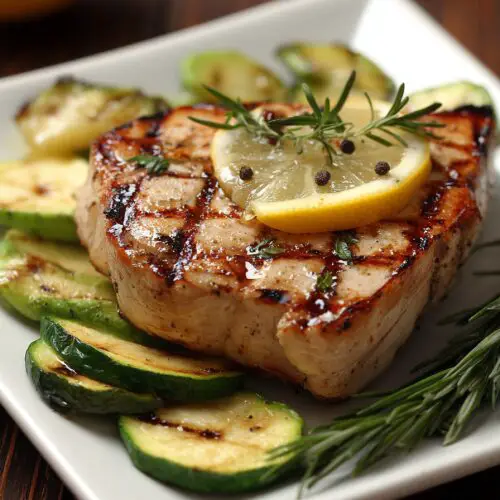
Swordfish Steak Recipe
Ingredients
- 4 fresh swordfish steaks 6–8 oz each, about 1 to 1 ½ inches thick; firm, moist flesh with no strong smell
- 1/4 cup extra-virgin olive oil good quality
- 3 tablespoons lemon juice freshly squeezed, about 1 large lemon
- 1 tablespoon lemon zest from the same lemon, if possible
- 3 cloves garlic finely minced or grated
- 1 teaspoon kosher salt plus more to taste
- 1/2 teaspoon black pepper freshly ground
- 1/2 teaspoon smoked paprika
- 1/2 teaspoon dried oregano or 1 teaspoon fresh, finely chopped
- 1/2 teaspoon dried thyme or 1 teaspoon fresh, finely chopped
- 1/4 teaspoon red pepper flakes optional, for a gentle kick
- 2 tablespoons fresh parsley chopped, for garnish
- lemon wedges for serving
- 1 tablespoon capers drained, optional
- 1 tablespoon unsalted butter optional, to melt over hot steaks
Instructions
- Place the swordfish steaks on a plate or cutting board and pat them very dry with paper towels. Trim off any dark bloodlines if you prefer, although they are safe to eat.4 fresh swordfish steaks
- In a medium bowl or glass measuring cup, whisk together the olive oil, lemon juice, lemon zest, garlic, kosher salt, black pepper, smoked paprika, dried oregano, dried thyme, and red pepper flakes (if using). Taste and adjust seasoning; it should be bold and bright.1/4 cup extra-virgin olive oil, 3 tablespoons lemon juice, 1 tablespoon lemon zest, 3 cloves garlic, 1 teaspoon kosher salt, 1/2 teaspoon black pepper, 1/2 teaspoon smoked paprika, 1/2 teaspoon dried oregano, 1/2 teaspoon dried thyme, 1/4 teaspoon red pepper flakes
- Place the swordfish steaks in a shallow dish or zip-top bag and pour the marinade over them, coating well. Marinate in the refrigerator for 15–20 minutes, but no longer than 30 minutes, flipping once if they are in a dish.4 fresh swordfish steaks
- Cook the marinated swordfish on the grill, in a hot skillet, or in the oven. In all cases, aim to remove the fish when it reaches an internal temperature of 135–140°F (57–60°C) for juicy, just-cooked-through swordfish.
- Preheat a gas or charcoal grill to medium-high heat (about 400–425°F). Clean and oil the grates well. Remove the swordfish from the marinade, letting excess drip off, and place on the grill. Grill for 4–5 minutes per side, depending on thickness, until opaque and just barely flaky at the center. Avoid moving the steaks too much so they develop grill marks.4 fresh swordfish steaks
- Heat a large cast-iron or heavy stainless-steel skillet over medium-high heat. Add just enough olive oil to coat the bottom. When the oil is hot and shimmering, add the marinated swordfish steaks, letting excess marinade drip off first. Sear for 4–5 minutes per side until a golden crust forms and the center is moist and opaque. Reduce heat to medium if the garlic starts to brown too quickly.4 fresh swordfish steaks, 1/4 cup extra-virgin olive oil
- Preheat the oven to 400°F (200°C). Lightly oil a baking dish and place the marinated swordfish steaks in a single layer. Spoon a small amount of remaining marinade over the top without covering them in liquid. Bake for 10–12 minutes, depending on thickness, until the fish flakes at the edges and is just opaque in the center.4 fresh swordfish steaks, 1/4 cup extra-virgin olive oil
- Transfer the cooked swordfish steaks to a serving platter. If using butter, place a small pat on each hot steak so it melts into a quick sauce. Sprinkle with chopped fresh parsley and scatter capers on top, if using. Serve immediately with lemon wedges for squeezing over the top.2 tablespoons fresh parsley, lemon wedges, 1 tablespoon capers, 1 tablespoon unsalted butter
- Check the thickest part of a steak with an instant-read thermometer; it should read 135–140°F. Without a thermometer, gently press the center—it should feel firm but still springy, and the middle should be just opaque and moist.