Spicy Ramen Recipe
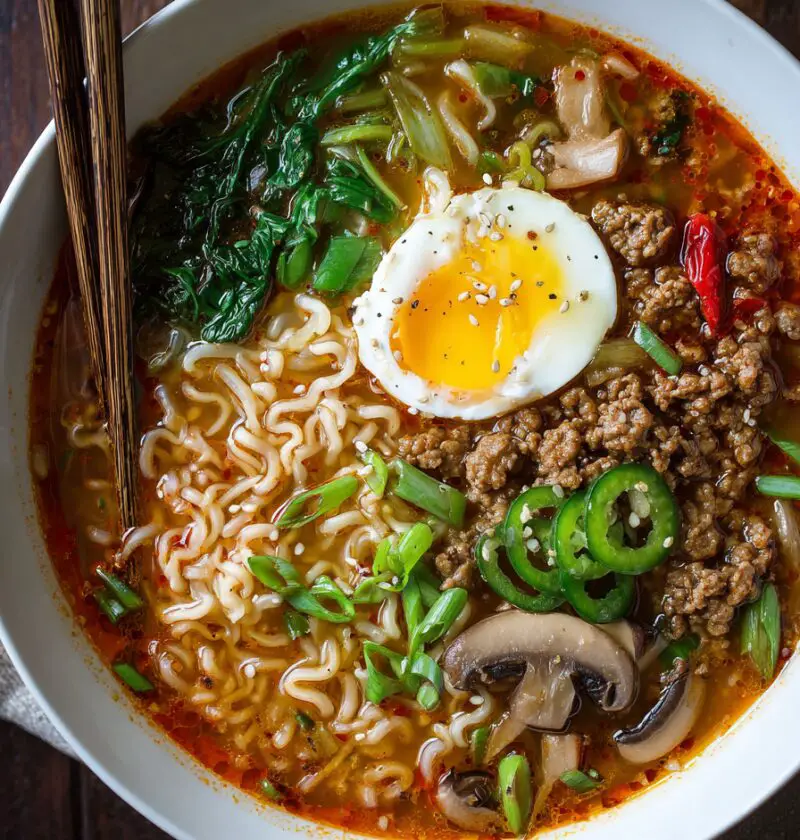
If you’re craving a steaming bowl of cozy comfort with a serious kick, this Spicy Ramen Recipe brings restaurant-style flavor to your kitchen in under 30 minutes—no packet seasoning required.
I’ve been a ramen lover since my twenties, but in my fifties I’m a lot more picky about what’s in my bowl. This homemade ramen keeps all the rich, spicy broth and bouncy noodles we adore, while using real ingredients you recognize and can actually pronounce. Think of it as your go-to spicy noodle soup for chilly nights, busy weeknights, or those “I just want a big comforting bowl” days.
Why This Spicy Ramen Recipe Has a Permanent Spot in My Meal Plan
You know what? There are a lot of ramen recipes floating around out there. Some are amazing, some are… mostly salt. This spicy ramen is my happy middle ground: big flavor, simple steps, and pantry-friendly ingredients.
This dish is a mash-up of Japanese ramen techniques and easy weeknight cooking. We build a flavorful ramen broth with garlic, ginger, and chili paste, then layer on tender noodles, jammy eggs, crunchy veggies, and a drizzle of chili oil. It’s flexible too—you can keep it vegetarian, add chicken or shrimp, or load it up with tofu.
I make this spicy noodle soup whenever:
- I’m tired and want something fast but satisfying
- My grown kids stop by “just for a minute” and suddenly they’re starving
- It’s cold or rainy and everyone wants a hot and spicy ramen moment on the couch with a blanket and Netflix
And because we’re using a lighter, homemade broth instead of those tiny seasoning packets, this ramen feels more like real food and less like a late-night college snack.
Why You’ll Love This Recipe
- Ready in about 25 minutes – A quick ramen meal that tastes like it simmered all afternoon.
- Uses simple grocery-store ingredients – No hunting specialty stores; everything is easy to find.
- Customizable heat level – Make it mild, medium, or “who turned on the fire alarm?” spicy.
- Healthier than instant ramen – Real broth, real veggies, real protein; less mystery powder.
- Great for meal prep – Prep the spicy broth and toppings ahead, then cook noodles fresh.
- Big, bold flavor – Layers of garlic, ginger, soy, and chili give you that deep, flavorful ramen broth.
- Works with any protein – Chicken, shrimp, pork, tofu, or just veggies all love this spicy ramen.
- One pot + one pan – Minimal dishes, maximum comfort.
- Perfect comfort food ramen – It hits that soothing, salty, spicy note without being heavy.
Ingredients
Here’s what you’ll need to make this Spicy Ramen Recipe for 4 hearty bowls. I’ll add quick tips and swaps along the way.
For the Spicy Ramen Broth
- 2 tablespoons neutral oil (canola, vegetable, or avocado oil)
- 4 cloves garlic, minced (fresh is important for flavor)
- 1 tablespoon fresh ginger, finely grated (or 1 teaspoon ground ginger in a pinch)
- 3 tablespoons chili garlic sauce or gochujang (adjust to taste for spice level)
- 2 tablespoons low-sodium soy sauce (or tamari for gluten-free)
- 1 tablespoon rice vinegar (adds brightness; apple cider vinegar works if needed)
- 1 tablespoon toasted sesame oil (for that nutty ramen flavor)
- 6 cups low-sodium chicken broth (or vegetable broth for a vegetarian ramen)
- 1–2 tablespoons white or yellow miso paste (optional, but gives great umami)
- 1–2 teaspoons sugar or honey (balances the heat and saltiness)
- ½–1 teaspoon crushed red pepper flakes (optional, for extra hot and spicy ramen)
For the Noodles & Toppings
- 12 ounces ramen noodles (3 bricks/blocks of dry ramen, seasoning packets discarded; or fresh ramen if available)
- 4 large eggs (for soft “jammy” ramen eggs; can skip for vegan)
- 1 cup sliced mushrooms (shiitake, cremini, or button mushrooms)
- 1 cup shredded or thinly sliced carrots
- 2 cups baby spinach or bok choy leaves (loosely packed)
- 2 green onions, thinly sliced (for garnish)
- 1 sheet nori (seaweed), cut into thin strips (optional but very ramen-shop feeling)
- 2 tablespoons chili oil or sesame chili oil (for drizzling on top)
- Sesame seeds, for garnish (optional but pretty)
Protein Add-Ons (Optional but Recommended)
Pick one or mix and match—this recipe is very forgiving:
- 1 cup cooked shredded chicken
- or 8 ounces extra-firm tofu, cubed and lightly pan-fried
- or 8 ounces shrimp, peeled and deveined
- or thinly sliced pork or beef (cook briefly before adding to broth)
Ingredient Notes & Tips
- Broth: Low-sodium broth is key; the chili sauces and soy sauce both add salt. You can always add more salt at the end, but you can’t take it out.
- Chili Garlic Sauce / Gochujang: These are your main “spicy ramen” flavor boosters. Start with less if you’re nervous and taste as you go.
- Miso Paste: If you have it, use it—it turns this into more of a Japanese ramen experience with that deep savory note.
- Noodles: Classic curly ramen noodles are great, but you can use any Asian noodle soup-style noodle: wheat noodles, udon, or even rice noodles for a gluten-free twist.

Step-by-Step Directions
Let me walk you through this like I would if you were standing in my kitchen, coffee in hand, chatting while we cook.
1. Prep Your Toppings and Noodles
- Bring a medium pot of water to a boil for the eggs and noodles.
- While you wait, slice your mushrooms, shred carrots, wash your spinach or bok choy, and slice green onions.
- If using tofu, chicken, shrimp, or another protein, prep it now—cut into bite-size pieces so it cooks quickly.
Tip: Getting all this done first makes the rest feel easy and calm, not rushed.
2. Cook the Eggs (Jammy-Style)
- Once the water is boiling, gently lower in the eggs using a spoon.
- Cook for 7 minutes for jammy yolks, 8–9 minutes for more set yolks.
- Transfer the eggs immediately to a bowl of ice water and let them chill at least 5–10 minutes (this stops cooking and makes peeling easier).
- Peel and slice in half right before serving.
If eggs stress you out, you’re not alone. The ice bath is non-negotiable here—it’s the secret for easy peeling.
3. Build the Spicy Broth
- In a large pot or Dutch oven, heat the neutral oil over medium heat.
- Add minced garlic and grated ginger. Cook, stirring, about 30–60 seconds until fragrant—don’t let it brown.
- Stir in chili garlic sauce or gochujang and cook another 30 seconds to wake up the spices.
- Pour in chicken or vegetable broth, soy sauce, rice vinegar, sesame oil, and sugar or honey. Stir well.
- Add mushrooms and bring the broth to a gentle boil, then reduce to a simmer.
- Whisk in miso paste (if using) by ladling a bit of hot broth into a small bowl, mixing with the miso until smooth, then stirring back into the pot.
- Taste and adjust: add more soy for salt, more chili sauce or red pepper flakes for heat, or a bit more sugar/honey if it tastes too sharp.
You’re looking for a flavorful ramen broth that tastes a little stronger than you want it in the bowl—the noodles and veggies will mellow it out.
4. Cook the Noodles
- Bring your egg pot of water back to a boil (or use fresh water if it looks cloudy).
- Add ramen noodles and cook according to package directions, usually 3–4 minutes.
- Drain and rinse briefly with warm water if they’re very starchy, then set aside.
Tip: Don’t overcook the noodles—they’ll soften more in the broth. Al dente is your friend here.
5. Finish the Broth with Veggies and Protein
- Add spinach or bok choy and carrots to the simmering broth. Cook 2–3 minutes, just until tender but still bright.
- If using pre-cooked chicken or tofu, stir it into the broth to warm through.
- If using raw shrimp or thinly sliced pork or beef, slide it in and cook just until done—this only takes a few minutes.
Now your spicy noodle soup base is ready for assembly.
6. Build Your Spicy Ramen Bowls
- Divide the cooked noodles between 4 large bowls.
- Ladle hot spicy broth, veggies, and protein over the noodles.
- Top each bowl with 1–2 egg halves.
- Garnish with green onions, nori strips, sesame seeds, and a drizzle of chili oil.
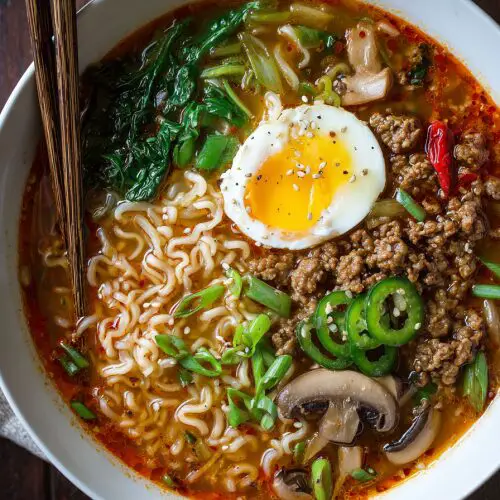
Stand back for a second and admire your work—it looks like restaurant-style Japanese ramen, but it’s your kitchen, your stove, your rules.
Servings & Timing
- Yield: Serves 4 generous bowls
- Prep Time: 10–15 minutes (chopping, measuring, egg prep)
- Cook Time: 15 minutes
- Total Time: About 25–30 minutes
This makes a fantastic weeknight hot and spicy ramen meal, but it also works beautifully for casual weekend dinners when you want something special without spending hours cooking.
Easy Variations to Try Next Time
Here’s the thing: once you’ve made this once, you’ll start playing with it. That’s when the fun really starts.
- Extra Creamy Spicy Ramen: Stir in ½ cup coconut milk at the end for a rich, slightly creamy spicy broth.
- Spicy Miso Ramen: Add an extra tablespoon of miso and a bit more chili paste for deeper umami and extra kick.
- Vegetarian/Vegan Ramen: Use vegetable broth, skip the eggs, and load up on tofu, mushrooms, and extra spinach.
- Sesame-Garlic Ramen: Add 1 extra tablespoon sesame oil and a clove more garlic for a nutty, aromatic twist.
- Seafood Spicy Ramen: Use shrimp, a handful of mussels or clams, and fish sauce (½–1 teaspoon) for a briny, ocean-kissed bowl.
- Low-Carb Ramen: Swap ramen noodles for shirataki noodles or spiralized zucchini; cook very briefly right in the broth.
Storage & Reheating Tips
Ramen is best fresh, but you absolutely can plan ahead if you separate a few components.
- Store the broth: Keep the spicy ramen broth (with veggies and protein, but without the noodles) in an airtight container in the fridge for up to 3–4 days.
- Store the noodles separately: Toss cooked noodles lightly with a tiny drizzle of oil so they don’t clump, then refrigerate up to 2–3 days.
- Reheating: Warm the broth gently on the stove until steaming. Add noodles at the end to heat through for 1–2 minutes so they don’t get mushy.
- Egg storage: Soft-boiled eggs can be stored in the fridge, unpeeled, up to 3 days. Peel right before serving and warm gently by placing in a bowl of hot (not boiling) water for a few minutes.
- Freezing: The broth freezes well (up to 2 months); freeze without noodles or eggs. Thaw overnight in the fridge, then reheat and add fresh noodles and toppings.
If you’re planning to make spicy ramen for lunches during the week, I recommend portioning broth and toppings in one container and noodles in another, then marrying them at lunchtime.
Notes from My Kitchen Tests
- Salt balance is everything. Different brands of soy sauce and broth vary. Taste, taste, taste—if something feels “flat,” it probably needs a tiny bit of salt or acidity (a splash more rice vinegar).
- Spice builds over time. Chili pastes can get stronger as they simmer. Start a little milder than you think you want, then bump it up. You can always pass extra chili oil at the table.
- Texture matters. Don’t overcook the noodles or veggies. A slightly firm noodle and tender-crisp carrots/spinach make your spicy Japanese noodles feel more like restaurant ramen.
- Layered flavor beats “just hot.” Garlic, ginger, soy, miso, and chili all play different roles. Don’t lean on just one ingredient. That’s how you get a flavorful ramen broth instead of a one-note spicy soup.
- Crowd-pleaser strategy. When I have guests with different spice tolerance, I keep the base medium-spicy and put out chili oil, red pepper flakes, and extra chili paste so everyone can adjust their bowl.
FAQs
1. How spicy is this Spicy Ramen Recipe?
It’s naturally medium-spicy if you follow the amounts as written, but you can cut the chili paste in half for a milder bowl or add more chili oil and flakes for very hot and spicy ramen.
2. Can I use instant ramen packets for the noodles?
Yes—just discard the seasoning packets and use only the noodles; the homemade ramen broth is much tastier and less salty.
3. How do I make this ramen vegetarian or vegan?
Use vegetable broth, skip the eggs or use a plant-based egg substitute, and choose tofu or extra veggies instead of meat.
4. What if I don’t have miso paste?
You can leave it out; your ramen recipe will still be delicious. Add an extra splash of soy sauce and a tiny bit more sesame oil to deepen the flavor.
5. Can I make the broth ahead of time?
Absolutely. Make the spicy broth up to 3 days ahead and store it in the fridge. When you’re ready to eat, just reheat the broth and cook fresh noodles.
6. Why are my noodles getting soggy?
If noodles sit in hot broth too long, they soak it up and soften. Store noodles and broth separately and combine right before serving or reheating.
7. What kind of chili paste works best?
Chili garlic sauce (like Huy Fong) or gochujang (Korean chili paste) both work well. Gochujang gives a deeper, slightly sweet heat; chili garlic sauce is sharper.
8. Can I make this gluten-free?
Yes—use gluten-free tamari instead of soy sauce and pick gluten-free noodles (like rice noodles or gluten-free ramen).
Conclusion
This Spicy Ramen Recipe brings together everything I love about comfort food ramen: a bold, flavorful ramen broth, tender noodles, plenty of veggies, and just the right amount of heat. It’s fast enough for a Tuesday night, special enough for a cozy weekend dinner, and flexible enough to fit your family’s preferences.
If you make this spicy ramen, I’d love to hear how you customized it—did you go extra spicy, keep it mild, add chicken, tofu, shrimp? Leave a comment with your tweaks, and if you enjoyed this bowl, take a look at my other Asian noodle soup ideas and easy ramen recipe variations for your next cozy night in.
Spicy Ramen
Ingredients
- 2 tablespoons neutral oil such as canola, vegetable, or avocado oil
- 4 cloves garlic minced
- 1 tablespoon fresh ginger finely grated (or 1 teaspoon ground ginger)
- 3 tablespoons chili garlic sauce or gochujang adjust to taste for spice level
- 2 tablespoons low-sodium soy sauce or tamari for gluten-free
- 1 tablespoon rice vinegar or apple cider vinegar
- 1 tablespoon toasted sesame oil
- 6 cups low-sodium chicken broth or vegetable broth for vegetarian
- 1 tablespoon white or yellow miso paste up to 2 tablespoons, optional, for extra umami
- 1 teaspoon sugar or honey up to 2 teaspoons, to balance heat and saltiness
- 1/2 teaspoon crushed red pepper flakes optional, up to 1 teaspoon, for extra heat
- 12 ounces ramen noodles about 3 blocks dry ramen, seasoning packets discarded, or fresh ramen
- 4 large eggs for soft jammy ramen eggs; omit for vegan
- 1 cup mushrooms sliced; shiitake, cremini, or button
- 1 cup carrots shredded or thinly sliced
- 2 cups baby spinach or bok choy leaves loosely packed
- 2 whole green onions thinly sliced, for garnish
- 1 sheet nori (seaweed) cut into thin strips, optional
- 2 tablespoons chili oil or sesame chili oil for drizzling on top
- sesame seeds optional, for garnish
- 1 cup cooked shredded chicken optional protein add-on
- 8 ounces extra-firm tofu cubed and lightly pan-fried; optional protein add-on
- 8 ounces shrimp peeled and deveined; optional protein add-on
- 8 ounces thinly sliced pork or beef optional protein add-on; cook briefly in broth
- salt to taste, if needed
Instructions
- Bring a medium pot of water to a boil for the eggs and noodles. While it heats, slice the mushrooms, shred or thinly slice the carrots, wash and dry the spinach or bok choy, and thinly slice the green onions. If using tofu, chicken, shrimp, pork, or beef, cut into bite-size pieces so they cook quickly.12 ounces ramen noodles, 4 large eggs, 1 cup mushrooms, 1 cup carrots, 2 cups baby spinach or bok choy leaves, 2 whole green onions, 1 cup cooked shredded chicken, 8 ounces extra-firm tofu, 8 ounces shrimp, 8 ounces thinly sliced pork or beef
- Once the water is boiling, gently lower in the eggs with a spoon. Boil for 7 minutes for jammy yolks or 8–9 minutes for more set yolks. Transfer immediately to a bowl of ice water and chill 5–10 minutes to stop the cooking and make peeling easier. Peel and slice in half just before serving.4 large eggs
- In a large pot or Dutch oven, heat the neutral oil over medium heat. Add the minced garlic and grated ginger and cook, stirring, for 30–60 seconds until fragrant but not browned. Stir in the chili garlic sauce or gochujang and cook for about 30 seconds to bloom the spices.2 tablespoons neutral oil, 4 cloves garlic, 1 tablespoon fresh ginger, 3 tablespoons chili garlic sauce or gochujang
- Pour in the chicken or vegetable broth, soy sauce, rice vinegar, toasted sesame oil, and sugar or honey. Stir well, then add the sliced mushrooms. Bring the broth to a gentle boil, then reduce to a simmer.2 tablespoons low-sodium soy sauce, 1 tablespoon rice vinegar, 1 tablespoon toasted sesame oil, 6 cups low-sodium chicken broth, 1 teaspoon sugar or honey, 1 cup mushrooms
- If using miso paste, ladle a small amount of hot broth into a bowl, whisk in the miso until smooth, then stir this mixture back into the pot. Taste the broth and adjust: add more soy sauce for saltiness, more chili paste or red pepper flakes for heat, or a bit more sugar or honey if it tastes too sharp. The broth should taste slightly stronger than you want in the final bowl, as noodles and veggies will dilute it.1 tablespoon white or yellow miso paste, 1 teaspoon sugar or honey, 1/2 teaspoon crushed red pepper flakes, salt
- Bring the pot of water used for the eggs back to a boil (or use fresh water if very cloudy). Add the ramen noodles and cook according to package directions, usually 3–4 minutes, until just al dente. Drain well and, if very starchy, rinse briefly with warm water. Set aside.12 ounces ramen noodles
- Add the spinach or bok choy and the carrots to the simmering broth. Cook for 2–3 minutes, just until tender but still bright. If using cooked shredded chicken or pan-fried tofu, stir them into the broth and warm through. If using raw shrimp or thinly sliced pork or beef, slide them into the hot broth and cook just until opaque and done, 2–4 minutes depending on thickness.1 cup carrots, 2 cups baby spinach or bok choy leaves, 1 cup cooked shredded chicken, 8 ounces extra-firm tofu, 8 ounces shrimp, 8 ounces thinly sliced pork or beef
- Divide the cooked ramen noodles among 4 large bowls. Ladle the hot spicy broth over the noodles, making sure to distribute the veggies and any protein evenly. Top each bowl with 1–2 egg halves.12 ounces ramen noodles, 4 large eggs
- Garnish each bowl with sliced green onions, nori strips, and sesame seeds if using. Finish with a drizzle of chili oil or sesame chili oil. Serve immediately while piping hot, passing extra chili oil or red pepper flakes at the table for those who like more heat.2 whole green onions, 1 sheet nori (seaweed), 2 tablespoons chili oil or sesame chili oil, sesame seeds