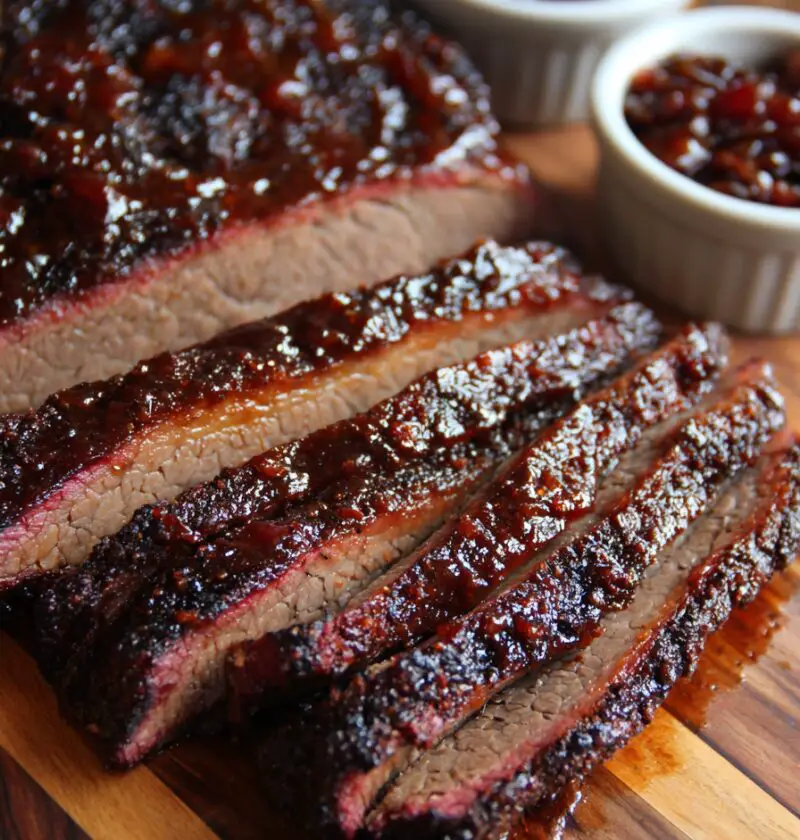
Smoked Brisket Recipe
This Smoked Brisket Recipe gives you tender, juicy slices with a deep bark, rich beefy flavor, and that classic backyard barbecue feel that makes a whole weekend meal worth waiting for.
A good brisket is worth the wait
If there’s one thing that turns an ordinary cookout into a real event, it’s a beautifully smoked brisket resting on the cutting board, juices pooling ever so slightly, everybody hovering nearby with plates in hand. This brisket recipe is built for home cooks who want that true Texas brisket style—simple seasoning, patient smoking, and a result that tastes like it came from a serious pit.
I’ve made a lot of roasts and barbecue over the years, and I’ll tell you plain: a proper smoked beef brisket is part recipe, part rhythm. You season it well, keep the smoker steady, and let time do what time does best. That’s where the magic happens. The fat renders, the collagen breaks down, and what began as a tough cut turns into tender smoked brisket that slices like a dream. I love serving this for summer gatherings, football weekends, and those family Sundays when everybody wanders into the kitchen asking, “Is it ready yet?”
And while brisket isn’t exactly “light food,” it is wonderfully simple food. It’s naturally low in carbs, packed with protein, and made from real ingredients—beef, salt, pepper, garlic, smoke, and patience. No fuss, no strange shortcuts, just honest barbecue.
Why you’ll love this recipe
- Big, bold BBQ brisket flavor with a simple rub
- Gives you a dark, flavorful bark and a moist center
- Works beautifully for backyard gatherings and holiday meals
- Great for feeding a crowd without a lot of side-by-side cooking
- Flexible for pellet grills, offset smokers, or charcoal smokers
- Uses classic Texas brisket seasoning that lets the beef shine
- Easy to prep ahead so your smoking day feels calmer
- Leftovers make fantastic sandwiches, tacos, and hash
- A reliable method for slow smoked brisket at home
- Delivers that satisfying mix of smoky crust and juicy brisket
Ingredients
For this homemade brisket, you’ll need:
- 1 whole packer beef brisket, 10 to 14 pounds
- 3 tablespoons kosher salt
- 3 tablespoons coarse black pepper
- 2 tablespoons granulated garlic
- 1 tablespoon paprika
- 1 tablespoon onion powder
- 2 teaspoons mustard powder (optional, but nice for depth)
- 2 tablespoons yellow mustard or 2 tablespoons Worcestershire sauce (as a binder, optional)
- 1 to 2 cups beef broth or apple cider vinegar mixed with water, for spritzing
- Butcher paper or heavy-duty foil, for wrapping
For smoking:
- Wood chunks, wood splits, or pellets—oak is classic, but hickory, pecan, or post oak are excellent
- A smoker set to 225°F to 250°F
A few ingredient tips, because they matter more than folks think:
- Brisket: Look for good marbling through the flat and point. A USDA Choice brisket works very well, and Prime is even more forgiving if your budget allows.
- Kosher salt: Diamond Crystal and Morton behave differently by volume, so if using Morton, use a little less.
- Black pepper: Coarse black pepper gives you the classic bark texture. Fine pepper disappears too much into the meat.
- Garlic and onion powder: These round out the flavor without taking over the beef.
- Paprika: Adds color and a light sweetness, not heat.
- Binder: Mustard won’t make the brisket taste like mustard. It simply helps the brisket rub stick.
- Wood choice: Oak gives that balanced, traditional wood smoked brisket flavor. Hickory is stronger; pecan is a touch softer and slightly sweet.

Directions
-
Trim the brisket.
Start with a cold brisket straight from the fridge—it’s much easier to trim that way. Use a sharp boning knife to remove hard surface fat and silver skin, then trim the fat cap down to about 1/4 inch. Leave enough fat to protect the meat, but not so much that the smoke and seasoning can’t reach it. If the edges are thin or ragged, neaten them up so the brisket cooks more evenly. -
Season it generously.
Pat the brisket dry with paper towels. If you like, rub the whole surface lightly with yellow mustard or Worcestershire sauce. Mix the salt, pepper, garlic, paprika, onion powder, and mustard powder, then coat the brisket evenly on all sides. Don’t skimp—this is a large cut, and it can handle a proper layer of seasoning. Let it sit at room temperature for 30 to 45 minutes while you heat the smoker, or refrigerate it overnight for a deeper, more settled flavor. -
Preheat the smoker.
Set your smoker to 225°F to 250°F. That range gives you the sweet spot for a pit smoked brisket—low enough for slow rendering, hot enough to build bark and keep the cook moving. Add your wood. Oak is my first pick for a classic barbecue brisket, but pecan is lovely too if you want a gentler smoke. -
Smoke the brisket low and slow.
Place the brisket in the smoker with the fat cap oriented based on your heat source. If the heat comes from below, fat side down can help protect the meat. If heat circulates more evenly, fat side up is fine. Smoke until the bark is dark mahogany and the internal temperature reaches about 165°F to 175°F. This usually takes 6 to 8 hours, depending on size and your cooker. If the surface looks dry in spots, spritz lightly every hour after the first 3 hours with broth or vinegar-water. -
Wrap at the stall.
Here’s the thing: brisket often hits a “stall,” where the temperature seems stuck. That’s normal. Once the color looks right and the bark is set, wrap the brisket tightly in butcher paper for a firmer bark, or foil for a softer finish and slightly faster cook. Return it to the smoker and continue cooking. -
Cook until probe tender.
Keep smoking until the internal temperature reaches around 195°F to 205°F, but don’t rely on numbers alone. The real test is feel. Slide a probe or skewer into the flat and point; it should go in with very little resistance, almost like warm butter. That’s when your smoked meat recipe turns from good to memorable. -
Rest it well—really well.
Remove the brisket from the smoker and let it rest, wrapped, for at least 1 hour, though 2 to 4 hours in a dry cooler or warm holding oven is even better. This rest is not optional if you want juicy brisket. Resting lets the juices settle back into the meat instead of running all over your cutting board. -
Slice and serve.
Unwrap the brisket and save any juices collected in the paper or foil. Slice the flat against the grain into pencil-thick slices. When you get to the point, rotate the brisket as needed because the grain changes direction. If you like, chop part of the point for sandwiches or burnt-end style bites. Spoon some of the reserved juices over the sliced meat before serving.
Servings & timing
- Yield: 10 to 14 servings, depending on brisket size and side dishes
- Prep Time: 30 minutes
- Seasoning Rest Time: 30 to 45 minutes, or overnight if preferred
- Cook Time: 10 to 14 hours
- Rest Time: 1 to 4 hours
- Total Time: About 12 to 18 hours, depending on the size of the brisket and your smoker temperature
A good planning note: most beef brisket recipe timing issues come from underestimating the rest period, not the smoke itself. Build in extra time and hold the brisket warm if it finishes early. That’s a lot less stressful than trying to rush a stubborn brisket.
Variations
- Texas-style classic: Use only kosher salt and coarse black pepper for the most traditional Texas brisket flavor.
- Spicy brisket: Add 1 to 2 teaspoons cayenne or chipotle powder to the rub.
- Coffee rub brisket: Mix in 1 tablespoon finely ground coffee for a darker, earthy bark.
- Sweet-smoke version: Add 2 tablespoons brown sugar to the rub for a slightly sweeter crust.
- Garlic-forward brisket: Increase granulated garlic to 3 tablespoons if you love a savory punch.
- Pellet grill brisket: Follow the same method, but add a smoke tube if you want a deeper smoke profile.
Storage & reheating
If you have leftover smoked brisket, you’re in luck. It reheats better than many people expect.
- Refrigerator: Store sliced or whole leftover brisket in an airtight container with a little of its cooking juice for up to 4 days.
- Freezer: Wrap portions tightly, then place in freezer bags or sealed containers for up to 3 months.
- Reheating sliced brisket: Place slices in a covered dish with a splash of beef broth, then warm in a 300°F oven until heated through, about 15 to 20 minutes.
- Reheating larger pieces: Wrap in foil with a little broth and reheat at 300°F until warm in the center.
- Microwave tip: Use only if you must, and cover the brisket with a damp paper towel to help prevent drying.
- Make-ahead advice: You can smoke the brisket a day ahead, chill it whole, then reheat gently while wrapped before slicing. Honestly, that’s a hosting trick I use all the time when I want a calmer party day.
Notes
A few personal lessons from making more than a few smoked beef brisket dinners over the years:
First, every brisket is a little different. One may finish early, another may linger in the stall like it’s got nowhere to be. That’s why tenderness matters more than chasing one exact temperature.
Second, the flat dries out before the point, usually. So when you’re checking doneness, pay close attention to the thickest part of the flat. If the flat is tender, the rest is usually in good shape too.
Third, smoke flavor should support the beef, not bulldoze it. More smoke isn’t always better. Thin blue smoke—the barely-there kind—is what you want. Heavy white smoke can make your BBQ brisket taste bitter.
And one more thing: slicing matters. A beautifully cooked brisket can still seem tough if it’s cut with the grain. If that happens, don’t panic. Turn the meat and slice again across the grain. Problem solved, or close to it.
FAQs
What is the best cut for a Smoked Brisket Recipe?
A whole packer brisket is best because it includes both the flat and point, giving you a better mix of lean and rich meat.
How long does it take to smoke brisket at 225°F?
A full brisket often takes 1 to 1.25 hours per pound, but time varies. Always cook until it feels tender, not just until it hits a number.
Should I wrap brisket in foil or butcher paper?
Butcher paper helps keep the bark firmer, while foil traps more moisture and cooks a bit faster. Both work well.
Why is my smoked brisket tough?
Usually, it needs more cooking time or more rest time. Brisket stays tough until enough collagen breaks down.
How do I keep brisket moist?
Trim properly, avoid overcooking, wrap at the stall, and give it a long rest. Saving and spooning the juices back over the slices helps too.
What wood is best for smoked beef brisket?
Oak is the classic choice, especially for Texas brisket, but hickory and pecan also give excellent results.
Can I make this brisket recipe in advance?
Yes. In fact, many pitmasters think brisket is even easier to serve when it’s cooked ahead and reheated gently.
Do I need to spritz the brisket?
Not always. If your smoker runs dry or the surface looks patchy, a light spritz can help, but too much can slow bark formation.
Conclusion
This Smoked Brisket Recipe is the kind of meal that rewards patience with every single slice—smoky bark, rich beef flavor, and that tender texture everybody hopes for in a true barbecue brisket. It’s simple at heart, but special on the table.
If you try this recipe, I’d love to hear how it turned out for you. Leave a comment with your smoker type, your favorite wood, or your own brisket trick—and if you’re planning a full barbecue spread, pair it with slaw, baked beans, or a good potato salad for the full backyard feast.