Pesto Recipe Without Pine Nuts (Bright, Fresh, and So Easy)
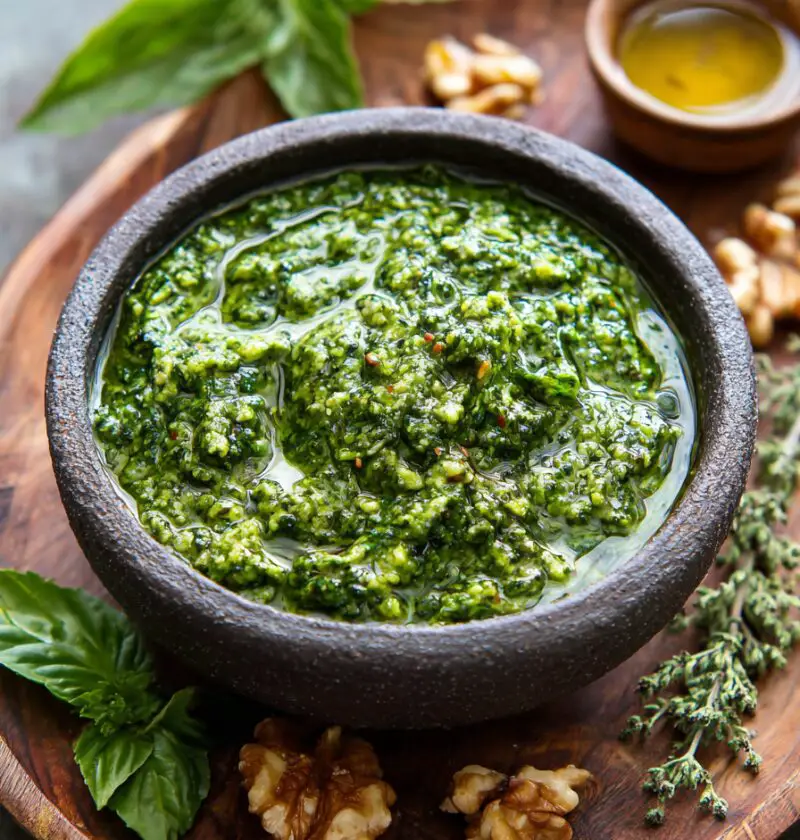
If you’ve been craving a bright, garlicky basil sauce but can’t use pine nuts, this Pesto Recipe Without Pine Nuts is going to be your new go‑to for pasta, sandwiches, and weeknight everything.
I’ve been making some version of basil pesto without pine nuts for years now—sometimes with walnuts, sometimes with almonds, sometimes completely nut free when I’m cooking for friends with allergies. It’s fast, it’s fresh, and it tastes like summer in a bowl, even if you’re standing in your kitchen in February with a sweater on and a cat staring at you like you’re late with dinner.
What Makes This Pesto Recipe Without Pine Nuts Special
Traditional pesto is made with basil, pine nuts, Parmesan, garlic, and olive oil. Delicious, yes—but pine nuts can be pricey, hard to find, and a no-go for some folks with nut allergies. This basil pesto without pine nuts keeps all the flavor and skips the stress.
Here’s what’s special about this version:
- You can make it with walnuts, almonds, or completely nut free.
- It’s easy to make dairy free or vegan with one simple swap.
- It’s a simple, homemade pesto without pine nuts that tastes better than store-bought jars.
I like to whip up a batch on Sunday and use it all week: tossed with hot pasta, spread on sandwiches, spooned over grilled chicken or fish, or thinned out with a bit of pasta water as a light basil sauce without pine nuts for roasted vegetables.
And a little personal note from my 50-year-old kitchen: I love recipes that feel a bit fancy but come together faster than my coffee machine warms up. This is one of them.
Why You’ll Love This Recipe
- No pine nuts needed – Perfect if you’re avoiding pine nuts because of allergies, cost, or simple convenience.
- Flexible and customizable – Make pesto with walnuts instead of pine nuts, with almonds, or totally nut free.
- Ready in 10 minutes – Toss everything in a food processor and you’re basically done.
- Budget-friendly – Walnuts and almonds are usually cheaper and easier to find than pine nuts.
- Perfect for allergies – With a couple tweaks, this becomes a nut free pesto recipe and even dairy free pesto without pine nuts.
- Freezer-friendly – Make a big batch and freeze portions for quick meals later.
- Big flavor, small effort – Garlic, basil, and good olive oil do almost all the work.
- Versatile – Use it as a spread, sauce, marinade, or even a flavor boost in salad dressing.
Ingredients
For this easy pesto without pine nuts, you’ll need:
- 2 cups fresh basil leaves, lightly packed
- Rinse and pat dry very well; excess water can make the pesto watery and dull the flavor.
- 1/2 cup nuts or seeds
- Choose one of these (or a mix):
- 1/2 cup walnuts – Classic substitute; gives a rich, slightly earthy flavor.
- OR 1/2 cup sliced or slivered almonds – Milder, slightly sweet; lovely with basil.
- OR 1/3 cup sunflower seeds or pumpkin seeds – Great for a nut free pesto recipe.
- 2–3 cloves garlic, roughly chopped
- Start with 2 if you’re garlic-shy; add more after tasting.
- 1/2 cup freshly grated Parmesan cheese
- Use real Parmigiano-Reggiano if you can—it truly makes a difference.
- For dairy free or vegan pesto without pine nuts, use 1/4 cup nutritional yeast instead.
- 1/2 teaspoon kosher salt, plus more to taste
- 1/4 teaspoon freshly ground black pepper
- 1–2 tablespoons fresh lemon juice
- Brightens the sauce and helps keep the color vibrant.
- 1/2 cup extra-virgin olive oil, plus more as needed
- Use a good-tasting oil you like; this is where a lot of the flavor comes from.
- 2–3 tablespoons water (optional)
- Helps adjust the consistency without adding more oil.
Optional but lovely:
- Pinch of red pepper flakes – For a mild kick.
- 1–2 tablespoons fresh parsley – Helps keep the green color and rounds out the flavor.

Directions
-
Prep your basil and ingredients
Wash the basil leaves, then spin them dry in a salad spinner or pat them well with a clean kitchen towel—wet basil makes a runny pesto and can dilute the flavor. Roughly chop the garlic so it blends evenly. -
Toast the nuts or seeds (optional but recommended)
Place walnuts, almonds, or seeds in a dry skillet over medium heat. Toast for 3–5 minutes, stirring frequently, until lightly golden and fragrant. Let them cool for a few minutes. This small step deepens the flavor of your pesto with walnuts instead of pine nuts or almonds instead of pine nuts. -
Start the base in the food processor
In a food processor bowl, add the cooled nuts or seeds, garlic, salt, and pepper. Pulse 5–6 times until everything is finely chopped but not paste-like—this helps avoid big garlic chunks. -
Add the basil, cheese, and lemon juice
Add basil leaves (and parsley, if using) plus grated Parmesan or nutritional yeast. Pulse several times, scraping down the sides as needed, until the mixture looks like a coarse, green crumble. Add 1 tablespoon lemon juice to start; you can add more later for brightness. -
Stream in the olive oil
With the processor running on low, slowly stream in the olive oil through the feed tube. Watch the texture: you’re aiming for a thick but pourable sauce. If it looks too thick, you can add a tablespoon or two of water or a bit more oil until it reaches your desired consistency. -
Taste and adjust
Stop and taste your homemade pesto without pine nuts. Does it need more salt? A squeeze more lemon? A little extra garlic? This is where you fine-tune it to your own taste. I usually add a pinch more salt and sometimes another tablespoon of lemon juice. -
Finish and store
Transfer the pesto to a clean jar or container. Smooth the top and, if you like, drizzle a thin layer of olive oil over the surface to help keep it bright green. Use right away or follow the storage tips below.
Servings & Timing
- Yield: About 1 cup of pesto (enough for 12–16 ounces of pasta, depending on how saucy you like it)
- Prep Time: 10–15 minutes
- Cook Time: 3–5 minutes (just for toasting nuts/seeds, optional)
- Total Time: About 15–20 minutes
If you already have toasted nuts on hand, it’s even faster.
Variations (Make It Your Own)
Because this pesto recipe without pine nuts is so flexible, you can easily tweak it to match your pantry and your preferences.
- Nut-Free School-Safe Pesto – Use sunflower seeds or pumpkin seeds, and skip the cheese or swap in a dairy-free alternative.
- Dairy Free Pesto Without Pine Nuts – Replace Parmesan with 1/4 cup nutritional yeast and add an extra pinch of salt.
- Extra-Creamy Almond Pesto – Use pesto with almonds instead of pine nuts and blend in 2 tablespoons of soaked cashews or a tablespoon of plain Greek yogurt (if dairy is ok).
- Spinach-Basil Pesto – Use 1 cup basil and 1 cup baby spinach for a milder flavor and a budget-friendly twist.
- Spicy Garlic-Lover’s Pesto – Add an extra clove of garlic and 1/2 teaspoon red pepper flakes for more heat.
- Lemon-Herb Pesto Sauce – Add more lemon juice and a handful of parsley to turn it into a brighter basil sauce without pine nuts, perfect for fish or roasted veggies.
Storage & Reheating (Or, How to Keep It Green and Gorgeous)
- Fridge: Store pesto in an airtight jar in the refrigerator for up to 5–7 days. Smoothing the top and covering it with a thin layer of olive oil helps keep the color bright.
- Freezer: For longer storage, freeze in small portions. Spoon pesto into an ice cube tray or silicone mold, freeze until solid, then pop the cubes into a freezer bag. They’ll keep well for 2–3 months.
- Using from frozen: Drop frozen pesto cubes straight into warm pasta or thaw in the fridge overnight. If it seems a bit thick after thawing, stir in a splash of warm water or olive oil.
- Make-ahead tip: If you’re planning to freeze large batches, you can leave out the cheese and add it fresh when you serve. It keeps the flavor brighter and prevents any texture changes.
No real “reheating” needed here—since pesto isn’t meant to be cooked hard, just gently warm it by stirring into hot pasta or whisking into a little bit of hot pasta water.
Notes From My Kitchen (Little Things That Make a Big Difference)
- Use very dry basil. A salad spinner is your friend here. Wet leaves can make the pesto watery and wash out that gorgeous green color.
- Balance the garlic. Raw garlic gets stronger as it sits. If you’ll be serving the sauce later, go lighter on garlic at first; you can always stir in a little grated garlic right before serving if it needs more kick.
- Taste your olive oil. If the oil is bitter or too peppery on its own, you’ll taste that in the pesto. Use one you’d happily eat with bread.
- Don’t overprocess. Pesto should have some texture. If you run the food processor too long, the basil can bruise and the nuts can turn the sauce a little pasty. Short pulses are your friend.
- Adjust consistency for how you’ll use it. For pasta, I like it a bit looser, so I thin it with a little pasta water. For sandwiches or a spread, I leave it thicker.
- Color-saving trick. A tiny pinch of sugar (seriously, tiny) and that lemon juice help keep the pesto bright and balance the bitterness of raw garlic and basil.
Honestly, once you make this a couple of times, you’ll stop measuring and start “eyeballing” like many of us older home cooks do—it becomes second nature.
FAQs About Pesto Without Pine Nuts
1. Can I make this pesto completely nut free?
Yes. Use sunflower seeds or pumpkin seeds instead of nuts, and you’ll have a delicious nut free pesto recipe that’s great for school lunches and allergy-sensitive households.
2. How can I make vegan pesto without pine nuts?
Skip the Parmesan and use about 1/4 cup nutritional yeast plus an extra pinch of salt. You’ll still get that cheesy, savory flavor in a fully vegan pesto without pine nuts.
3. My pesto turned dark—what happened?
Basil can oxidize and darken when exposed to air. Adding lemon juice, not overprocessing, and storing it with a thin layer of olive oil on top help keep the color bright.
4. Can I use a blender instead of a food processor?
You can, but blenders tend to make a smoother, sometimes thicker sauce. Add the oil more quickly and be careful not to over-blend so the basil doesn’t turn too dark.
5. What pasta shapes go best with this pesto?
Short, ridged shapes like fusilli, rotini, or penne catch the sauce beautifully, but classic spaghetti or linguine work too. Just save a little pasta water to help the sauce cling.
6. How salty should the pesto be?
Aim for slightly salty when tasted on its own—once it’s mixed with pasta or spread on bread, that saltiness balances out. Remember Parmesan is salty, so add extra salt gradually.
7. Can I use dried basil for this recipe?
No, dried basil won’t work here. You really need fresh basil leaves for that classic bright, fresh pesto flavor and color.
8. Is this pesto good for meal prep?
Absolutely. Make a batch on the weekend, then use it all week on pasta, grain bowls, eggs, sandwiches, and roasted vegetables. It’s one of those “small effort, big reward” meal prep staples.
Conclusion
This Pesto Recipe Without Pine Nuts is one of those trusty little recipes that earns its keep in your kitchen—fast, flexible, and deeply flavorful. Whether you’re making basil pesto without pine nuts because of allergies, budget, or just curiosity, you’ll end up with a sauce that tastes fresh and homemade, exactly how you want it.
Give it a try this week, then let me know in the comments how you used it—on pasta, sandwiches, roasted veggies, or something totally creative I haven’t thought of yet. And if you enjoy this, you might also like experimenting with other simple sauces, like chimichurri or a quick yogurt herb sauce, for even more easy weeknight flavor.
Pesto Recipe Without Pine Nuts (Bright, Fresh, and So Easy)
Ingredients
- 2 cups fresh basil leaves lightly packed, rinsed and dried very well
- 1/2 cup walnuts, sliced almonds, or seeds use 1/2 cup walnuts OR 1/2 cup sliced/slivered almonds OR 1/3 cup sunflower or pumpkin seeds for nut-free
- 2–3 cloves garlic roughly chopped; start with 2 if you prefer milder garlic flavor
- 1/2 cup freshly grated Parmesan cheese or 1/4 cup nutritional yeast for dairy-free/vegan
- 1/2 teaspoon kosher salt plus more to taste
- 1/4 teaspoon freshly ground black pepper
- 1–2 tablespoons fresh lemon juice start with 1 tablespoon, add more to taste
- 1/2 cup extra-virgin olive oil plus more as needed to adjust consistency
- 2–3 tablespoons water optional, to thin pesto without adding more oil
- pinch red pepper flakes optional, for a mild kick
- 1–2 tablespoons fresh parsley optional, helps keep color bright and rounds out flavor
Instructions
- Wash the basil leaves, then spin them dry in a salad spinner or pat very well with a clean kitchen towel. Wet basil can make the pesto watery and dull the flavor. Roughly chop the garlic so it blends evenly.2 cups fresh basil leaves, 2–3 cloves garlic
- Place the walnuts, almonds, or seeds in a dry skillet over medium heat. Toast for 3–5 minutes, stirring frequently, until lightly golden and fragrant. Remove from heat and let cool for a few minutes.1/2 cup walnuts, sliced almonds, or seeds
- Add the cooled nuts or seeds, garlic, salt, and black pepper to the bowl of a food processor. Pulse 5–6 times until everything is finely chopped but not a paste, making sure there are no large garlic chunks.1/2 cup walnuts, sliced almonds, or seeds, 2–3 cloves garlic, 1/2 teaspoon kosher salt, 1/4 teaspoon freshly ground black pepper
- Add the basil leaves, optional parsley, and grated Parmesan cheese (or nutritional yeast for dairy-free/vegan). Add 1 tablespoon of lemon juice. Pulse several times, scraping down the sides as needed, until the mixture looks like a coarse green crumble.2 cups fresh basil leaves, 1/2 cup freshly grated Parmesan cheese, 1–2 tablespoons fresh lemon juice, 1–2 tablespoons fresh parsley
- With the food processor running on low, slowly stream in the olive oil through the feed tube. Process just until the pesto becomes a thick but pourable sauce. If it seems too thick, add 1–2 tablespoons of water or a bit more olive oil and pulse to combine.1/2 cup extra-virgin olive oil, 2–3 tablespoons water
- Taste the pesto. Adjust with more salt, pepper, additional lemon juice for brightness, extra garlic for more punch, or a pinch of red pepper flakes if you’d like heat. Pulse briefly after each adjustment to combine.2–3 cloves garlic, 1/2 teaspoon kosher salt, 1/4 teaspoon freshly ground black pepper, 1–2 tablespoons fresh lemon juice, pinch red pepper flakes
- Transfer the pesto to a clean jar or container. Smooth the top and, if desired, drizzle a thin layer of olive oil over the surface to help keep the color bright. Use right away, or refrigerate for up to 5–7 days.1/2 cup extra-virgin olive oil