Pellet Smoker Recipe (Perfect Backyard Smoked Feast for Any Weekend)
If you’re craving deep wood-smoke flavor without babysitting a fire all day, this pellet smoker recipe is going to become your new weekend ritual. It’s a simple, flexible smoked meat blueprint you can use on ribs, pork shoulder, chicken, or even a small brisket—perfect for beginners to pellet smoker cooking and still satisfying for seasoned grill masters.
I’m a 50-year-old mom in the Midwest, and my pellet smoker grill has basically become my warm-weather kitchen. This is the base recipe I use for most of our backyard smoker recipes: a balanced barbecue dry rub, an easy smoker marinade-style spritz, and timing/temperature cues that take the guesswork out of low and slow smoking. Whether you’re cooking for game day, a family Sunday dinner, or a casual neighborhood gathering, this pellet smoker recipe will give you tender, juicy meat with that classic wood smoke flavor every single time.
Why You’ll Love This Pellet Smoker Recipe
- Beginner-friendly but “competition-level” results – Clear timing, pellet smoker temperature ranges, and visual cues make this a great beginner pellet smoker recipe that still tastes like advanced pellet smoker recipes.
- Flexible for different meats – Use this base for a smoked brisket recipe, smoked ribs recipe, smoked pork shoulder, smoked chicken recipe, or even a smoked turkey recipe.
- Hands-off cooking – Pellet smokers handle the fire management for you, so you can actually sit, relax, and sip iced tea while the magic happens.
- Works with any wood pellet smoker or pellet grill – Traeger, Pit Boss, Camp Chef, Recteq—this method works across the board.
- Big-batch friendly – Perfect for weekend smoker cooking and family smoker dinners; leftovers taste even better the next day.
- Customizable flavor – Swap pellets (hickory, mesquite, applewood) and play with different smoker rub recipes and smoker marinade recipes.
- Great for meal prep – Smoked meat keeps well for lunches, freezer meals, and quick weeknight tacos, sandwiches, or salads.
- Reliable low and slow smoking method – Clear temperatures and timing for long cook smoking, so you’re not guessing when the meat is done.
Ingredients
This pellet smoker recipe will walk you through a full rack of ribs and a small pork shoulder roast (Boston butt), but you can absolutely use the same rub and process on chicken or brisket.
For the All-Purpose Barbecue Dry Rub
- 1/4 cup brown sugar, packed (light or dark both work)
- 2 tbsp kosher salt (use a little less if you’re sensitive to salt)
- 2 tbsp smoked paprika (for deeper color and smoky flavor)
- 1 tbsp black pepper, freshly ground if possible
- 1 tbsp garlic powder
- 1 tbsp onion powder
- 2 tsp chili powder
- 1 tsp cayenne pepper (reduce or skip if you want mild)
- 1 tsp mustard powder (optional but adds a nice tang)
For the Smoker Spritz (Marinade-Style Moisture Boost)
- 1 cup apple juice (or apple cider)
- 1/4 cup apple cider vinegar
- 1 tbsp Worcestershire sauce
For the Meats
- 1 rack pork spare ribs or baby back ribs (about 2.5–3 lbs)
- 1 small pork shoulder/Boston butt, 4–5 lbs (bone-in preferred for flavor)
- 2–3 tbsp yellow mustard (as a binder for the rub; you won’t taste it)
For the Pellet Smoker
- 100% hardwood pellets of your choice:
- Hickory pellets (classic, bold wood smoke flavor—great for ribs and pork shoulder)
- Mesquite pellet smoking (strong, great for brisket, use sparingly if you’re smoke-sensitive)
- Applewood pellet smoking (sweeter, milder, lovely with pork and chicken)
Tips on Choosing Ingredients:
- Use fresh pellets—old, dusty pellets can cause temperature swings and poor smoke.
- Bone-in cuts like pork shoulder and ribs handle long cook smoking more gracefully and stay juicier.
- If you can, buy meat with a good fat cap and marbling; fat equals flavor and tenderness in smoked meat recipes.

Directions (Step-by-Step Pellet Smoker Cooking Guide)
1. Mix your dry rub
In a small bowl, combine brown sugar, salt, smoked paprika, black pepper, garlic powder, onion powder, chili powder, cayenne, and mustard powder. Stir with a fork to break up any sugar clumps. You want an even, sandy mixture—if it looks like wet sand, you’re on the right track.
2. Prep the ribs
Pat the ribs dry with paper towels. If there’s a thin, shiny membrane on the bone side, slide a butter knife under one edge, grab it with a paper towel, and pull. It’s a little fussy, but it helps ribs absorb more smoke and makes them more tender.
3. Prep the pork shoulder
Trim any large, hard pieces of fat from the pork shoulder but leave a thin fat cap for flavor. Pat dry with paper towels. Lightly score the fat cap with a sharp knife in a crosshatch pattern—just shallow cuts—so the rub and smoke can work their way in.
4. Add the mustard binder
Rub a thin layer of yellow mustard all over the ribs and pork shoulder. This isn’t about flavor; it’s like glue for the dry rub so it sticks well through long cook smoking.
5. Season generously with dry rub
Sprinkle the barbecue dry rub over all sides of the ribs and pork shoulder. Don’t be shy here—this forms your bark (that gorgeous crust). Press the rub in gently with your hands instead of rubbing hard so you don’t create clumps or patches.
6. Let the meat rest while you heat the pellet smoker grill
Let the seasoned meat sit at room temperature for 20–30 minutes. Meanwhile, fill your wood pellet smoker hopper with your chosen pellets. Set the pellet smoker temperature to 225°F for classic low and slow smoking. Let it preheat with the lid closed for about 15 minutes.
7. Arrange the meat on the smoker
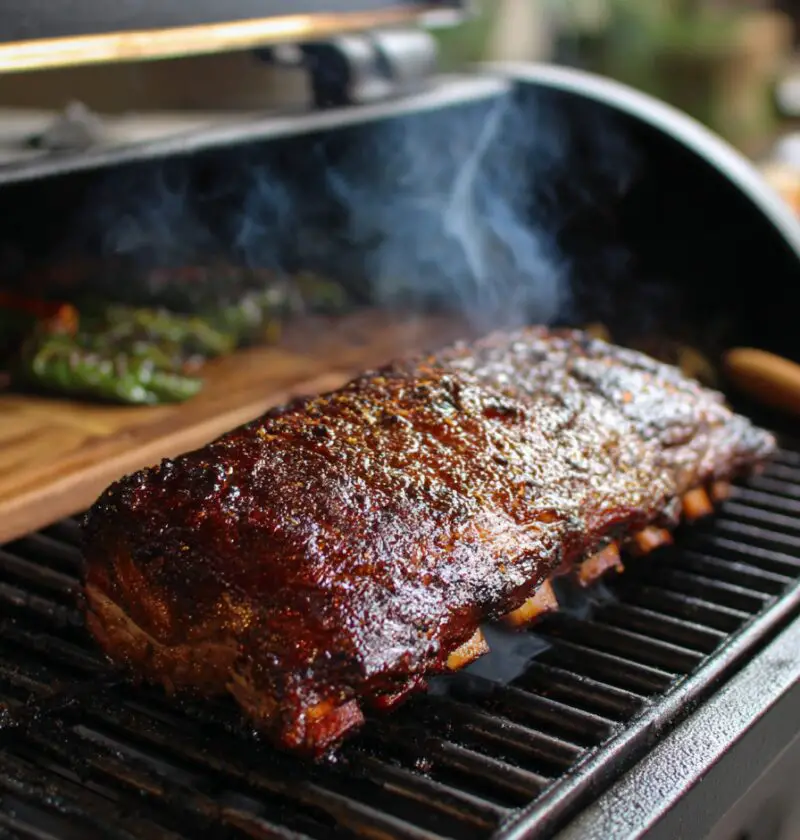
Once your pellet smoker grill is at 225°F and producing thin blue smoke (not thick white smoke), place the pork shoulder in the center of the grate, fat cap up. Place the ribs bone side down beside it, leaving a little space so the smoke can circulate. Close the lid and don’t keep peeking—every peek lets heat out.
8. Make your spritz
In a spray bottle or small bowl, combine apple juice, apple cider vinegar, and Worcestershire sauce. If you don’t have a spray bottle, you can gently brush it on later with a silicone brush.
9. Smoke, spritz, and be patient
Smoke at 225°F for about 3 hours without touching the meat. After 3 hours, open the lid briefly and spritz the ribs and pork shoulder with your apple juice mix. Repeat the spritz every 45–60 minutes. You’re adding flavor, moisture, and a bit of that smoker marinade effect as the meat slowly cooks.
10. Wrap the ribs (optional but helpful)
At around the 4–5 hour mark (when the ribs have good color and the meat is pulling back slightly from the bones), you can wrap them tightly in heavy-duty foil or butcher paper with a light spritz inside. This step helps them get tender and keeps them from drying out. Return them to the smoker, still at 225°F, for another 1–2 hours.
11. Monitor internal temperatures
Use an instant-read thermometer or a probe thermometer—this is where pellet smoker techniques get precise.
- Pork shoulder: cook until 195–203°F internal temperature.
- Ribs: usually tender when the meat reaches around 190–200°F and a toothpick slides in between bones with little resistance.
The total time for pork shoulder at 225°F is usually 8–10 hours for a 4–5 lb roast, depending on your particular smoker and weather. Ribs usually take about 5–7 hours total.
12. Rest the meat
Once the pork shoulder and ribs hit temp, remove them from the smoker. Let the ribs rest in the foil for at least 20–30 minutes. Wrap the pork shoulder in foil or butcher paper, then a towel, and let it rest in a cooler or on the counter for at least 45–60 minutes. Resting is where the juices redistribute and the texture settles; don’t rush it.
13. Slice, pull, and serve
Slice the ribs between the bones. For the pork shoulder, remove the bone (it should slide right out) and pull the meat apart with your hands or meat claws. Taste and adjust seasoning with a pinch of salt or a little extra rub if needed. Serve with your favorite barbecue sauce on the side so everyone can sauce their own—this lets that beautiful wood smoke flavor shine.
Servings & Timing
-
Yield:
- 1 full rack of ribs (serves about 3–4)
- 1 small pork shoulder, 4–5 lbs (serves about 8–10, depending on appetites and sides)
-
Prep Time: 30–40 minutes (trimming, rubbing, preheating)
-
Cook Time:
- Ribs: 5–7 hours low and slow
- Pork shoulder: 8–10 hours low and slow
-
Rest Time: 45–60 minutes for pork shoulder; 20–30 minutes for ribs
-
Total Time: Around 10–12 hours, mostly hands-off smoker time
Yes, it’s a long cook smoking day—but honestly, that’s part of the charm. Start in the morning, and you’ll sit down to smoked barbecue recipes worthy of a little bragging by dinner.
Variations (Make This Pellet Smoker Recipe Your Own)
- Sweet & Smoky Applewood Pork – Use applewood pellets, add 1 extra tbsp brown sugar to the rub, and brush the ribs with a light layer of apple jelly during the last 20 minutes.
- Texas-Style Brisket Version – Skip the sugar, use only salt, pepper, garlic, and a bit of smoked paprika, then smoke a small brisket flat instead of pork shoulder with mesquite pellet smoking.
- Spicy Competition Barbecue – Increase cayenne to 2 tsp, add 1 tsp chipotle powder, and finish the ribs with a thin glaze of spicy barbecue sauce during the last 15 minutes.
- Smoked Chicken Recipe Twist – Use bone-in chicken thighs or whole chickens, reduce the cooking time (usually 1.5–3 hours at 250°F), and use applewood or a mild hickory blend.
- Herb-Infused Turkey – For a smoked turkey recipe, mix 2 tsp dried thyme and 2 tsp dried rosemary into the rub and use a blend of hickory and apple pellets.
- Low-Sugar Version – Cut the brown sugar in half and skip any sweet glazes; the wood smoke flavor and spices still carry the dish.
Storage & Reheating
Smoked meat is one of those backyard smoker recipes that tastes just as good (sometimes better) the next day.
- Fridge: Store pulled pork and sliced ribs in airtight containers with a little extra cooking juice or a splash of broth to keep them moist. They keep well for 3–4 days.
- Freezer: Portion into freezer bags or containers, removing as much air as you can. Smoked meats freeze well for up to 2–3 months.
- Reheating:
- For best results, reheat covered in a 275°F oven with a splash of broth or apple juice until warmed through.
- You can also reheat pulled pork gently in a covered skillet over low heat with a bit of liquid.
- Make-Ahead Tip: Smoke the pork shoulder a day ahead, refrigerate, then reheat gently before serving; it actually holds the smoke flavor beautifully and makes party day less stressful.
Notes from My Patio Table
- Pellet smoker meals are forgiving, but weather still matters. Wind and cold can pull heat from your smoker, so expect slightly longer cooking times if you’re smoking in colder months.
- Trust internal temperature and tenderness over the clock. Two shoulders the same size can still cook at different rates.
- If your pellet smoker grill tends to run hot or cool, adjust your set temp by 10–15 degrees and keep an eye on your built-in thermometer versus a separate digital one.
- For stronger smoke flavor, some folks smoke at 180–200°F for the first couple of hours, then bump to 225°F. If you like heavier smoke, you might enjoy that method.
- Don’t overload the smoker. Good airflow equals even smoking; crowding the grates can lead to uneven results.
- You know what? Take notes. Keep a little “smoking journal” with pellet type, weather, cut of meat, and timing. After a few cooks, you’ll have your own personal competition barbecue recipes log.
FAQs About This Pellet Smoker Recipe
1. Can I use this recipe on a gas grill with a smoke tube?
Yes—use a smoker tube filled with pellets and keep your grill at 225°F, but you may get a slightly lighter smoke flavor than a dedicated wood pellet smoker.
2. What’s the best pellet flavor for beginners?
Hickory or a hickory/apple blend is a safe, classic choice for most pellet grill recipes—bold but not overwhelming.
3. How do I prevent my meat from drying out?
Keep the pellet smoker temperature steady, spritz occasionally, don’t trim away all the fat, and avoid overcooking beyond the recommended internal temps.
4. Do I really need to wrap the ribs?
You don’t have to; unwrapped ribs get a firmer bark, while wrapped ribs are usually more tender and juicy—try both and see what your family prefers.
5. Can I smoke multiple meats at once?
Yes, that’s one of the joys of outdoor smoking recipes; just place bigger cuts like pork shoulder closer to the hotter spots and smaller cuts toward the cooler edges and pull them off as they finish.
6. Why did my pork shoulder “stall” in temperature?
Around 150–170°F, the meat often stalls as moisture evaporates; wrapping in foil or butcher paper helps push through this stall more quickly.
7. Should I sauce the meat during smoking or after?
For most smoked barbecue recipes, it’s best to add sauce only during the last 15–20 minutes or serve it on the side so the bark doesn’t get soggy or burned.
8. Can I use this rub on vegetables or tofu?
Absolutely—brush with a little oil, sprinkle on the rub, and smoke at 225–250°F until tender; it’s a fun way to offer flavorful sides for guests who don’t eat meat.
Conclusion
This pellet smoker recipe isn’t just about ribs and pork shoulder; it’s a simple, reliable roadmap you can use across your smoked meat recipes—from brisket and turkey to chicken and beyond. With steady low and slow smoking, a good barbecue dry rub, and the gentle, consistent heat of a pellet smoker grill, you’ll be turning out outdoor smoking recipes that taste like they came straight from a barbecue competition tent.
If you try this, I’d truly love to hear how your cook went—what pellets you used, which cuts you chose, and how your family or guests reacted. Leave a comment with your tweaks and questions, and if you’re hooked on pellet smoker meals now, go peek at more smoker recipe ideas and side dishes to round out your next backyard feast.
Pellet Smoker Recipe (Ribs & Pork Shoulder)
Ingredients
- 1/4 cup brown sugar packed, light or dark
- 2 tablespoons kosher salt use a little less if sensitive to salt
- 2 tablespoons smoked paprika
- 1 tablespoon black pepper freshly ground if possible
- 1 tablespoon garlic powder
- 1 tablespoon onion powder
- 2 teaspoons chili powder
- 1 teaspoon cayenne pepper reduce or skip for milder heat
- 1 teaspoon mustard powder optional, adds tang
- 1 cup apple juice or apple cider
- 1/4 cup apple cider vinegar
- 1 tablespoon Worcestershire sauce
- 1 rack pork spare ribs or baby back ribs about 2.5–3 lbs
- 1 pork shoulder (Boston butt) 4–5 lbs, bone-in preferred
- 2-3 tablespoons yellow mustard used as a binder; you won’t taste it
- hardwood pellets hickory, mesquite, applewood, or blend for pellet smoker
Instructions
- In a small bowl, combine the brown sugar, kosher salt, smoked paprika, black pepper, garlic powder, onion powder, chili powder, cayenne pepper, and mustard powder. Stir well with a fork to break up any clumps until you have an even, sandy mixture.1/4 cup brown sugar, 2 tablespoons kosher salt, 2 tablespoons smoked paprika, 1 tablespoon black pepper, 1 tablespoon garlic powder, 1 tablespoon onion powder, 2 teaspoons chili powder, 1 teaspoon cayenne pepper, 1 teaspoon mustard powder
- Pat the ribs dry with paper towels. If there is a thin membrane on the bone side, slide a butter knife under one edge, grip it with a paper towel, and pull to remove so the ribs absorb more smoke and turn out more tender.1 rack pork spare ribs or baby back ribs
- Trim any large, hard pieces of fat from the pork shoulder, leaving a thin fat cap. Pat dry with paper towels. Lightly score the fat cap in a shallow crosshatch pattern so the rub and smoke can penetrate.1 pork shoulder (Boston butt)
- Rub a thin, even layer of yellow mustard all over the ribs and pork shoulder. This helps the dry rub adhere during the long smoke.2-3 tablespoons yellow mustard, 1 rack pork spare ribs or baby back ribs, 1 pork shoulder (Boston butt)
- Generously sprinkle the dry rub over all sides of the ribs and pork shoulder. Gently press the rub into the meat rather than rubbing hard so it forms an even coating that will become the bark.1/4 cup brown sugar, 2 tablespoons kosher salt, 2 tablespoons smoked paprika, 1 tablespoon black pepper, 1 tablespoon garlic powder, 1 tablespoon onion powder, 2 teaspoons chili powder, 1 teaspoon cayenne pepper, 1 teaspoon mustard powder, 1 rack pork spare ribs or baby back ribs, 1 pork shoulder (Boston butt)
- Let the seasoned ribs and pork shoulder rest at room temperature for 20–30 minutes. Meanwhile, fill the hopper of your pellet smoker with hardwood pellets and preheat to 225°F with the lid closed for about 15 minutes, until the smoker is producing thin blue smoke.hardwood pellets, 1 rack pork spare ribs or baby back ribs, 1 pork shoulder (Boston butt)
- Place the pork shoulder in the center of the smoker grate, fat cap up. Place the ribs bone side down beside it, leaving space between pieces for smoke circulation. Close the lid.1 rack pork spare ribs or baby back ribs, 1 pork shoulder (Boston butt)
- In a spray bottle or small bowl, combine the apple juice, apple cider vinegar, and Worcestershire sauce. Set aside for spritzing during the cook.1 cup apple juice, 1/4 cup apple cider vinegar, 1 tablespoon Worcestershire sauce
- Smoke the ribs and pork shoulder at 225°F for about 3 hours without opening the lid. After 3 hours, briefly open the smoker and spritz the meat with the apple juice mixture. Continue smoking, spritzing every 45–60 minutes to add flavor and moisture.1 cup apple juice, 1/4 cup apple cider vinegar, 1 tablespoon Worcestershire sauce, 1 rack pork spare ribs or baby back ribs, 1 pork shoulder (Boston butt)
- At around the 4–5 hour mark, when the ribs have good color and the meat is pulling back slightly from the bones, wrap them tightly in heavy-duty foil or butcher paper with a light spritz inside. Return the wrapped ribs to the smoker at 225°F for another 1–2 hours to help them become tender and juicy.1 rack pork spare ribs or baby back ribs
- Use an instant-read or probe thermometer to check doneness. Cook the pork shoulder until it reaches 195–203°F internal temperature. The ribs are typically done around 190–200°F when a toothpick slides between the bones with little resistance. Expect 8–10 hours total for a 4–5 lb pork shoulder and 5–7 hours total for the ribs at 225°F.1 rack pork spare ribs or baby back ribs, 1 pork shoulder (Boston butt)
- Remove the ribs and pork shoulder from the smoker once they reach temperature. Let the wrapped ribs rest for 20–30 minutes. Wrap the pork shoulder in foil or butcher paper, then a towel, and rest for at least 45–60 minutes to allow the juices to redistribute.1 rack pork spare ribs or baby back ribs, 1 pork shoulder (Boston butt)
- Slice the ribs between the bones. Remove the bone from the pork shoulder and pull the meat into shreds. Taste and adjust seasoning with a pinch of extra rub or salt if needed. Serve with barbecue sauce on the side so guests can sauce to taste.1 rack pork spare ribs or baby back ribs, 1 pork shoulder (Boston butt)