Lemon Meringue Fudge Recipe
This Lemon Meringue Fudge Recipe brings together creamy lemon fudge, sweet marshmallow meringue, and a bright citrus tang—no oven, no fancy candy thermometers, just pure lemon dessert joy in a pan.
I’m a 50‑something home cook who’s lived through the heyday of boxed pudding desserts, microwave mug cakes, and now viral TikTok treats—and I’ll tell you, this meringue fudge might be one of the most crowd‑pleasing lemon sweets I’ve ever served. It has all the personality of a classic lemon meringue pie, but in a fun, homemade fudge format you can cut into squares, tuck into gift boxes, or stash in the freezer for a “just one more piece” moment.
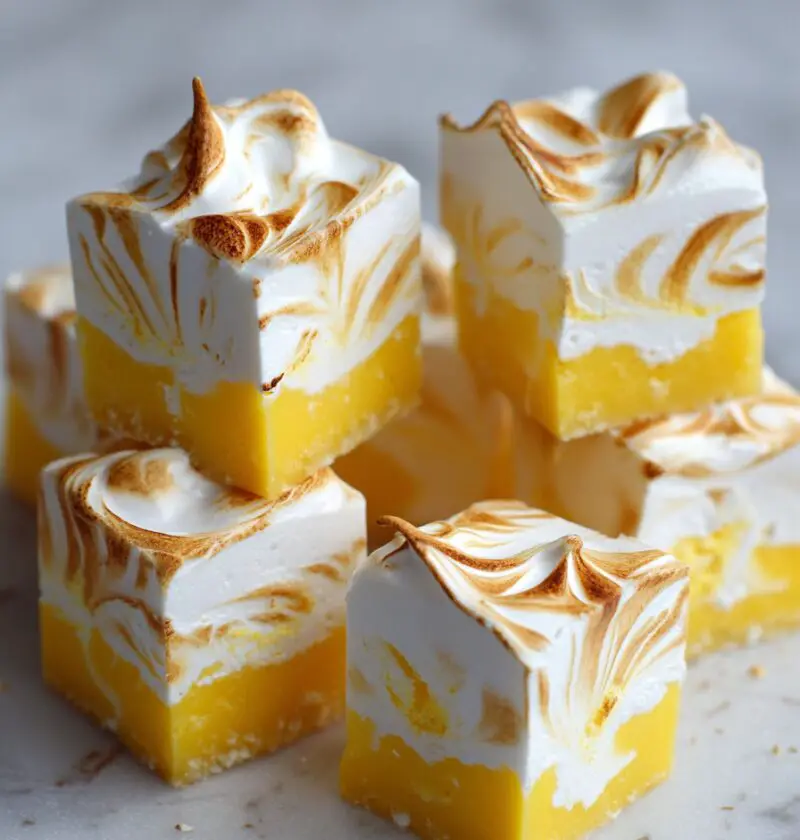
You get the best of both worlds: that tangy fudge center, a creamy lemon candy texture from white chocolate and condensed milk, plus a cloud‑like marshmallow meringue swirl on top. I love this recipe for spring holidays, showers, and honestly any time citrus is calling your name.
Why You’ll Love This Lemon Meringue Fudge Recipe
- No oven needed – This is a stovetop fudge recipe; your oven gets the night off.
- Big lemon flavor – Bright, tangy fudge thanks to real lemon juice, zest, and a bit of extract.
- Pretty enough for parties – The white and yellow swirls with fluffy meringue look bakery‑worthy.
- Beginner‑friendly – No candy thermometer, no tricky stages—just gentle heating and stirring.
- Great for gifting – Packs well in tins or treat bags and looks gorgeous in holiday or hostess boxes.
- Make‑ahead friendly – Keeps well in the fridge and freezer, so you can prep days in advance.
- Flexible and fun – Easy to tweak for gluten‑free, extra tangy, or even a toasted meringue twist.
- Kid‑approved – It’s sweet like candy, but with enough citrus fudge tang that adults love it too.
If you’ve ever been nervous about homemade fudge, this is a very forgiving place to start. Think of it as a creamy lemon candy bar with a marshmallow meringue hat.
Ingredients
Here’s everything you need for a batch of this creamy lemon meringue fudge. I’m including a few notes so you know where you can bend and where you really shouldn’t.
For the Lemon Fudge Base
- 3 cups (about 18 oz / 510 g) white chocolate chips
- Use good‑quality chips that melt smoothly (Ghirardelli or Guittard work well).
- 1 can (14 oz / 396 g) sweetened condensed milk
- This is what makes the fudge rich and creamy—don’t swap with evaporated milk.
- 4 tablespoons unsalted butter, cut into pieces
- 1/3 cup fresh lemon juice (about 2–3 lemons)
- Fresh juice gives the best tang; bottled will work in a pinch, but taste and adjust.
- 2–3 teaspoons finely grated lemon zest
- Use a microplane and avoid the white pith, which tastes bitter.
- 1 teaspoon lemon extract (optional but recommended for stronger flavor)
- 1/4 teaspoon fine sea salt
- Helps balance the sweetness of the fudge recipe and brightens the citrus flavor.
- A few drops yellow gel food coloring (optional, for a soft lemon color)
For the Marshmallow “Meringue” Swirl
This isn’t a classic whipped egg white meringue; it’s a marshmallow meringue‑style topping that’s safer and easier for beginners.
- 1 1/2 cups mini marshmallows
- 1 tablespoon butter
- 1 teaspoon vanilla extract
- Pinch of salt
If you want a true meringue fudge topping with egg whites, see the Variations section below.
To Finish (Optional but lovely)
- Extra lemon zest for sprinkling
- Crushed graham crackers (for a “pie crust” vibe on top)
- A tiny sprinkle of flaky sea salt to cut the sweetness

Directions for the Lemon Meringue Fudge Recipe
You’ll need an 8‑inch square pan, parchment paper, a medium saucepan, and a heat‑safe spatula or wooden spoon.
-
Prepare the pan
Line an 8×8‑inch baking pan with parchment paper, letting it hang over the sides to form a “sling.” Lightly grease the parchment with a tiny bit of butter or nonstick spray so the citrus fudge releases cleanly. -
Melt the white chocolate and condensed milk
In a medium, heavy‑bottomed saucepan, add the white chocolate chips, sweetened condensed milk, and 4 tablespoons butter. Set the heat to low. Stir constantly until the chips are almost melted and the mixture looks thick and glossy.
Tip: Keep the heat gentle—if white chocolate overheats, it can seize and turn grainy. -
Add the lemon flavor
Remove the pan from the heat. Stir in the lemon juice, lemon zest, lemon extract (if using), and 1/4 teaspoon salt. The mixture will look slightly thinner at first; keep stirring until everything is fully combined and smooth.
Taste a tiny bit (careful, it’s hot). If you want more tang, you can add another teaspoon of lemon juice. -
Color the fudge (optional)
If you’d like a pretty, creamy lemon color, add a drop or two of yellow gel food coloring. Stir well, then decide if you want a deeper shade and add another drop.
Here’s the thing: a little gel color goes a long way—start small. -
Pour the lemon fudge into the pan
Scrape the lemon fudge mixture into the prepared pan and smooth the top with an offset spatula or the back of a spoon. Set aside at room temperature while you make the marshmallow meringue layer. It will start to thicken as it cools. -
Make the marshmallow “meringue” topping
In a clean saucepan (or wipe out the one you used), add the mini marshmallows, 1 tablespoon butter, vanilla extract, and a pinch of salt. Melt over low heat, stirring until completely smooth and creamy.
It should look fluffy and glossy—like a thick, pourable marshmallow cream. -
Swirl on the topping
Working fairly quickly, pour or dollop the warm marshmallow mixture over the lemon fudge base. Use a knife or skewer to gently swirl the two layers together, creating a meringue‑like pattern. Don’t over‑swirl, or you’ll lose the contrast.
If you’re adding crushed graham crackers or extra zest, sprinkle them on now while everything is still soft. -
Chill until firm
Cover the pan loosely (a piece of foil works well) and transfer to the refrigerator. Chill for at least 3–4 hours, or until the meringue fudge is firm enough to cut. Overnight is even better for clean slices. -
Cut into squares and serve
Use the parchment sling to lift the fudge out of the pan and place it on a cutting board. With a sharp knife, cut into 1‑ to 1.5‑inch squares. Wipe the knife between cuts for neat edges.
Serve chilled or allow the lemon fudge to sit at room temperature for 5–10 minutes for a softer, creamier bite.
Servings & Timing
- Yield: About 25–36 small squares, depending on how you slice
- Prep Time: 15–20 minutes active time
- Chill Time: 3–4 hours in the fridge (or up to overnight)
- Total Time: About 3.5–4.5 hours, most of it hands‑off
From a practical standpoint, this is an ideal “day before” dessert recipe—make it at night, let it chill, and you’re party‑ready by morning.
Variations on This Tangy Fudge
You know what? Once you’ve made this once, it’s hard not to start playing with it. Here are some fun twists:
- Toasted Meringue Fudge: Make a real egg white meringue topping, spread it on the chilled fudge, and briefly toast it with a kitchen torch for that classic pie look.
- Extra Tangy Lemon Fudge: Add an extra tablespoon of lemon juice and an extra teaspoon of zest for folks who love a really sharp citrus dessert.
- Gluten‑Free Lemon Meringue Fudge: Skip the graham cracker garnish or use certified gluten‑free cookies; the base fudge is naturally gluten‑free.
- Lemon Berry Swirl: Dot the top with small spoonfuls of raspberry or blueberry jam before swirling the marshmallow layer.
- Citrus Medley Fudge: Swap half the lemon juice for fresh lime or orange juice for a more complex citrus fudge flavor.
- White Chocolate Lemon Crunch: Stir in 1/2 cup crushed vanilla wafers or shortbread into the lemon fudge base before pouring into the pan.
Storage & Reheating (Thawing) Tips
- Room Temperature: For serving, you can keep the fudge at room temperature for 1–2 hours. It softens slightly but still holds its shape.
- Refrigerator: Store lemon meringue fudge in an airtight container in the fridge for up to 7–10 days. Layer pieces with parchment so they don’t stick.
- Freezer: For longer storage, freeze in a well‑sealed container for up to 2 months. Again, use parchment or wax paper between layers.
- Thawing: To enjoy from frozen, transfer the fudge to the fridge and let it thaw for a few hours or overnight. For faster thawing, place a few pieces on a plate at room temperature for about 20–30 minutes.
Since this is a candy‑style dessert, there’s no real reheating—just thawing. The texture actually holds up surprisingly well in the freezer, which makes it a nice “emergency dessert” to keep on hand.
Notes From My Kitchen
- Balancing sweetness and tang: White chocolate and condensed milk are sweet, so the lemon needs to be bold. If your lemons are mild, don’t be shy about adding more zest or a splash more juice.
- Don’t rush the melting: Low and slow heat is the key to smooth, creamy lemon fudge. If it starts to look grainy, pull it off the heat and stir vigorously; sometimes that rescues it.
- Use fresh lemons if you can: Fresh lemon zest is where most of that “wow” flavor comes from. If all you have is bottled juice, bump up the lemon extract a bit.
- Cut small pieces: This is a rich dessert recipe—small squares really are enough. I joke that this is “two‑bite fudge,” but for some of my friends it’s more like four small nibbles.
- Perfect for mixed dessert tables: Lemon meringue fudge is a nice contrast next to chocolate brownies, peanut butter bars, or cookies. The citrus brightens up a heavy dessert spread.
Every time I test another batch, someone “just swings by” the kitchen and asks, “Is that lemon I smell?” It’s the kind of dessert that quietly calls people to the counter.
FAQs About This Lemon Meringue Fudge Recipe
1. Can I use white chocolate baking bars instead of chips?
Yes, you can use good‑quality white baking bars; just chop them into small pieces so they melt evenly. Measure by weight for the best results (about 18 oz total).
2. My fudge didn’t set—what went wrong?
Most often, it either didn’t chill long enough or had too much liquid. Make sure you measure the lemon juice and give it a full 4 hours (or overnight) in the fridge.
3. Can I make this lemon fudge without sweetened condensed milk?
Not with this exact method. Condensed milk is what gives the right creamy texture—if you swap it, you’re essentially changing the whole recipe and the results can be unpredictable.
4. Is this safe for kids if I use a real meringue?
Yes, as long as you make a cooked meringue (Swiss or Italian style) where the egg whites reach a safe temperature. The marshmallow version in this recipe is even simpler and very kid‑friendly.
5. Can I reduce the sugar?
Because this is candy, you can’t really reduce the sweetness without changing the texture. What you can do is boost lemon zest and salt to balance the flavor so it tastes less cloying.
6. What if I don’t have lemon extract?
You can skip it and add an extra teaspoon of zest instead. The flavor will be a bit softer but still delicious and very clearly lemon meringue.
7. Can I make this fudge recipe a day or two ahead?
Absolutely. This is actually better after it rests overnight, and it keeps nicely in the fridge for several days, so it’s a good make‑ahead lemon dessert for holidays or potlucks.
8. How do I get really clean slices for gift boxes?
Use a long, sharp knife, wipe it with a warm, damp cloth between cuts, and cut straight down rather than sawing. Chilling the pan overnight helps you get those bakery‑style edges.
Conclusion
This Lemon Meringue Fudge Recipe takes everything people love about classic lemon meringue—bright citrus, creamy texture, and a soft, sweet topping—and turns it into an easy, no‑bake fudge that feels a little bit fancy without a lot of work. It’s sturdy enough for gift boxes, pretty enough for any dessert table, and simple enough for a weekday treat.
If you make this lemon meringue, marshmallow‑swirled fudge, I’d love to hear how it turns out—leave a comment, share your tweaks, or tell me who you shared it with. And if you’re still in a lemon mood, try pairing it with lemon bars or a simple lemon loaf for a full citrus dessert spread.
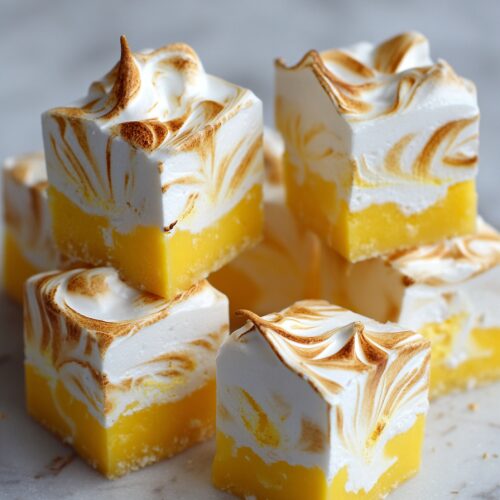
Lemon Meringue Fudge
Ingredients
- 3 cups white chocolate chips about 18 oz / 510 g; use good-quality chips that melt smoothly
- 14 oz can sweetened condensed milk about 396 g; do not substitute evaporated milk
- 4 tablespoons unsalted butter cut into pieces
- 1/3 cup fresh lemon juice about 2–3 lemons; fresh is best
- 2-3 teaspoons lemon zest finely grated; avoid the bitter white pith
- 1 teaspoon lemon extract optional but recommended for stronger flavor
- 1/4 teaspoon fine sea salt to balance sweetness and brighten flavor
- yellow gel food coloring a few drops, optional, for a soft lemon color
- 1 1/2 cups mini marshmallows
- 1 tablespoon butter for the marshmallow topping
- 1 teaspoon vanilla extract
- salt pinch, for the marshmallow topping
- lemon zest optional, extra, for sprinkling on top
- crushed graham crackers optional, for a pie crust-style garnish on top
- flaky sea salt optional, a tiny sprinkle on top to cut sweetness
Instructions
- Line an 8×8-inch baking pan with parchment paper, letting it hang over the sides to form a sling. Lightly grease the parchment with a small amount of butter or nonstick spray so the fudge releases cleanly.
- In a medium, heavy-bottomed saucepan, add the white chocolate chips, sweetened condensed milk, and 4 tablespoons unsalted butter. Set the heat to low and stir constantly until the chips are almost melted and the mixture looks thick and glossy. Keep the heat gentle to prevent the white chocolate from seizing.3 cups white chocolate chips, 14 oz can sweetened condensed milk, 4 tablespoons unsalted butter
- Remove the pan from the heat. Stir in the fresh lemon juice, lemon zest, lemon extract (if using), and 1/4 teaspoon fine sea salt. The mixture may thin slightly at first; keep stirring until everything is fully combined and smooth. Carefully taste a tiny bit and add a little more lemon juice if you prefer extra tang.1/3 cup fresh lemon juice, 2-3 teaspoons lemon zest, 1 teaspoon lemon extract, 1/4 teaspoon fine sea salt
- If desired, add a drop or two of yellow gel food coloring to the warm lemon fudge mixture. Stir well and add more gel, a drop at a time, until you reach a soft lemon color. A little gel color goes a long way, so start with a very small amount.yellow gel food coloring
- Scrape the lemon fudge mixture into the prepared pan and smooth the top with an offset spatula or the back of a spoon. Set the pan aside at room temperature while you make the marshmallow topping. The fudge will start to thicken as it cools.
- In a clean saucepan (or wipe out the one you used), add the mini marshmallows, 1 tablespoon butter, vanilla extract, and a pinch of salt. Melt over low heat, stirring constantly, until the mixture is completely smooth, creamy, and fluffy, like a thick pourable marshmallow cream.1 1/2 cups mini marshmallows, 1 tablespoon butter, 1 teaspoon vanilla extract, salt
- Working fairly quickly while the marshmallow mixture is warm, pour or dollop it over the lemon fudge base. Use a knife or skewer to gently swirl the two layers together, creating a meringue-like pattern without overmixing. If using extra lemon zest, crushed graham crackers, or flaky sea salt, sprinkle them over the top now while everything is still soft.lemon zest, crushed graham crackers, flaky sea salt
- Cover the pan loosely with foil or a lid and transfer it to the refrigerator. Chill for at least 3–4 hours, or until the fudge is firm enough to cut cleanly. For the neatest slices, let it chill overnight.
- Use the parchment sling to lift the chilled fudge out of the pan onto a cutting board. With a sharp knife, cut into 1- to 1.5-inch squares, wiping the knife clean between cuts for tidy edges. Serve chilled or let the pieces sit at room temperature for 5–10 minutes for a softer, creamier bite.