Hot Cross Buns Recipe
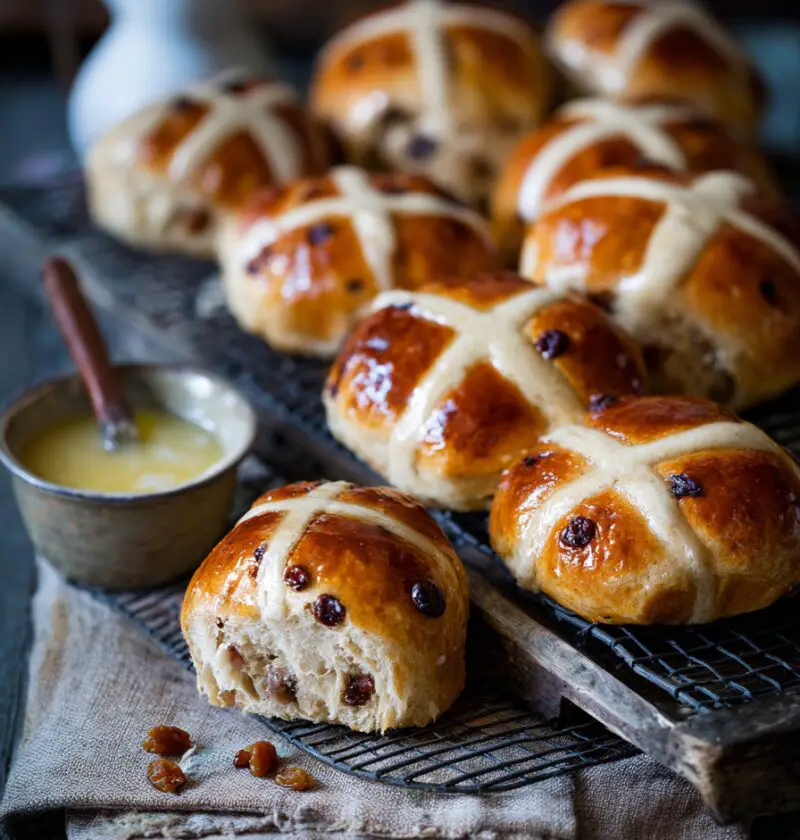
If there’s ever a baked treat that feels like spring on a plate, it’s this Hot Cross Buns Recipe—soft, warmly spiced, lightly sweet, and studded with juicy dried fruit, all finished with that classic cross and a shiny glaze.
A Cozy Classic Worth Baking Every Spring
Hot cross buns are traditional Easter bread rolls made with yeast, warming spices, and dried fruit, usually raisins or currants, then marked with a simple flour cross before baking. They’re tender, fragrant, and just a little nostalgic—the kind of bake that makes the whole kitchen smell like cinnamon, nutmeg, and comfort.
I’ve been making some version of these homemade hot cross buns for years, usually the week before Easter, when I want something special for brunch but not fussy. And I’ll tell you, there’s something downright lovely about pulling a tray of golden spiced sweet buns from the oven while the coffee’s brewing. They feel festive, yes, but not precious. You can serve them warm with butter, tuck them into an Easter breakfast spread, or sneak one in the afternoon with tea. I’ve done all three.
What makes this Hot Cross Buns Recipe especially nice is the balance: enough spice to feel traditional, enough fruit to keep every bite interesting, and a soft enriched dough that stays tender instead of heavy. Compared with many store-bought versions, these have better flavor, less excess sweetness, and a fresher texture. That matters. In recipe testing, I found that using a moderate amount of sugar and enriched dough ingredients like milk, butter, and egg gives you that bakery-style softness without making the buns overly rich.
Why You’ll Love This Recipe
- Soft, fluffy texture with a tender crumb
- Filled with plump raisins for classic fruit filled buns flavor
- Warm cinnamon and spice in every bite
- Perfect for Easter brunch, spring gatherings, or weekend baking
- Freezer-friendly, so you can make them ahead
- Easier than they look—truly, don’t let yeast scare you
- Classic cross topping gives them that beautiful traditional look
- Light glaze adds shine and a gentle sweetness
- Wonderful warm, toasted, or split and buttered
- A lovely festive bread recipe to share with family and friends
Ingredients You’ll Need
Here’s everything for these classic hot cross buns, with a few simple tips along the way.
For the dough
- 1 cup whole milk, warmed to about 105–110°F
(Warm, not hot—too hot can harm the yeast. I usually test it with my finger; it should feel like warm bath water.) - 2 1/4 teaspoons active dry yeast
(That’s one standard packet. Instant yeast also works.) - 1/4 cup granulated sugar
- 3 1/2 to 4 cups all-purpose flour
(Start with 3 1/2 cups and add more only if needed.) - 1 teaspoon salt
- 1 1/2 teaspoons ground cinnamon
- 1/4 teaspoon ground nutmeg
- 1/4 teaspoon ground allspice
(You can swap clove for allspice if that’s what you have.) - 2 large eggs, room temperature
- 1/4 cup unsalted butter, softened
- 3/4 cup raisins or currants
(For softer raisin buns recipe texture, soak them in warm water for 10 minutes, then drain well.) - 1/4 cup orange zest or finely chopped candied orange peel, optional
(This brightens the flavor beautifully.)
For the cross
- 1/2 cup all-purpose flour
- 5 to 6 tablespoons water
(Add slowly until you get a thick pipeable paste.)
For the glaze
- 2 tablespoons apricot jam or orange marmalade
- 1 tablespoon warm water

How to Make Hot Cross Buns Without Stress
-
Wake up the yeast.
In a large mixing bowl, stir the warm milk, yeast, and 1 tablespoon of the sugar together. Let it sit for 5 to 10 minutes until foamy. If it doesn’t foam, your yeast may be old or the milk may have been too cool—start fresh here, because this step matters. -
Mix the dry ingredients.
In another bowl, whisk together 3 1/2 cups flour, the remaining sugar, salt, cinnamon, nutmeg, and allspice. This helps distribute the spice evenly, so you don’t get one bite that tastes like Christmas and another that tastes plain. -
Build the dough.
Add the eggs and softened butter to the yeast mixture, then stir in the dry ingredients. Mix until a shaggy dough forms. If you’re using a stand mixer, use the dough hook on low speed for about 6 to 8 minutes. By hand, knead for about 8 to 10 minutes on a lightly floured surface until smooth and elastic. -
Work in the fruit.
Gently knead in the raisins or currants and the orange zest or candied peel, if using. If the fruit resists, and it often does, press it in gradually over a minute or two. The dough should feel soft and slightly tacky, not sticky like pancake batter. -
Let the dough rise.
Place the dough in a lightly greased bowl, cover it with a clean towel or plastic wrap, and let it rise in a warm spot for 1 to 1 1/2 hours, or until doubled in size. I like to set mine in a turned-off oven with the light on. It’s a little old-school, but it works. -
Shape the buns.
Punch down the dough gently and divide it into 12 equal pieces. Shape each piece into a smooth ball and place them in a greased 9×13-inch baking dish or on a lined baking sheet, slightly spaced apart. This gives you that lovely pull-apart effect once they bake. -
Give them a second rise.
Cover the shaped buns loosely and let them rise again for 30 to 45 minutes, until puffy. They don’t need to double this time—just look airy and fuller. Meanwhile, preheat your oven to 375°F. -
Pipe the crosses.
Mix the flour and water for the cross into a thick paste. Spoon it into a piping bag or zip-top bag with the corner snipped off, then pipe lines across the buns one way, then the other way to form crosses. Keep the paste thick enough to hold its shape. -
Bake until golden.
Bake for 20 to 25 minutes, until the tops are golden brown and the buns sound slightly hollow when tapped. If you like numbers—and I do when baking enriched dough—the internal temperature should be about 190°F. -
Brush with glaze.
Warm the apricot jam with the water until smooth, then brush it over the warm buns. This gives your glazed cross buns that beautiful bakery finish and a subtle fruity shine. -
Cool just enough to enjoy.
Let the buns cool for about 10 to 15 minutes before serving. Honestly, they’re at their very best slightly warm, with a pat of salted butter melting into the middle.
Servings & Timing
- Yield: 12 buns
- Prep Time: 25 minutes
- Rise Time: 1 hour 45 minutes to 2 hours 15 minutes
- Bake Time: 20 to 25 minutes
- Total Time: About 2 hours 30 minutes to 3 hours
That may sound like a stretch, but most of it is hands-off. The actual active time is quite manageable, especially for a homemade traditional Easter bread.
Fun Variations to Try
If you’re the sort who likes to tweak a classic, here are a few easy ideas:
- Chocolate Chip Version: Replace half the raisins with mini chocolate chips for a kid-friendly Easter treat.
- Citrus Lover’s Buns: Add lemon zest with the orange zest for a brighter, fresher flavor.
- Apple Cinnamon Style: Swap raisins for chopped dried apples for a cozy spin on cinnamon spice buns.
- Cranberry Orange Buns: Use dried cranberries instead of currants for a tart-sweet variation.
- Whole Wheat Blend: Replace up to 1 cup of the all-purpose flour with whole wheat flour for a nuttier taste.
- Dairy-Free Version: Use plant milk and vegan butter; the texture will be slightly different, but still lovely.
Storage & Reheating
These yeast sweet buns store well, which is one more reason I come back to this recipe year after year.
- Room Temperature: Store in an airtight container for up to 2 days.
- Refrigerator: They’ll keep for up to 5 days, though refrigeration can dry them out a bit.
- Freezer: Freeze in a sealed freezer bag for up to 2 months. I like to wrap them individually if I know we’ll be grabbing one at a time.
Reheating tips
- Warm a bun in the microwave for about 10 to 15 seconds.
- Or toast split buns lightly and spread with butter, cream cheese, or a little orange marmalade.
Make-ahead advice
You can shape the buns the night before, cover them tightly, and refrigerate them overnight. The next morning, let them sit at room temperature for 30 to 45 minutes before piping the crosses and baking. That’s especially handy for Easter morning when you’d rather sip coffee than wrestle dough.
Notes From My Kitchen
A few things I learned while testing this Hot Cross Buns Recipe might save you some guesswork.
First, don’t overload the dough with flour. It’s tempting—especially if you’re kneading by hand—but a softer dough gives you softer buns. Add extra flour only a tablespoon at a time if the dough is truly unmanageable.
Second, soaking the raisins really helps. It sounds like a small step, and it is, but those little bits of fruit stay plump instead of chewy. That’s a worthwhile difference.
Third, the second rise affects the final texture more than folks think. Under-proofed buns bake up dense; properly risen buns feel light and springy. If your kitchen is chilly, be patient. Bread has its own timeline.
And one more thing: the glaze may seem optional, but I wouldn’t skip it. These are good without it, sure, but with that glossy finish they look and taste like proper homemade hot cross buns from a sweet little bakery.
FAQs
Can I use instant yeast instead of active dry yeast?
Yes. Use the same amount and mix it right in with the dry ingredients, though I still like blooming it if I want extra reassurance.
Why didn’t my dough rise?
Usually it’s one of three things: old yeast, milk that was too hot, or a room that was too cold. Yeast can be finicky, but not impossible.
Can I make these without dried fruit?
Absolutely. They’ll still be delicious, though less traditional. You can replace the fruit with chocolate chips or leave it out entirely.
What’s the best flour for hot cross buns?
All-purpose flour works beautifully for a soft, tender bun. Bread flour gives a slightly chewier texture, which some bakers prefer.
Can I freeze the dough instead of the baked buns?
Yes, after shaping. Freeze the shaped dough balls on a tray, then transfer to a bag; thaw and let rise before baking.
Why are my buns dense instead of fluffy?
Dense buns usually mean too much flour or not enough rise time. A soft dough and patient proofing make a big difference.
How do I know when the buns are fully baked?
They should be golden on top and sound a little hollow when tapped. If you use a thermometer, aim for around 190°F in the center.
Can I make this easter buns recipe ahead for brunch?
Yes, and it works well. Refrigerating the shaped buns overnight is the easiest method for a smooth, no-rush morning.
A Few Final Thoughts Before You Bake
This Hot Cross Buns Recipe brings together everything we love about spring baking: warm spice, soft texture, bright fruit, and that timeless Easter charm. Whether you call them hot cross buns, spiced sweet buns, or your favorite easter buns recipe, they’re a delicious way to make the season feel special.
If you bake them, I’d love to hear how they turned out for you. Leave a comment, share your favorite variation, or save this recipe for your Easter table—and if you’re planning a brunch spread, pair these with fresh fruit, egg casserole, or a simple citrus salad for a meal that feels both easy and festive.