French Macarons Recipe
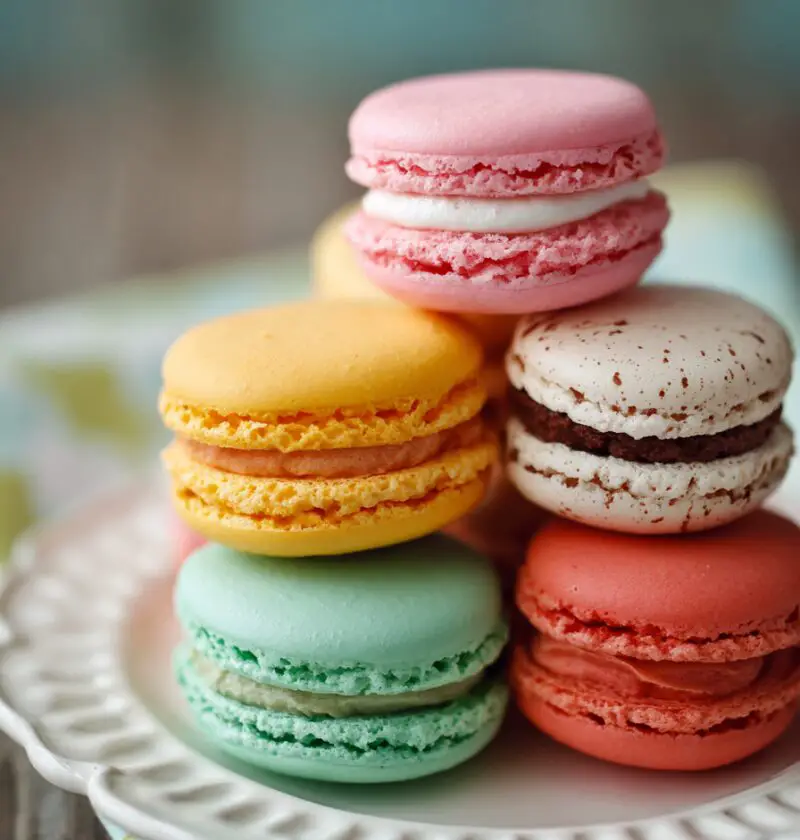
Delicate, chewy, and completely worthy of a fancy bakery box, this French Macarons Recipe gives you classic, colorful French macarons at home—with clear, no-stress steps and lots of practical tips from someone who’s made every mistake for you already.
I’m a 50-year-old mom, grandma, and lifelong baker, and I can tell you: the first time you pull a tray of homemade French almond cookies from the oven and see those perfect little “feet,” you’ll feel like you just brought a bit of Paris into your kitchen. These gluten free macarons look fancy, taste incredible, and once you understand the rhythm, they’re actually very doable. This is my go-to classic French macarons recipe, with a simple vanilla buttercream filling and plenty of ideas for chocolate, raspberry, and coffee versions too.
Why You’ll Love This French Macarons Recipe
- Step-by-step and beginner-friendly – Written for real home bakers, not pastry school students.
- Uses the classic French meringue method – No hot sugar syrup required, just whipped egg white macarons.
- Bakery-style texture – Shiny macaron shells with a thin crisp exterior and soft, chewy centers.
- Naturally gluten free – Almond flour macarons are perfect for gluten-sensitive friends and family.
- Customizable flavors and colors – Turn this into a vanilla, chocolate, raspberry, or coffee macaron recipe with simple swaps.
- Great for parties and gifts – They hold well, pack beautifully, and always impress.
- Make-ahead friendly – Macarons taste even better after a short rest in the fridge.
- Data-tested tips that actually work – From oven temperature to aging the shells, these macaron baking tips come from lots of trial runs.
What Makes This French Macarons Recipe Special
French macarons have a bit of a reputation, don’t they? People talk about them like they’re some impossible French pastry recipe that only Parisian bakeries can handle. Honestly, that used to scare me off too.
Then, one December, my daughter asked if we could try “those pretty pastel cookies” for a holiday cookie box. I read a half-dozen macaron shells recipes, tested different temperatures, tried both French meringue macarons and Italian meringue macarons, and filled my kitchen with more imperfect macarons than I care to admit.
Here’s what I learned: if you use a scale, pay attention to your meringue, and follow a few visual cues, homemade French macarons are totally achievable. The technique matters more than how “fancy” you are as a baker.
This recipe uses:
- French meringue method – Egg whites whipped with granulated sugar.
- Finely ground almond flour – For that signature flavor and gluten free texture.
- Simple buttercream filling – Easy to flavor for endless macaron filling ideas.
It’s a great base recipe you can dress up for Valentine’s Day with pink raspberry macarons, for Christmas with peppermint or mocha, or keep classic with soft vanilla macaron cookies for a bridal shower or baby shower.
And because I know many of you care about ingredients: we’re using real butter, real vanilla, and no weird stabilizers. Just solid technique and a bit of patience.
Ingredients
For the most consistent results, I strongly recommend using a kitchen scale for this French Macarons Recipe. Macarons are a little picky about ratios, and grams keep things accurate.
For the macaron shells:
- 120 g fine almond flour (about 1 1/4 cups, spooned and leveled; use blanched, finely ground)
- 200 g powdered sugar (about 1 2/3 cups; sifted)
- 100 g egg whites (about 3 large egg whites; aged if possible, at room temperature)
- 100 g granulated sugar (about 1/2 cup; regular white sugar)
- 1/4 tsp cream of tartar (helps stabilize the meringue)
- 1/4 tsp fine sea salt
- 1 tsp pure vanilla extract (or almond extract for a stronger nutty flavor)
- Gel food coloring, optional (use gel or powder, not liquid, so you don’t thin the batter)
For the vanilla buttercream filling:
- 115 g (1/2 cup) unsalted butter, softened
- 240 g (2 cups) powdered sugar, sifted
- 1–2 Tbsp heavy cream or whole milk (for desired consistency)
- 1 tsp pure vanilla extract
- Pinch of fine sea salt
A few quick notes on ingredients:
- Almond flour: Look for brands labeled “superfine” (like Bob’s Red Mill finely ground almond flour). If it feels grainy, pulse it with the powdered sugar and sift well.
- Egg whites: Aging egg whites (separating them and leaving covered in the fridge 24–48 hours, then bringing to room temp) can give more stable French meringue macarons—but it’s not absolutely required.
- Food coloring: Gel colors from AmeriColor or Wilton work well for colorful French macarons without messing up the texture.

Directions
-
Prepare your pans and tools.
Line 2 baking sheets with parchment paper or silicone macaron mats. Fit a large piping bag with a round tip (about 1/2 inch). If you don’t have a tip, you can snip the end of the bag later. -
Sift dry ingredients (really do not skip).
In a medium bowl, whisk together almond flour and powdered sugar. Then sift the mixture through a fine-mesh sieve into another bowl, pressing gently with a spoon. Discard any large bits. This step gives you smooth macaron shells. -
Whip the egg whites to a foam.
In a clean, grease-free bowl, add egg whites, salt, and cream of tartar. Using a stand mixer with the whisk attachment (or a hand mixer), beat on medium speed until the egg whites look foamy—about 1–2 minutes. -
Add sugar gradually and build the meringue.
With the mixer running, slowly rain in the granulated sugar, about 1 tablespoon at a time. Continue beating on medium-high until you reach stiff, glossy peaks (another 5–7 minutes). The meringue should hold a straight peak when you lift the whisk. -
Add vanilla and color.
Beat in the vanilla extract for a few seconds. If you’re making colorful French macarons, add a small amount of gel food coloring now and mix just until evenly tinted. Remember, the color fades slightly when baked. -
Fold in the almond mixture – macaronage time.
Add about 1/3 of the almond flour mixture to the meringue and gently fold with a rubber spatula, going around the bowl and then through the center. Repeat with the rest of the dry ingredients. At first, the batter will feel stiff—keep folding gently. -
Reach the “lava” stage.
This is the part everyone worries about, but you’ll get the hang of it. You want the batter to flow slowly off the spatula like thick lava, forming ribbons that disappear back into the bowl in about 10–15 seconds. If it breaks in chunks, it’s too stiff—fold a few more times. If it runs like pancake batter, it’s overmixed (try chilling it a bit before piping). -
Pipe the macaron shells.
Transfer the batter to your piping bag. Pipe 1 1/4-inch rounds onto your prepared trays, spacing them about 1 inch apart. Hold the bag straight up, squeeze, then stop and twist your wrist slightly to finish each circle. -
Tap to release air bubbles.
Firmly tap each baking sheet on the counter 4–5 times. You’ll see little bubbles rise to the surface. Pop any visible large bubbles with a toothpick for smoother tops. -
Rest the shells.
Let the piped macaron shells sit at room temperature for 25–45 minutes, depending on humidity, until the tops look dull and you can gently touch one without it sticking to your finger. This helps create the classic ruffled “feet.” -
Bake.
Preheat the oven to 300°F (150°C). Bake one tray at a time on the middle rack for 15–18 minutes. The macaron shells are done when they don’t wiggle much if you gently nudge one, and the tops feel set, not jiggly. -
Cool completely.
Remove from the oven and let the shells cool on the baking sheets for at least 15–20 minutes. Then carefully peel them off the parchment or mats. If they stick badly, they may need another minute or two of baking next time. -
Make the vanilla buttercream filling.
Beat the softened butter on medium speed until creamy (about 2 minutes). Add powdered sugar, vanilla, salt, and 1 tablespoon cream. Beat on low at first, then increase to medium until fluffy and smooth. Add a bit more cream if needed to reach spreadable consistency. -
Fill and sandwich.
Match up shells in pairs of similar size. Pipe a small dollop of buttercream on the flat side of one shell, then top with another shell and gently twist to spread the filling to the edges. Don’t overfill; a little goes a long way in these chewy macaron cookies. -
Mature the macarons (the “secret step”).
Place filled macarons in an airtight container and refrigerate for 12–24 hours before serving. This resting time softens the shells slightly and blends the flavors—true bakery style macarons are almost always “matured” like this.
Servings & Timing
- Yield: About 24–30 filled macarons (48–60 shells), depending on size
- Prep Time: 30–40 minutes (plus a few minutes for buttercream)
- Rest Time: 25–45 minutes for shells, 12–24 hours for best flavor after filling
- Bake Time: 15–18 minutes per tray
- Total Active Time: About 1 hour
- Total Time with resting: About 24 hours (hands-off for most of that)
Think of this as a great “make ahead” macaron dessert recipe: you do the fun part one day, and enjoy perfect texture the next.
Variations
You know what? Once you master this base French macarons recipe, the fun really begins. Here are some of my favorite twists:
- Chocolate Macaron Recipe: Add 2 tablespoons unsweetened cocoa powder to the almond flour mixture and fill with chocolate ganache or chocolate buttercream.
- Raspberry Macaron Recipe: Tint the shells pink and fill with raspberry jam plus a little vanilla buttercream, or a bright raspberry Swiss meringue buttercream.
- Coffee Macaron Recipe: Add 1–2 teaspoons instant espresso powder to the shells and fill with coffee or mocha buttercream.
- Lemon or Citrus Macarons: Add lemon zest to the shells and fill with lemon curd or lemon buttercream for a sunny, tart bite.
- Italian Meringue Macarons: Use the same almond mixture but prepare the meringue with a hot sugar syrup (Italian method) if you prefer an even more stable batter.
- Color-Themed Macarons: Make colorful French macarons for holidays—pastels for spring, red and green for Christmas, or your team colors for game day.
Storage & Reheating
Macarons don’t really get “reheated,” but they do like a little time to rest.
- Fridge: Store filled macarons in an airtight container in the refrigerator for up to 5 days. Let them sit at room temperature for 20–30 minutes before serving for the best texture.
- Freezer: You can freeze filled macarons in a single layer, then transfer to a container for up to 2 months. Thaw overnight in the fridge, then bring to room temperature.
- Make-ahead shells: Bake the macaron shells and freeze them (unfilled) for up to 2 months, well wrapped. Fill them straight from the freezer and let them “mature” in the fridge.
The flavor actually improves after a night in the fridge, so this classic French macarons recipe is perfect when you need a show-stopping dessert you can prepare ahead.
Notes
- Humidity matters. If you live in a very humid area (I’m in the Midwest and feel your pain on summer days), the shells can take longer to dry before baking. If they never form a skin, try running a dehumidifier or air conditioner and avoid boiling pots in the kitchen that same hour.
- Every oven is different. My sweet old oven likes 300°F, but some readers report better results at 290°F or 310°F. If your macaron shells brown too fast or crack, your oven may run hot. An inexpensive oven thermometer can be a game changer.
- Don’t skip the scale. I fought this for years. Once I started weighing ingredients, my success rate with macarons jumped way up. The structure of these little almond flour cookies is very sensitive to ratios.
- Resting vs. not resting. Some macaron recipes skip the resting step, but I’ve tested both ways, and resting gives me more consistent feet and smoother tops—especially for French meringue macarons.
- Macaronage practice. The folding stage feels mysterious until you’ve seen it a few times. You might intentionally overfold a tiny portion of batter just once to see what “too far” looks like; it helps train your eye.
If you’re a data person, you’ll notice that most failed batches trace back to three points: under- or over-whipped meringue, incorrect batter consistency, or oven temperature. Focus on those, and you’ll be golden.
FAQs
Why are my macarons hollow inside?
Usually this comes from underbaked shells or an over-whipped meringue. Try baking 1–2 minutes longer and aim for stiff but not dry meringue.
Why don’t my macarons have feet?
Common causes are under-rested shells (no skin formed), batter that’s too runny, or an oven that’s too cool. Make sure the tops are dry to the touch before baking and check your oven temperature.
Can I make macarons without almond flour?
Classic Parisian macaron recipes are almond-based. Other nut flours can work, but regular all-purpose flour will not give the same texture and often fails.
Do I really have to age the egg whites?
Aging egg whites helps stabilize the meringue, but it’s not absolutely required. Fresh egg whites can still make great macarons if whipped correctly.
Why did my macaron shells crack on top?
This often means the shells didn’t dry long enough, there were trapped air bubbles, or the oven temperature was too high. Tap the trays well, pop bubbles, and consider lowering the temp slightly.
Can I make these macarons dairy free?
Yes—just use a dairy-free butter substitute for the filling or fill with dairy-free ganache or jam. The shells themselves are naturally dairy free.
How do I get vibrant colors without ruining the batter?
Use gel or powdered food coloring, and add it near the end of whipping the meringue. Avoid liquid colors; they can thin the batter too much.
Are French macarons gluten free?
Yes, this macaron dessert recipe is naturally gluten free because it’s made from almond flour, not wheat flour. Just double-check fillings and flavorings for any hidden gluten.
Conclusion
French macarons look fancy, but with a clear French Macarons Recipe and a few trustworthy macaron baking tips, they become a fun weekend project instead of a scary pastry exam. You get crisp yet chewy macaron shells, creamy filling, and endless flavor options—from classic vanilla macarons to chocolate, raspberry, or coffee.
If you try these, I’d love to hear how your batch turns out—tell me your color and flavor combos, or share what worked (and what didn’t) in the comments. And if you’re in the mood for more French-inspired treats, make a little dessert tour and explore my other French pastry recipes next.
French Macarons
Ingredients
- 120 g fine almond flour about 1 1/4 cups, spooned and leveled; use blanched, finely ground
- 200 g powdered sugar about 1 2/3 cups; sifted
- 100 g egg whites about 3 large egg whites; aged if possible, at room temperature
- 100 g granulated sugar about 1/2 cup; regular white sugar
- 1/4 teaspoon cream of tartar helps stabilize the meringue
- 1/4 teaspoon fine sea salt
- 1 teaspoon pure vanilla extract or almond extract for a stronger nutty flavor
- gel food coloring optional; use gel or powder, not liquid
- 115 g unsalted butter softened; for vanilla buttercream filling
- 240 g powdered sugar about 2 cups; sifted, for buttercream
- 1-2 tablespoons heavy cream or whole milk for desired buttercream consistency
- 1 teaspoon pure vanilla extract for buttercream
- 1 pinch fine sea salt for buttercream
Instructions
- Line 2 baking sheets with parchment paper or silicone macaron mats. Fit a large piping bag with a round tip (about 1/2 inch), or be ready to snip the end of the bag later.
- In a medium bowl, whisk together the almond flour and 200 g powdered sugar. Sift the mixture through a fine-mesh sieve into another bowl, pressing gently with a spoon and discarding any large bits to ensure smooth shells.120 g fine almond flour, 200 g powdered sugar
- In a clean, grease-free bowl, add the egg whites, fine sea salt, and cream of tartar. Using a stand mixer with the whisk attachment or a hand mixer, beat on medium speed until the egg whites look foamy, about 1–2 minutes.100 g egg whites, 1/4 teaspoon cream of tartar, 1/4 teaspoon fine sea salt
- With the mixer running, gradually add the granulated sugar, about 1 tablespoon at a time. Continue beating on medium-high until you reach stiff, glossy peaks, 5–7 minutes more. The meringue should hold a straight peak when you lift the whisk.100 g granulated sugar
- Beat in 1 teaspoon vanilla extract for a few seconds. If using, add a small amount of gel food coloring and mix just until evenly tinted; remember the color will fade slightly when baked.1 teaspoon pure vanilla extract, gel food coloring
- Add about one-third of the almond flour mixture to the meringue and gently fold with a rubber spatula, going around the bowl and then through the center. Repeat in two more additions until all the dry ingredients are incorporated. The batter will be stiff at first; continue folding gently.120 g fine almond flour, 200 g powdered sugar
- Continue folding until the batter flows slowly off the spatula like thick lava, forming ribbons that disappear back into the bowl in about 10–15 seconds. If it breaks in chunks, fold a few more times; if it runs like pancake batter, it is overmixed.
- Transfer the batter to the piping bag. Pipe 1 1/4-inch rounds onto the prepared trays, spacing them about 1 inch apart. Hold the bag straight up, squeeze to form a round, then stop and twist your wrist slightly to finish each circle.
- Firmly tap each baking sheet on the counter 4–5 times to release air bubbles. Pop any visible large bubbles on the surface with a toothpick for smoother tops.
- Let the piped macaron shells sit at room temperature for 25–45 minutes, depending on humidity, until the tops look dull and you can gently touch one without batter sticking to your finger. This helps create the classic ruffled feet.
- Preheat the oven to 300°F (150°C). Bake one tray at a time on the middle rack for 15–18 minutes. The shells are done when they no longer wiggle much if gently nudged and the tops feel set, not jiggly.
- Remove the trays from the oven and let the shells cool on the baking sheets for at least 15–20 minutes. Carefully peel them off the parchment or mats. If they stick badly, they likely need another minute or two of baking next time.
- Beat the softened butter on medium speed until creamy, about 2 minutes. Add 240 g powdered sugar, 1 teaspoon vanilla extract, a pinch of fine sea salt, and 1 tablespoon cream or milk. Beat on low to combine, then increase to medium and mix until fluffy and smooth. Add more cream or milk, a little at a time, to reach a spreadable consistency.115 g unsalted butter, 240 g powdered sugar, 1-2 tablespoons heavy cream or whole milk, 1 teaspoon pure vanilla extract, 1 pinch fine sea salt
- Match the cooled shells in pairs of similar size. Pipe or spread a small dollop of vanilla buttercream onto the flat side of one shell, then top with its partner and gently twist to spread the filling to the edges without overfilling.
- Place the filled macarons in an airtight container and refrigerate for 12–24 hours before serving. This resting time softens the shells slightly and allows the flavors to meld for a true bakery-style texture.
Notes
Rest Time: 25–45 minutes for shells, plus 12–24 hours chilling after filling for best flavor and texture.
Storage: Store filled macarons in an airtight container in the refrigerator for up to 5 days. Bring to room temperature 20–30 minutes before serving. Freeze filled macarons for up to 2 months; thaw overnight in the fridge, then bring to room temperature. Unfilled shells can also be frozen up to 2 months and filled straight from the freezer.
Tips: Humidity can lengthen drying time; if shells never form a skin, reduce kitchen moisture or use a dehumidifier. Ovens vary—if shells crack or brown too fast, lower the temperature slightly and use an oven thermometer. Weighing ingredients with a scale greatly improves consistency. Most macaron issues trace back to meringue texture, batter consistency, or oven temperature.