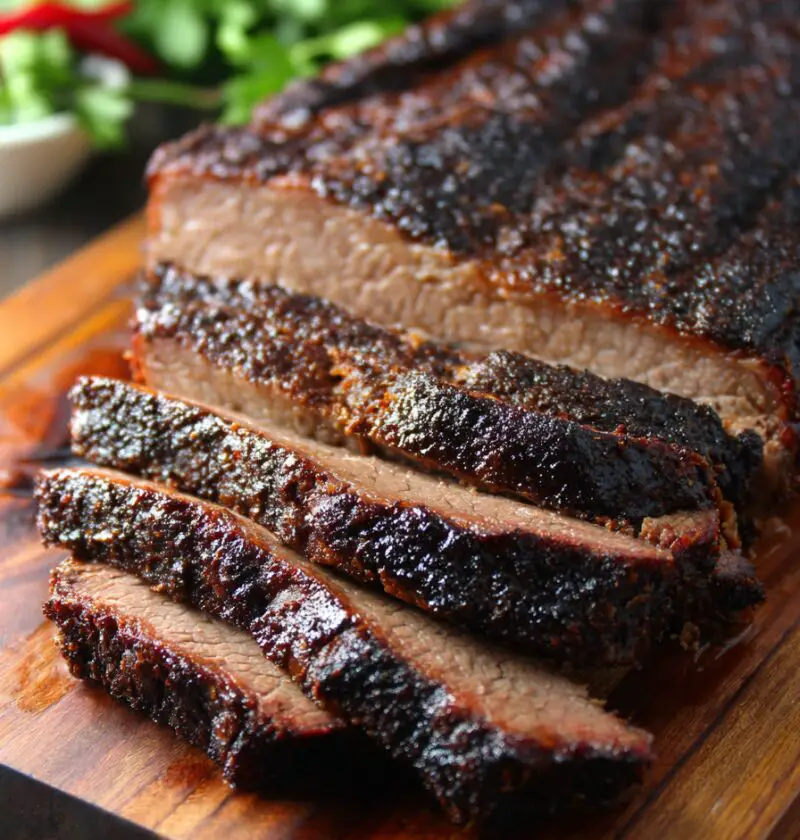
Coffee Rubbed Smoked Brisket Recipe
If you’re craving a bold, smoky, deeply savory main dish, this Coffee Rubbed Smoked Brisket Recipe delivers tender slices, a gorgeous bark, and that rich backyard barbecue flavor that makes everybody hover near the cutting board.
A Brisket Worth Waiting For
There’s something almost magical about a good smoked brisket recipe. It starts as a humble cut of beef, and with patience, smoke, and the right seasoning, it turns into the kind of meal people remember. This Coffee Rubbed Smoked Brisket Recipe is one I come back to whenever I want a brisket that feels a little special but still true to classic barbecue. The coffee doesn’t make it taste like breakfast, not one bit. Instead, it adds depth, helps build that dark smoked brisket bark, and brings out the natural richness of the beef.
I love serving this for summer cookouts, football weekends, and family gatherings when everybody’s happy to linger outside and sneak “just one more piece.” Around here, brisket is never a rushed affair. It’s low and slow brisket, coffee spice rub on your hands, smoke in the air, and a cooler full of drinks nearby. That’s part of the charm.
And if you’ve ever felt intimidated by smoked beef brisket, let me reassure you: it’s not hard, but it does ask for patience. Think of it like gardening or pie dough—gentle handling and good timing make all the difference. Once you understand a few basics, you’ll be making tender smoked brisket with confidence.
Why You’ll Love This Recipe
- Big, bold flavor from a savory coffee rub and classic barbecue spices
- Creates a dark, beautiful brisket bark with great texture
- Perfect for a pellet grill, offset smoker, or charcoal smoker
- Feeds a crowd and makes terrific leftovers
- Simple homemade brisket rub with pantry-friendly ingredients
- Coffee enhances the beef without making it bitter
- Works beautifully for texas style brisket lovers who want a twist
- Great make-ahead recipe for parties and weekend hosting
- Slices tender and juicy when cooked low and slow
- Easy to adjust for sweeter, spicier, or saltier preferences
Ingredients
Here’s what you’ll need for this coffee rubbed brisket. This recipe is written for a whole packer brisket, which includes both the flat and the point.
For the brisket
- 1 whole beef brisket, 10 to 12 pounds
- 2 tablespoons yellow mustard or Worcestershire sauce (for binding the rub; optional)
For the homemade coffee rub
- 3 tablespoons finely ground dark roast coffee
- 2 tablespoons kosher salt
- 2 tablespoons coarse black pepper
- 2 tablespoons smoked paprika
- 1 tablespoon garlic powder
- 1 tablespoon onion powder
- 1 tablespoon brown sugar
- 2 teaspoons chili powder
- 1 teaspoon ground cumin
- 1 teaspoon mustard powder
- 1/2 teaspoon cayenne pepper (optional, for heat)
For smoking
- 1 cup beef broth or apple cider vinegar mixed with water, for spritzing
- Wood chunks or pellets, such as oak, hickory, or mesquite
Ingredient tips and easy swaps
- Brisket: Look for one with good marbling and a flexible feel when you pick it up; that usually means better fat distribution and a more tender smoked brisket.
- Coffee: Use finely ground coffee, not coarse grounds meant for a French press. A dark roast gives the richest flavor in this coffee seasoned brisket.
- Kosher salt: Diamond Crystal and Morton both work, but Morton is saltier by volume, so use a little less if that’s what you have.
- Brown sugar: This helps with color and balances the spice; if you prefer a more traditional texas style brisket profile, you can reduce it.
- Mustard or Worcestershire: They help the brisket dry rub stick, though the flavor fades during cooking.
- Wood choice: Oak is the classic middle ground—strong, steady, and not too pushy. Hickory is bolder. Mesquite is stronger still, so use it with a lighter hand.

Directions
-
Trim the brisket.
Start with a cold brisket straight from the fridge—it’s much easier to trim that way. Use a sharp boning or chef’s knife to remove any hard surface fat and silver skin. Leave about 1/4 inch of the fat cap so the meat stays protected during the long cook. If one end is unusually thin, tidy it up so it cooks more evenly. -
Make the brisket seasoning blend.
In a bowl, stir together the coffee, kosher salt, black pepper, smoked paprika, garlic powder, onion powder, brown sugar, chili powder, cumin, mustard powder, and cayenne. Break up any lumps with your fingers or the back of a spoon. The rub should smell earthy, smoky, and just a little sweet. -
Season the brisket generously.
Pat the brisket dry with paper towels. If using mustard or Worcestershire, rub a thin coat all over the surface. Sprinkle the coffee rub brisket mixture evenly on all sides, pressing lightly so it adheres. Don’t rub it in like you’re polishing furniture—just press and cover. Let the brisket sit at room temperature for 30 to 45 minutes while your smoker heats. -
Preheat the smoker.
Heat your smoker to 225°F to 250°F. That range is the sweet spot for a slow smoked brisket. You want clean, thin blue smoke rather than thick white clouds. If the smoke looks heavy and bitter, the flavor will be, too. -
Start smoking.
Place the brisket fat side down if your heat source comes from below, or fat side up if heat comes from above. Insert a meat thermometer probe into the thickest part of the flat. Smoke the brisket until the bark starts to set and the internal temperature reaches about 165°F, which usually takes 6 to 8 hours depending on size and your smoker’s consistency. -
Spritz as needed.
After the first 3 hours, lightly spritz the surface every 45 to 60 minutes with beef broth or the vinegar-water mix if it looks dry. Don’t soak it. A light mist helps support bark formation without washing away your homemade brisket rub. -
Wrap during the stall.
When the brisket hits the stall—usually around 160°F to 170°F—and the bark is a deep mahogany brown, wrap it tightly in unwaxed butcher paper or foil. Butcher paper helps preserve that lovely smoked brisket bark, while foil holds more moisture and shortens the cook a bit. Neither choice is wrong; they simply cook a little differently. -
Finish cooking until probe tender.
Return the wrapped brisket to the smoker and continue cooking until the internal temperature reaches 195°F to 205°F. More important than the number, though, is feel. A thermometer probe should slide into the flat with very little resistance, like warm butter. That’s when you know your barbecue brisket recipe is done. -
Rest the brisket.
This part matters more than people think. Remove the brisket from the smoker and let it rest, wrapped, for at least 1 hour, though 2 to 3 hours in a dry cooler is even better. Resting allows the juices to settle back into the meat, which means slices instead of shreds. -
Slice and serve.
Slice the flat against the grain into pencil-thick slices. Turn the point as needed and slice that section separately, since the grain runs differently. Serve warm with pickles, onions, white bread, barbecue sauce on the side, or nothing at all if you want that beef and coffee rub to do the talking.
Servings & Timing
- Yield: 12 to 16 servings
- Prep Time: 30 minutes
- Resting Time Before Smoking: 30 to 45 minutes
- Cook Time: 10 to 14 hours
- Rest Time After Smoking: 1 to 3 hours
- Total Time: About 12 to 18 hours, depending on brisket size and smoker temperature
A general rule of thumb for a beef brisket smoker setup is about 1 to 1 1/4 hours per pound at 225°F, but every brisket has its own personality. That sounds funny, but it’s true.
Variations
- Texas-style simple rub: Skip the brown sugar and cumin for a more classic salt, pepper, and coffee rubbed brisket profile.
- Sweet heat version: Add 1 extra tablespoon brown sugar and 1 teaspoon chipotle powder for a sweeter, spicier bark.
- Espresso rub: Use finely ground espresso for a deeper, darker coffee spice rub flavor.
- Maple coffee brisket: Add 1 tablespoon maple sugar to the brisket dry rub for a subtle sweet finish.
- Garlic-forward version: Increase garlic powder to 1 1/2 tablespoons if your crowd loves a stronger savory note.
- Grilled brisket finish: After smoking and resting, give slices a quick kiss on a hot grill for a grilled brisket recipe spin.
Storage & Reheating
Store leftover coffee rubbed brisket in an airtight container in the refrigerator for up to 4 days. Keep a little of the cooking juice or a splash of beef broth with it so the slices stay moist.
For longer storage, wrap portions tightly and freeze for up to 3 months. I like to freeze it in meal-sized packs, which makes weeknight dinners much easier.
To reheat, place brisket slices in a covered baking dish with a few tablespoons of broth, then warm at 300°F until heated through, about 20 to 30 minutes. You can also reheat vacuum-sealed portions in simmering water if you have them packed that way. That method works beautifully and keeps the meat from drying out.
Make-ahead tip: Smoke the brisket the day before, rest it, chill it whole, and reheat gently the next day while still wrapped. Honestly, sometimes the slicing is even cleaner after an overnight chill.
Notes
One thing I learned after testing this smoked meat recipe a few times is that coffee can be bold without being harsh—if the grind is fine and the balance is right. Too much coffee, and the brisket seasoning blend can lean bitter. Too little, and you lose that special edge that makes people ask, “What is that flavor?”
The bark matters, but don’t chase bark so hard that you dry out the flat. That’s the balancing act with brisket. If your smoker runs hot, check earlier than you think you need to.
A dual-probe thermometer, like a ThermoWorks Smoke or Meater, makes a huge difference. One probe for the meat, one for the smoker chamber—it’s a small thing that saves a lot of second-guessing.
If your brisket finishes early, that’s not a problem. Hold it wrapped in a towel-lined cooler for a couple of hours. In barbecue, a long rest is often a blessing, not a setback.
And here’s a little side note from my own backyard BBQ brisket adventures: don’t skip the slicing direction. Even perfect brisket can seem chewy if it’s sliced with the grain. That one small detail changes everything.
FAQs
Can you really taste the coffee in this Coffee Rubbed Smoked Brisket Recipe?
Not in a strong, obvious way. The coffee adds depth and helps create a rich bark, but the final flavor is savory, smoky, and balanced.
What’s the best wood for smoked beef brisket?
Oak is a favorite because it’s classic and balanced. Hickory gives a stronger smoke flavor, while mesquite is bolder and should be used more sparingly.
Do I have to wrap the brisket?
No, but wrapping helps push through the stall and usually keeps the brisket more moist. Butcher paper is great if you want to keep a firmer bark.
Why did my brisket turn out tough?
Usually it needed more time, not less. Brisket becomes tender when the connective tissue breaks down fully, so cook until probe tender rather than relying only on temperature.
Can I make this coffee rub brisket in a pellet smoker?
Absolutely. Pellet grills are excellent for maintaining steady temperatures, which is a big help for low and slow brisket.
Should I use foil or butcher paper?
Foil traps more moisture and cooks a bit faster, while butcher paper breathes more and protects the bark better. If you love a pronounced smoked brisket bark, paper is often the better choice.
What internal temperature should brisket be done at?
Most briskets finish somewhere between 195°F and 205°F. The real test, though, is tenderness—a probe should slide in with little resistance.
Can I use this brisket dry rub on other meats?
Yes, and it’s very good on beef ribs, chuck roast, and even thick pork chops. It’s a flexible savory coffee rub with plenty of smoky character.
Conclusion
This Coffee Rubbed Smoked Brisket Recipe brings together deep beefy flavor, a bold homemade coffee rub, and that slow-cooked tenderness every good barbecue should have. It’s hearty, crowd-pleasing, and just distinctive enough to stand out without straying too far from a classic texas style brisket feel.
If you give it a try, I’d love to hear how it turned out for you. Leave a comment, share your smoker setup, or tell me whether you went with butcher paper or foil—and if you’re hungry for more, you might enjoy exploring other smoked meat recipe favorites for your next backyard cookout.