Coconut Cake Recipe
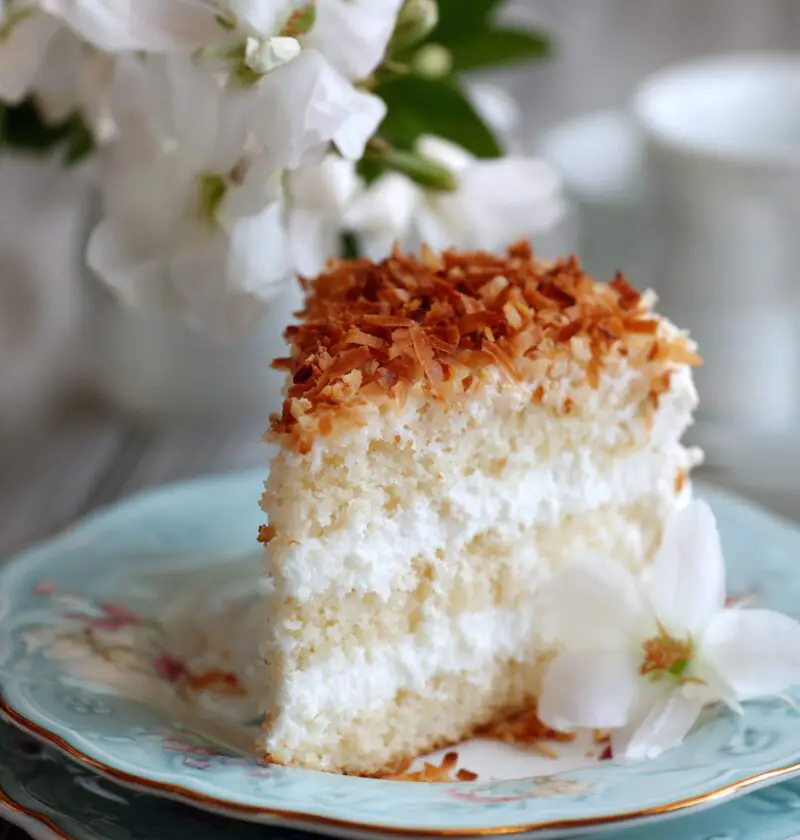
If you’re dreaming of a moist, fluffy Coconut Cake Recipe that tastes like it came from a cozy Southern bakery, you’re in the right place—this easy coconut cake is tender, full of coconut flavor, and wrapped in a cloud of creamy coconut frosting.
This homemade coconut cake is my go-to for spring holidays, summer cookouts, and honestly, any time I need a show-stopping coconut dessert recipe that doesn’t make me fuss all day. It’s a classic coconut layer cake: soft vanilla-coconut layers, rich coconut cream frosting, and plenty of shredded coconut on the outside. Think birthday parties, Easter dessert tables, bridal showers—this cake fits right in.
Over the years (and there have been a few—hello, midlife baking hobby), I’ve tested this recipe every which way: butter vs. oil, milk vs. coconut milk, 9×13 vs. layer cake. This version gives you that moist coconut cake crumb we all want—tender, not dense, with a rich coconut taste that doesn’t feel heavy.
If you care about “healthy-ish,” you’ll be glad to know this easy coconut cake skips shortening and uses real butter, real eggs, and coconut milk for flavor and moisture. I’m not calling it health food, but I will say this: a small slice with a cup of coffee and a quiet moment feels very good for the soul.
Search data over the last few years shows that coconut cake really spikes around Easter and during summer party season. So if you found this coconut birthday cake idea while planning a big celebration, you are absolutely not alone. You’re in good, coconut-loving company here.
Why You’ll Love This Recipe
- Moist, bakery-style crumb thanks to a mix of butter, oil, and coconut milk.
- Big coconut flavor without being cloying—great for both coconut lovers and “on the fence” guests.
- Works as a traditional coconut cake, a coconut birthday cake, or a simple sheet cake.
- Straightforward pantry ingredients—no fancy specialty items required.
- Make-ahead friendly: bake the layers one day, frost the next.
- Versatile coconut dessert recipe: tweak it to be more tropical, lighter, or richer.
- Stable coconut frosting recipe that pipes well and holds up on a dessert table.
- Family-tested and party-approved; it slices cleanly and serves beautifully.
Ingredients
Here’s everything you’ll need for this fluffy coconut cake. Measure carefully—especially the flour—to keep that tender crumb.
For the Coconut Cake Layers
- 2 ½ cups (300 g) cake flour, spooned and leveled
- (Cake flour keeps the crumb soft; if using all-purpose, subtract 2 tablespoons and add 2 tablespoons cornstarch.)
- 2 ½ teaspoons baking powder
- ½ teaspoon baking soda
- ½ teaspoon fine sea salt
- ½ cup (40 g) unsweetened shredded coconut, very finely chopped
- (Pulse in a food processor so it blends into the cake instead of feeling chewy.)
- ½ cup (1 stick / 113 g) unsalted butter, softened to room temperature
- ½ cup (120 ml) neutral oil (such as canola or vegetable oil)
- 1 ¾ cups (350 g) granulated sugar
- 4 large eggs, room temperature
- 2 teaspoons pure vanilla extract
- 1–1 ½ teaspoons coconut extract (start with 1 teaspoon, add more for stronger flavor)
- 1 ½ cups (360 ml) full-fat canned coconut milk, well shaken and at room temperature
For the Coconut Cream Cheese Frosting
- 1 cup (2 sticks / 226 g) unsalted butter, softened
- 8 oz (226 g) cream cheese, softened
- 4–5 cups (480–600 g) powdered sugar, sifted
- ¼ cup (60 ml) full-fat canned coconut milk, room temperature
- 1 teaspoon vanilla extract
- 1 teaspoon coconut extract
- Pinch of fine sea salt
- 2–3 cups sweetened shredded coconut, for decorating the outside of the cake
Pan Prep
- Butter or nonstick spray
- Parchment rounds for two 9-inch (23 cm) cake pans
You know what? Let me show you what this beauty looks like all dressed up:

That’s the goal: tall layers, neat sides, and plenty of coconut snow on top.
Directions
1. Preheat and prepare your pans.
Set your oven to 350°F (175°C). Grease two 9-inch round cake pans with butter or spray, line the bottoms with parchment, then grease and lightly flour the parchment. This helps your moist coconut cake release without tearing.
2. Whisk the dry ingredients.
In a medium bowl, whisk together cake flour, baking powder, baking soda, and salt. Stir in the finely chopped unsweetened coconut so it’s evenly distributed. Set aside.
3. Cream the butter, oil, and sugar.
In a large mixing bowl (stand mixer with paddle works best), beat the butter and oil together on medium speed until smooth—about 1–2 minutes. Add the sugar and beat for another 2–3 minutes until the mixture looks pale and slightly fluffy. This step helps build structure and air.
4. Add the eggs and flavorings.
Beat in the eggs one at a time, scraping the bowl as needed. Mix in the vanilla and coconut extract. The batter may look a bit curdled at this point, and that’s okay; it will smooth out when you add the flour and coconut milk.
5. Alternate dry ingredients and coconut milk.
On low speed, add one-third of the flour mixture, then half the coconut milk, another third of the flour, the remaining coconut milk, and finish with the last third of flour. Mix just until combined after each addition. Stop as soon as the flour disappears—overmixing can make your coconut layer cake tough instead of fluffy.
6. Bake the layers.
Divide the batter evenly between the two prepared pans and smooth the tops. Bake for 24–30 minutes, or until the tops are lightly golden and a toothpick inserted in the center comes out with just a few moist crumbs. If your oven has hot spots (most home ovens do), rotate the pans halfway through baking.
7. Cool completely.
Let the cakes cool in the pans for about 10 minutes. Run a thin knife around the edges, then turn onto wire racks, peel off the parchment, and cool fully. Don’t rush this—frosting warm cake is the fastest way to turn a neat coconut cream cake into a sliding mess.
8. Make the coconut frosting.
Beat the butter and cream cheese together on medium speed until creamy and smooth, about 2–3 minutes. Add 3 cups of powdered sugar, the coconut milk, vanilla, coconut extract, and salt. Beat on low until combined, then on medium until fluffy. Add more powdered sugar, ½ cup at a time, until you reach a spreadable but stable consistency. The frosting should hold soft peaks and not slump off a spatula.
9. Level and crumb coat the cake.
If your cake layers domed, use a serrated knife to level the tops. Place one layer on a serving plate or cake stand. Add a generous scoop of frosting and spread to the edges. Top with the second layer. Spread a thin layer of frosting over the top and sides to “crumb coat” the cake; this traps any loose crumbs. Chill for 20–30 minutes so the frosting firms up slightly.
10. Frost and decorate with coconut.
After the crumb coat chills, spread the remaining frosting over the top and sides of the cake. Press shredded coconut gently into the sides and sprinkle it generously on top. This is the fun, slightly messy part—use a baking sheet underneath to catch stray coconut.
Servings & Timing
- Yield: 12–14 slices (two 9-inch layers)
- Prep Time: 25–30 minutes
- Bake Time: 24–30 minutes
- Cooling Time: 1–1 ½ hours
- Decorating Time: 20–30 minutes
- Total Time: About 2 ½–3 hours (mostly hands-off while the cake cools)
If you’re planning this coconut dessert recipe for a party, I recommend baking the layers earlier in the day—or even the day before—so frosting and decorating feels relaxed.
Variations
Here’s where you can have a little fun with this simple coconut cake recipe and make it your own.
- Coconut Lime Cake: Add 1 tablespoon lime zest to the batter and 1–2 tablespoons lime juice to the frosting for a bright, tropical twist.
- Coconut Sheet Cake: Bake the batter in a 9×13-inch pan for 30–35 minutes, then frost the top only for an easier, casual coconut cream cake.
- Toasted Coconut Cake: Toast the shredded coconut in the oven at 325°F for 5–8 minutes, stirring once, and use it to decorate for a nutty, deeper flavor.
- Coconut Almond Cake: Replace ½ teaspoon of vanilla with almond extract and sprinkle sliced almonds on top for a bakery-style coconut almond dessert.
- Gluten-Friendly Version: Use a good 1:1 gluten-free baking flour blend and skip the extra shredded coconut inside the batter to keep the texture soft.
- Extra-Fluffy Coconut Cake: Separate the eggs, whip the whites to soft peaks, and gently fold them in at the end of mixing for a lighter, airy crumb.
Storage & Reheating
- Room Temperature: If your kitchen is cool, the frosted cake can sit, covered, at room temperature for up to 6 hours—great for parties and holiday tables.
- Refrigerator: Store covered in the fridge for 3–4 days. I like to press plastic wrap against the cut sides to keep the cake extra moist.
- Freezer (Cake Layers): Wrap unfrosted cake layers tightly in plastic wrap and then foil. Freeze for up to 2 months. Thaw wrapped at room temperature for a few hours before frosting.
- Freezer (Slices): Freeze individual slices on a baking sheet until firm, then wrap and store for up to 1 month. Thaw overnight in the fridge or at room temperature for 30–60 minutes.
No “reheating” needed here, but chilled cake tastes best if you let it sit at room temperature for 20–30 minutes before serving so the frosting softens and the coconut flavor blooms.
Notes
- Moisture matters: The combination of butter and oil gives you flavor plus that moist coconut cake texture. Butter brings taste; oil keeps it soft even when chilled.
- Coconut extract strength: Brands vary. Start with 1 teaspoon, taste the batter or frosting, and add in tiny splashes until it smells pleasantly coconutty but not like sunscreen.
- Don’t skip room temperature ingredients: When the eggs, butter, and coconut milk are all roughly the same temperature, the batter comes together smoother and bakes more evenly.
- Level layers = pretty cake: A small, inexpensive cake leveler or a long serrated bread knife makes stacking your coconut layer cake much easier.
- For cleaner slices: Chill the cake for about 30 minutes, then use a sharp knife wiped clean between cuts. This is especially helpful if you’re serving it as a coconut birthday cake and want picture-perfect slices.
- Flavor “develops” overnight: Honestly, like most traditional coconut cakes, this one tastes even better the next day once the flavors have settled in.
FAQs
Can I make this Coconut Cake Recipe ahead of time?
Yes—bake the cake layers up to 2 days ahead, wrap them well, and keep them at room temperature or in the fridge; frost the day you plan to serve.
Can I use boxed cake mix and just add coconut?
You can start with a white or yellow cake mix, replace some of the water with coconut milk, and add coconut extract and shredded coconut, but the texture will be a bit lighter than this homemade coconut cake.
What if I don’t have cake flour?
Use the all-purpose flour and cornstarch trick: for each cup of cake flour, measure 1 cup all-purpose flour, remove 2 tablespoons, and replace with 2 tablespoons cornstarch, then sift well.
Can I skip the cream cheese in the frosting?
Yes—use all butter for a classic American buttercream, and add a little extra coconut milk as needed; just know it will be a bit sweeter and richer.
How do I keep my cake from drying out?
Don’t overbake: pull it from the oven when a toothpick has moist crumbs, not when it’s bone dry. Also, wrap cooled layers if you’re holding them overnight, and keep the finished cake covered.
Can I make this as cupcakes?
Yes—fill cupcake liners about ⅔ full and bake at 350°F for 16–20 minutes. This recipe makes around 24–26 coconut cupcakes, depending on how full you fill the liners.
Is this a traditional Southern coconut cake?
It’s inspired by traditional coconut cake recipes but simplified a bit—no cooked icing, just an easy coconut cream cheese frosting that most home bakers feel comfortable making.
Can I reduce the sugar?
You can cut the sugar in the cake by about ¼ cup without much change in texture, but the frosting needs the powdered sugar for structure—try using a little less frosting on the cake instead.
Conclusion
This Coconut Cake Recipe is everything I want in a special-occasion dessert: moist, fluffy, full of real coconut flavor, and pretty enough to take center stage at any celebration. Whether you serve it as a coconut birthday cake, a Sunday dinner dessert, or that “just because” treat we all need once in a while, it has a way of making the moment feel a little more memorable.
If you bake this easy coconut cake, tell me how it turned out—leave a comment, share your twist (lime? toasted coconut? sheet cake version?), or tag your photos so we can all be inspired. And if you love coconut, you might want to explore other cozy desserts next, like lemon coconut bars or a simple vanilla birthday cake for your non-coconut folks.
Coconut Cake
Ingredients
- 2 1/2 cups cake flour 300 g, spooned and leveled; if using all-purpose flour, subtract 2 tablespoons and add 2 tablespoons cornstarch
- 2 1/2 teaspoons baking powder
- 1/2 teaspoon baking soda
- 1/2 teaspoon fine sea salt
- 1/2 cup unsweetened shredded coconut 40 g, very finely chopped or pulsed in a food processor
- 1/2 cup unsalted butter 1 stick / 113 g, softened to room temperature
- 1/2 cup neutral oil 120 ml, such as canola or vegetable oil
- 1 3/4 cups granulated sugar 350 g
- 4 large eggs room temperature
- 2 teaspoons pure vanilla extract
- 1-1 1/2 teaspoons coconut extract start with 1 teaspoon and add more for stronger flavor
- 1 1/2 cups full-fat canned coconut milk 360 ml, well shaken and at room temperature
- 1 cup unsalted butter 2 sticks / 226 g, softened, for frosting
- 8 oz cream cheese 226 g, softened
- 4-5 cups powdered sugar 480–600 g, sifted
- 1/4 cup full-fat canned coconut milk 60 ml, room temperature, for frosting
- 1 teaspoon vanilla extract for frosting
- 1 teaspoon coconut extract for frosting
- 1 pinch fine sea salt for frosting
- 2-3 cups sweetened shredded coconut for decorating the outside of the cake
- butter or nonstick spray for greasing pans
- 2 parchment rounds for two 9-inch (23 cm) cake pans
Instructions
- Preheat the oven to 350°F (175°C). Grease two 9-inch round cake pans with butter or nonstick spray. Line the bottoms with parchment rounds, then grease and lightly flour the parchment to help the layers release cleanly.
- In a medium bowl, whisk together the cake flour, baking powder, baking soda, and fine sea salt. Stir in the very finely chopped unsweetened shredded coconut until evenly distributed. Set aside.
- In a large mixing bowl (or stand mixer fitted with the paddle attachment), beat the softened butter and neutral oil together on medium speed until smooth, about 1–2 minutes. Add the granulated sugar and beat for another 2–3 minutes until the mixture looks pale and slightly fluffy.
- Beat in the eggs one at a time, mixing well and scraping down the bowl as needed. Add the vanilla extract and coconut extract and mix until combined. The batter may look slightly curdled at this stage; it will smooth out once the dry ingredients and coconut milk are added.
- With the mixer on low speed, add one-third of the flour mixture, then half of the coconut milk. Add another third of the flour mixture, then the remaining coconut milk, and finish with the last third of the flour mixture. Mix just until combined after each addition and stop as soon as no dry flour remains to avoid overmixing.
- Divide the batter evenly between the two prepared cake pans and smooth the tops. Bake for 24–30 minutes, or until the tops are lightly golden and a toothpick inserted in the center comes out with just a few moist crumbs. Rotate the pans halfway through baking if your oven has hot spots.
- Let the cakes cool in the pans for about 10 minutes. Run a thin knife around the edges, then invert onto wire racks. Peel off the parchment and allow the layers to cool completely before frosting.
- In a large bowl, beat the softened butter and cream cheese together on medium speed until creamy and smooth, about 2–3 minutes. Add 3 cups of powdered sugar, the coconut milk, vanilla extract, coconut extract, and a pinch of salt. Beat on low until combined, then increase to medium and beat until fluffy. Add additional powdered sugar, about 1/2 cup at a time, until the frosting is thick, spreadable, and holds soft peaks without slumping.
- If the cake layers are domed, use a serrated knife to level the tops. Place one layer on a serving plate or cake stand. Add a generous scoop of frosting and spread it evenly to the edges. Place the second layer on top. Spread a thin layer of frosting over the top and sides of the cake to create a crumb coat. Chill the cake for 20–30 minutes to let the crumb coat firm up.
- After chilling, spread the remaining frosting evenly over the top and sides of the cake. Gently press sweetened shredded coconut onto the sides of the cake and sprinkle more on top to fully cover. Use a baking sheet underneath to catch any falling coconut, if desired.