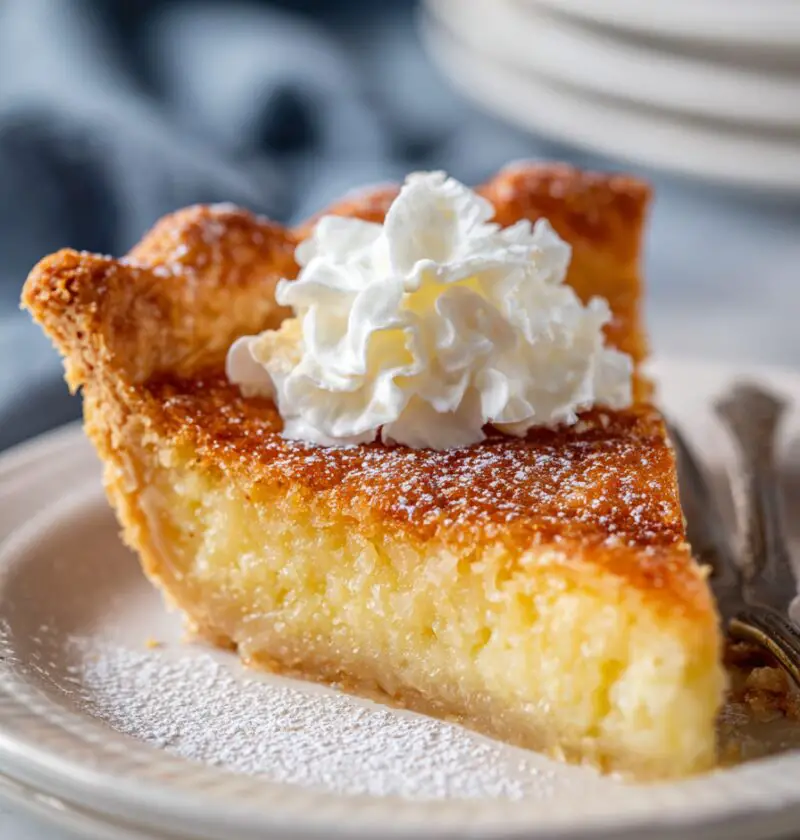
Chess Pie Recipe
If you love a simple, old fashioned dessert that tastes like a warm hug, this Chess Pie Recipe is going to become your new “house pie.”
What Makes This Chess Pie Recipe So Special?
Chess pie is a classic Southern chess pie: a rich, sweet custard pie made from pantry staples like sugar, butter, eggs, and a little cornmeal for that signature texture. It’s what I call a “sugar butter pie”, and yes, it’s exactly as dreamy as it sounds.
This is the pie I pull out for holidays, church potlucks, and those random Tuesdays when the week needs a little sweetness. It’s a traditional southern dessert with a history that goes back generations, and it tastes like something your grandmother might have made from memory.
What I love most is how this classic chess pie feels both humble and indulgent. No fancy ingredients, no special techniques—just an easy homemade pie with a buttery crust and a silky, cornmeal custard filling that bakes up golden and crackly on top. If you’ve been wanting a classic American pie that always works and always impresses, this is the one.
Let me walk you through it, just like I’d do if you were sitting at my kitchen table with a cup of coffee.
Why You’ll Love This Recipe
- Pantry-friendly: This chess pie recipe uses basic ingredients you probably already have on hand—perfect for last-minute baking.
- Foolproof for beginners: No fancy techniques, just simple mixing and baking; great for new bakers and teens learning to bake.
- Rich, sweet custard pie flavor: The filling is buttery, smooth, and sweet, with that classic “old fashioned dessert” vibe.
- Signature cornmeal texture: A touch of cornmeal lets this stand out from other custard pies with a subtle, almost caramelized bite.
- Perfect for any season: Works for Thanksgiving, Easter, Sunday suppers, or a random “just because” night.
- Crowd-pleasing & nostalgic: Tastes like something from a vintage church cookbook—the kind of vintage pie recipe people ask you to write down.
- Simple pie recipe for busy days: Minimal prep and no fancy equipment; a whisk and a bowl get the job done.
- Make-ahead friendly: The flavor of this old fashioned chess pie actually deepens as it rests, making it perfect for baking the day before.
Ingredients
Here’s everything you’ll need to make this buttery chess pie with its sweet custard filling. This is a single 9-inch pie—perfect for 8 generous slices.
- 1 (9-inch) unbaked pie crust (homemade or store-bought, chilled in the pan)
- 1 ½ cups granulated sugar
- 3 tablespoons fine yellow cornmeal (this creates that classic cornmeal custard filling)
- 2 tablespoons all-purpose flour (helps the pie set cleanly)
- ¼ teaspoon salt
- ½ cup (1 stick) unsalted butter, melted and slightly cooled
- 3 large eggs, at room temperature
- ¼ cup whole milk (you can use 2%, but whole gives a richer custard)
- 1 tablespoon white vinegar (balances the sweetness and gives a subtle tang)
- 1 teaspoon pure vanilla extract
- Optional for serving: whipped cream or vanilla ice cream, plus a sprinkle of flaky sea salt
A few quick ingredient notes from my kitchen to yours:
- Pie crust: If you use a frozen crust, let it thaw slightly so it doesn’t crack. For homemade, keep it cold; cold fat equals a flakier crust.
- Cornmeal: Use fine yellow cornmeal for a smooth, classic chess pie texture. Coarse cornmeal will make the filling too gritty.
- Butter: Melt it, then let it cool for 5–10 minutes so it doesn’t scramble the eggs.
- Eggs: Room temperature eggs whisk more easily and bake more evenly in custard pies.

Directions
You know what? If you can whisk, you can make this pie. Here’s exactly how I do it.
-
Preheat the oven and prep your crust.
Preheat your oven to 350°F (175°C). Place your unbaked pie crust into a 9-inch pie dish (if it isn’t already), crimp the edges, and refrigerate it while you mix the filling; a chilled crust helps prevent soggy bottom. -
Stir together the dry ingredients.
In a medium mixing bowl, whisk together the sugar, cornmeal, flour, and salt until everything looks evenly combined. This helps keep the filling smooth and prevents lumps later. -
Add the melted butter.
Pour in the melted, cooled butter and whisk until the mixture looks sandy and thick. It may clump a bit; that’s okay, it will smooth out once the eggs go in. -
Whisk in the eggs.
Add the eggs one at a time, whisking well after each addition. The mixture should turn glossy and a little thicker—this is the base of your sweet custard pie filling. -
Finish with milk, vinegar, and vanilla.
Add the milk, vinegar, and vanilla extract and whisk until the filling is completely smooth and uniform. It will be pourable but slightly thickened. -
Pour the filling into the crust.
Take the chilled pie crust from the fridge and place it on a baking sheet (this makes it easier to move in and out of the oven). Pour the chess pie filling into the crust, leaving just a little space at the top of the crust edge. -
Shield the crust (optional but helpful).
If your crust tends to brown quickly, loosely cover the outer edges with strips of foil or use a pie shield from the start. You can also add this halfway through if it’s browning too fast. -
Bake the chess pie.
Bake at 350°F for 40–50 minutes, until the top is golden, slightly crackly, and the center is mostly set but still has the tiniest jiggle when you gently nudge the pan. If the top starts to brown too deeply, tent the whole pie with foil. -
Cool completely.
This part matters: let the southern chess pie cool completely on a wire rack, at least 3 hours. The custard continues to set as it cools, so don’t rush this step or you’ll have a runny center. -
Slice and serve.
Slice with a sharp knife, wiping between cuts for clean slices. Serve at room temperature or chilled, with whipped cream or ice cream if you like. It’s lovely plain, too—just you and that buttery chess pie.
Servings & Timing
- Yield: 1 pie (about 8 servings)
- Prep Time: 15–20 minutes
- Bake Time: 40–50 minutes
- Cooling Time: 3 hours (hands-off, but very important)
- Total Time: About 4 hours, mostly unattended
This is a great make-ahead classic pie recipe because all that cooling time means you can bake it in the morning for dinner, or the day before a holiday meal.
Variations
Once you’ve made this classic version, try playing with a few twists. Think of this as your chess pie “base recipe”:
- Lemon Chess Pie: Add 2–3 tablespoons fresh lemon juice and 1 teaspoon lemon zest for a bright, tangy twist on this rich custard pie.
- Chocolate Chess Pie: Whisk in ¼ cup unsweetened cocoa powder and reduce the flour to 1 tablespoon for a fudgy, brownie-like filling.
- Brown Sugar Chess Pie: Swap half the granulated sugar for light brown sugar for a deeper, caramel-like flavor.
- Coconut Chess Pie: Fold in ½ cup sweetened shredded coconut for a toasty, tropical nod that still feels like an old fashioned dessert.
- Nutty Chess Pie: Sprinkle ½ cup chopped pecans or toasted walnuts over the bottom of the crust before adding the filling for a crunchy layer.
- Buttermilk Chess Pie: Replace the milk and vinegar with ¼ cup buttermilk for a subtle tang and super tender custard.
Storage & Reheating
One of the reasons I love this simple pie recipe is how well it keeps. It actually tastes even better the next day.
-
Refrigerator:
Cover the cooled pie with plastic wrap or foil and store in the fridge for up to 4 days. I like to place it in a cake carrier to keep the top safe from bumps. -
Freezer:
You can freeze the whole baked pie or individual slices. Wrap tightly in plastic wrap, then in foil, and freeze for up to 2 months. -
Thawing:
Thaw overnight in the fridge. For individual slices, you can thaw on the counter for about 30–45 minutes if you’re impatient (no judgment here). -
Serving/Reheating:
Chess pie is wonderful cold or at room temperature. If you like it slightly warm, heat slices in a 300°F oven for 8–10 minutes—just until gently warmed, not hot.
For make-ahead holiday planning: I usually bake this southern baking recipe the day before Thanksgiving or Christmas, cool it completely, and tuck it in the fridge. On serving day, I let it sit out for 45–60 minutes so the texture softens.
Notes From My Kitchen
-
Don’t skip the vinegar.
It might sound funny in a dessert, but that little spoonful of vinegar keeps this buttery chess pie from tasting one-note sweet. It balances everything, like lemon in lemonade. -
Check for doneness with the jiggle test.
Give the pie a gentle shake near the end of baking. You want the very center to jiggle slightly, like set Jell-O, not slosh. It will firm up more as it cools. -
Use a light-colored pie pan if you can.
Dark pans brown faster and can overcook the crust before the custard is done. A glass or light metal pan gives you more even baking. -
Room temperature ingredients help.
Cold eggs can firm up the melted butter too quickly and cause a slightly curdled look in the batter. If you forgot to pull them out, just rest the eggs in warm water for 5–10 minutes. -
Let it rest. Really.
I know it’s tempting to cut into this sugar butter pie while it’s still warm, but the slices will be a little messy. Delicious, but messy. If you want pretty slices for guests, let it cool all the way. -
Serve simply.
This old fashioned chess pie is rich. A small slice and maybe a spoonful of whipped cream is really all you need.
FAQs
What is chess pie, exactly?
Chess pie is a traditional Southern dessert made with a simple custard filling of sugar, eggs, butter, and a little cornmeal, baked in a single crust. It’s sweet, rich, and has a slightly crackly top.
Why is there cornmeal in chess pie?
Cornmeal gives the pie its classic texture and helps thicken the filling. It also adds a subtle flavor that sets it apart from plain custard pies.
Can I use a store-bought pie crust?
Yes, absolutely. This easy homemade pie filling works beautifully in a refrigerated or frozen crust—just make sure the crust is chilled and fits a 9-inch pie dish.
How do I keep my chess pie from being runny?
Bake it until the center has only a slight jiggle and allow it to cool completely before slicing. Undercooking or cutting too soon are the most common issues.
Can I make this pie without cornmeal?
You can, but then it’s really more of a basic sugar custard pie. The cornmeal is what makes it a classic chess pie with that vintage Southern character.
Is chess pie very sweet?
Yes, it’s a sweet pie—very much a rich custard pie. The vinegar and salt help balance the sweetness, and smaller slices work well.
Can I halve the recipe?
Custard pies don’t scale down easily in a standard pie pan, but you could bake a half batch in a small tart pan and start checking earlier for doneness.
Do I need to blind-bake the crust?
For this old fashioned chess pie, you don’t have to. Starting with a chilled crust and baking at 350°F gives a nicely cooked bottom for most ovens. If your oven runs cool or your crust is often pale, you can blind-bake for 8–10 minutes, then add the filling.
Conclusion
This Chess Pie Recipe is the kind of dessert that earns a permanent spot in your recipe box—simple ingredients, dependable results, and that nostalgic, old-fashioned flavor that never goes out of style. Whether you’re baking a southern chess pie for a holiday, a potluck, or just a cozy Sunday evening, it brings a little sweetness and comfort to the table every time.
If you try this classic chess pie, I’d love to hear how it turns out—leave a comment, share your twist on it, or tell me whose table you served it at. And if you’re in the mood for more traditional southern desserts, you might like pairing this with a pecan pie or a banana pudding next time.
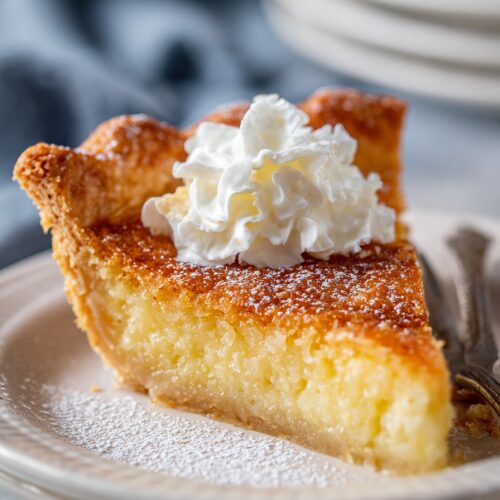
Chess Pie
Ingredients
- 1 9-inch unbaked pie crust homemade or store-bought, chilled in the pan
- 1 1/2 cups granulated sugar
- 3 tablespoons fine yellow cornmeal
- 2 tablespoons all-purpose flour
- 1/4 teaspoon salt
- 1/2 cup unsalted butter melted and slightly cooled
- 3 large eggs at room temperature
- 1/4 cup whole milk 2% can be used, but whole gives a richer custard
- 1 tablespoon white vinegar
- 1 teaspoon pure vanilla extract
- whipped cream or vanilla ice cream optional, for serving
- flaky sea salt optional, for sprinkling on top
Instructions
- Preheat your oven to 350°F (175°C). Place the unbaked 9-inch pie crust into a pie dish if it is not already in one, crimp the edges, and refrigerate the crust while you prepare the filling so it stays cold.1 9-inch unbaked pie crust
- In a medium mixing bowl, whisk together the granulated sugar, fine yellow cornmeal, all-purpose flour, and salt until evenly combined and no streaks remain.1 1/2 cups granulated sugar, 3 tablespoons fine yellow cornmeal, 2 tablespoons all-purpose flour, 1/4 teaspoon salt
- Pour the melted, slightly cooled unsalted butter into the dry mixture and whisk until the mixture looks sandy and thick. Some small clumps are fine; they will smooth out with the eggs.1/2 cup unsalted butter
- Add the eggs one at a time, whisking well after each addition, until the mixture becomes glossy and slightly thicker, forming the base of the custard filling.3 large eggs
- Whisk in the whole milk, white vinegar, and vanilla extract until the filling is completely smooth and uniform. The mixture should be pourable but slightly thickened.1/4 cup whole milk, 1 tablespoon white vinegar, 1 teaspoon pure vanilla extract
- Place the chilled pie crust on a baking sheet for easier handling. Pour the chess pie filling into the crust, leaving a small amount of space below the top edge of the crust.1 9-inch unbaked pie crust
- If your crust tends to brown quickly, loosely cover the outer edges with strips of foil or use a pie shield before baking. You can also add this halfway through baking if the crust is browning too fast.
- Bake the pie at 350°F (175°C) for 40–50 minutes, until the top is golden and slightly crackly and the center is mostly set but still has a tiny jiggle when you gently nudge the pan. If the top is browning too deeply, tent the pie loosely with foil.
- Transfer the baked chess pie to a wire rack and let it cool completely, at least 3 hours. The custard will continue to set as it cools, so do not cut into it while it is warm if you want clean slices.
- Slice the cooled pie with a sharp knife, wiping the blade between cuts for neat slices. Serve at room temperature or chilled, with whipped cream or vanilla ice cream and a sprinkle of flaky sea salt if desired.whipped cream or vanilla ice cream, flaky sea salt