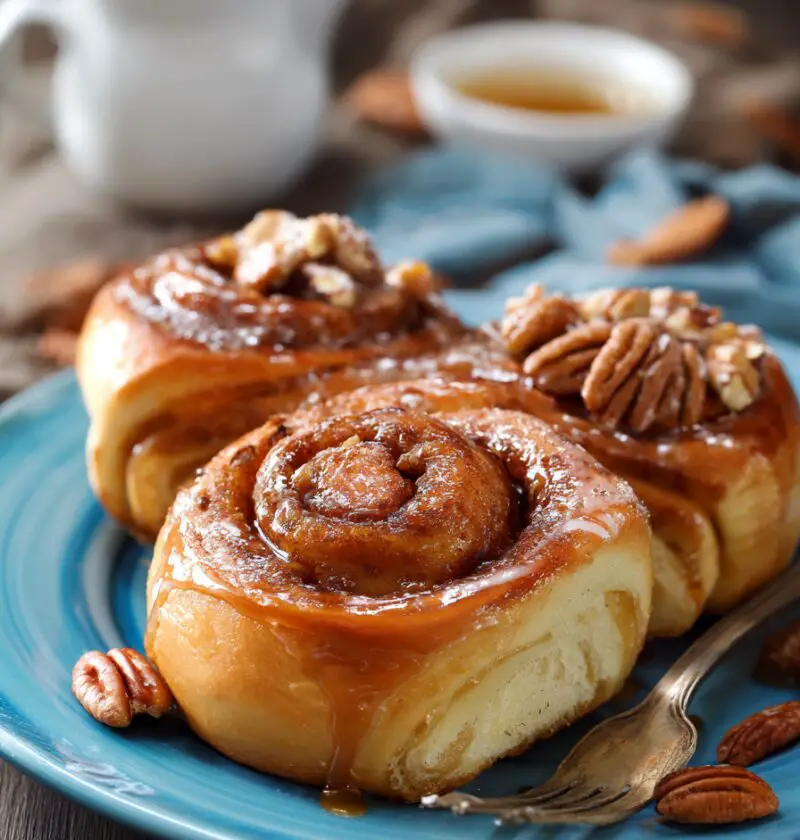
Caramel Rolls Recipe
If you’ve been hunting for a soft, sticky, bakery-style Caramel Rolls Recipe that makes your whole kitchen smell like a cozy Sunday morning, you’ve just found it—pillowy yeast dough, rich cinnamon filling, and a buttery caramel glaze topping that turns into the dreamiest breakfast roll recipe.
A Cozy, Bakery-Style Caramel Rolls Recipe You Can Make at Home
These homemade caramel rolls are everything I wanted when I first tried to recreate the ones from a tiny Midwest bakery my family loved when the kids were little. They’re soft caramel rolls, scented with cinnamon, swirled like classic sweet rolls, then baked over a buttery brown sugar caramel that turns into a sticky, shiny sauce.
What makes this caramel rolls recipe special is a combination of texture and timing: a tender yeast caramel roll dough enriched with milk and butter, a cinnamon caramel swirl that doesn’t leak out and burn, and a caramel glaze topping that you can pour on before baking, after baking—or both, if you like things extra sticky. They’re perfect for holiday brunch, a special birthday breakfast, or any chilly weekend when you just need something warm and sweet from the oven.
And yes, this is a sweet roll recipe that’s friendly for newer bakers, as long as you follow the cues I’ll give you for the dough. If you’ve been nervous about working with yeast, hang with me—I’m 50, I’ve made every dough mistake under the sun, and I’ll walk you through it like we’re chatting at my kitchen counter.
Why You’ll Love This Caramel Rolls Recipe
- Pillowy-soft dough that stays tender for days, not just the first hour.
- Rich, sticky caramel glaze that tastes like a cross between toffee and butterscotch.
- Classic cinnamon caramel rolls flavor that feels like a warm hug on a cold morning.
- Make-ahead friendly—prep the night before and bake fresh in the morning.
- Simple pantry ingredients: flour, yeast, milk, sugar, butter, cinnamon, and cream.
- Great for feeding a crowd—one pan of sticky caramel rolls easily serves a brunch table.
- Customizable: turn them into pecan sticky caramel rolls, salted caramel rolls, or even mini rolls.
- Reliable yeast caramel rolls method with visual cues, so you don’t have to guess when the dough is ready.
Ingredients
For the Caramel Roll Dough
- 1 cup (240 ml) whole milk, warmed to 105–115°F (just warm, not hot)
- 2 ¼ teaspoons (1 packet, 7 g) active dry yeast
- ⅓ cup (65 g) granulated sugar
- 2 large eggs, room temperature
- ⅓ cup (75 g) unsalted butter, melted and cooled slightly
- 1 teaspoon fine sea salt
- 4 to 4 ¼ cups (480–510 g) all-purpose flour (start with 4 cups; add extra only if needed)
For the Cinnamon Filling
- ½ cup (110 g) unsalted butter, very soft (spreadable)
- 1 cup (200 g) light brown sugar, packed
- 2 tablespoons ground cinnamon
- ½ teaspoon ground nutmeg (optional, but lovely in fall and winter)
- Pinch of salt
For the Caramel Glaze Topping (Sticky Base)
- ¾ cup (170 g) unsalted butter
- 1 cup (200 g) light brown sugar, packed
- ½ cup (120 ml) heavy cream
- ¼ cup (60 ml) light corn syrup or honey (helps keep the caramel smooth and glossy)
- 1 teaspoon vanilla extract
- ½ teaspoon fine sea salt (or more, for a salted caramel twist)
Optional Add-Ins
- 1 cup (120 g) chopped pecans or walnuts (for a sticky pecan roll vibe)
- Flaky sea salt, for sprinkling on top after baking
Ingredient Tips
- Milk: Use whole milk if you can; the extra fat keeps the rolls tender.
- Yeast: Active dry yeast works well; if using instant yeast, you can skip the proofing step and mix it straight in with the dry ingredients.
- Flour: Different brands absorb moisture differently—start with 4 cups and add a tablespoon at a time until the dough is soft but not sticky.
- Butter: Real unsalted butter is key here. Margarine just doesn’t give the same flavor or texture.
- Brown sugar: Light brown sugar makes a classic caramel flavor; dark brown sugar gives a deeper, molasses-heavy caramel if you prefer that.

Directions
1. Activate the yeast
- Warm the milk until it’s just warm to the touch—like a baby’s bath water, about 105–115°F.
- Pour the warm milk into a large mixing bowl (or the bowl of a stand mixer). Stir in the granulated sugar.
- Sprinkle the yeast over the top and let it sit for 5–10 minutes, until it looks foamy and creamy.
- If it doesn’t foam, your yeast may be expired or the milk was too hot—start over here so you don’t waste the rest of your ingredients.
2. Make the dough
- Once the yeast is foamy, whisk in the eggs, melted butter, and salt until well combined.
- Stir in 3 ½ cups of the flour, one cup at a time, until you have a soft, shaggy dough.
- Turn the dough out onto a lightly floured surface (or leave it in the mixer bowl) and begin kneading, adding more flour a tablespoon at a time as needed.
- You’re looking for a dough that’s soft, elastic, and just barely tacky—like the sticky side of a Post-it, not like cookie dough.
- Knead for about 8–10 minutes by hand, or 6–7 minutes on medium-low speed with a dough hook.
- If the dough tears easily when you stretch a small piece, knead a bit longer; if it feels dense, you probably added a bit too much flour, but it will still bake up nicely.
3. First rise
- Shape the dough into a smooth ball. Lightly oil a large bowl, place the dough inside, and turn it once so it’s coated.
- Cover the bowl with a clean kitchen towel or plastic wrap. Let it rise in a warm, draft-free spot for 60–90 minutes, or until doubled in size.
- A cold kitchen? Try placing the bowl in your (turned-off) oven with just the light on—it creates a gently warm environment.
4. Make the caramel glaze topping
- While the dough rises, make the caramel base. Add butter, brown sugar, heavy cream, and corn syrup (or honey) to a medium saucepan.
- Cook over medium heat, stirring often, until the butter melts and the mixture is smooth and just starting to bubble around the edges.
- Remove from heat and stir in the vanilla and salt.
- Pour the warm caramel into a greased 9×13-inch baking pan, tilting the pan to spread it evenly.
- If you’re using nuts, sprinkle them evenly over the caramel layer.
- Let this sit and cool slightly while you shape the rolls. It will thicken a bit, which is exactly what we want for sticky caramel rolls.
5. Mix the cinnamon filling
- In a small bowl, combine the soft butter, brown sugar, cinnamon, nutmeg (if using), and a pinch of salt. Stir until it forms a thick, spreadable paste.
- Using a paste instead of loose sugar helps keep the filling from leaking out and burning on the bottom.
6. Shape the rolls
- Once the dough has doubled, gently punch it down to release the air. Turn it out onto a lightly floured surface.
- Roll the dough into a rectangle about 16×20 inches. Try to keep the thickness even—around ¼ inch.
- Spread the cinnamon filling evenly over the dough, leaving a ½-inch border along one long side.
- Starting from the long side opposite that border, roll the dough up into a tight log.
- Pinch the seam to seal it and roll it gently so it’s even in thickness.
- Using a sharp knife or unflavored dental floss, slice the log into 12–15 rolls, about 1 ¼ to 1 ½ inches each.
- Dental floss gives you cleaner cuts and helps keep those beautiful swirls intact.
7. Second rise
- Arrange the rolls cut-side up over the caramel layer in the prepared pan, leaving a little space between each one for rising.
- Cover loosely with a kitchen towel or lightly greased plastic wrap.
- Let rise again for 30–45 minutes, or until the rolls are puffy and just touching each other.
- If your kitchen is cooler, this could take closer to an hour—watch the dough, not the clock.
8. Bake
- Preheat your oven to 350°F (175°C) while the rolls finish their second rise.
- Bake the rolls for 25–30 minutes, or until golden brown on top and the centers register about 190°F on an instant-read thermometer.
- If the tops are browning too quickly, tent the pan loosely with foil for the last 5–10 minutes.
9. Flip and serve
- Cool the pan on a wire rack for 5–10 minutes.
- Carefully place a large, rimmed baking sheet or serving platter over the pan. Using oven mitts, flip the whole thing over quickly but gently.
- Let the pan sit upside down for a minute, then lift it off to reveal the sticky caramel rolls, now soaked in caramel glaze topping.
- Spoon any extra caramel from the pan onto the rolls. Serve warm.
- If some caramel stays behind (it happens!), just scrape it out with a spatula and drizzle it over.
Servings & Timing
- Yield: 12–15 caramel rolls, depending on how thick you slice them
- Prep Time: 30–40 minutes active time
- Rise Time: 1 ½–2 ½ hours total (first and second rise, depending on your kitchen temperature)
- Bake Time: 25–30 minutes
- Total Time: About 3 hours (most of that is hands-off rising time)
For a weekend breakfast or holiday brunch, I usually mix the dough the night before, let it do the first rise, shape the rolls, and then let them chill in the fridge overnight for the second rise. In the morning—straight into the oven they go.
Variations
- Pecan Sticky Caramel Rolls: Scatter 1–1 ½ cups chopped pecans over the caramel in the pan before adding the rolls.
- Salted Caramel Rolls: Increase the salt in the caramel to 1 teaspoon and sprinkle flaky sea salt over the rolls right after flipping.
- Maple Caramel Rolls: Replace half of the brown sugar in the caramel with pure maple syrup and add ½ teaspoon maple extract.
- Cinnamon Apple Caramel Rolls: Add 1 cup finely diced, peeled apple to the cinnamon filling for a fall-inspired twist.
- Mini Caramel Rolls: Roll the dough into a longer log and slice into smaller pieces; bake in two 9-inch round pans and reduce baking time by 5–8 minutes.
- Lightened-Up Caramel Rolls: Use half-and-half instead of heavy cream in the caramel and reduce the filling sugar by ¼ cup for a slightly less-sweet version.
Storage & Reheating
- Room temperature: These homemade caramel rolls keep well, covered tightly, at room temperature for up to 2 days.
- Refrigerator: For longer storage, refrigerate for up to 5 days. The caramel will firm up in the fridge but softens again when warmed.
- Freezer (baked): Cool completely, then wrap individual rolls tightly and freeze for up to 2 months. Thaw overnight in the fridge or a couple of hours on the counter.
- Freezer (unbaked): After shaping and placing in the pan with caramel, cover well and freeze for up to 1 month. Thaw overnight in the fridge, then let sit at room temp 30–45 minutes before baking.
Reheating
- Microwave individual rolls for 20–30 seconds until warm and gooey.
- For a whole pan, cover with foil and warm in a 300°F oven for 10–15 minutes.
If you’re planning ahead for a special occasion, I recommend the make-ahead method: assemble the rolls, refrigerate overnight, and bake fresh the next morning. It’s such a sanity saver when you have guests.
Notes From My Kitchen
- Watch the flour: The biggest difference between soft caramel rolls and dense ones is how much flour goes into the dough. Stop adding flour as soon as the dough is soft and only slightly tacky.
- Don’t rush the rise: Yeast doughs need time. If your rolls aren’t puffing, give them more time in a slightly warmer spot.
- Use a thermometer if you’re nervous: An instant-read thermometer is your best friend for both the milk temperature (for the yeast) and the finished rolls (190°F in the center).
- Caramel thickness: If you like extra gooey sticky caramel rolls, you can increase the heavy cream in the caramel to ¾ cup.
- Pan choice: A sturdy metal 9×13 pan browns the bottoms nicely; glass works too, but check a bit earlier because it can bake hotter around the edges.
- Flavor memory: I tested these several times to hit that sweet spot between a cinnamon roll and a classic bakery sticky bun. The cinnamon filling leans cozy, while the caramel leans buttery and not cloyingly sweet, especially if you add that pinch of extra salt.
FAQs
1. Can I use instant yeast instead of active dry yeast?
Yes—use the same amount of instant yeast and mix it in with the flour instead of proofing it in the milk; your rise times may be slightly shorter, so keep an eye on the dough.
2. Why didn’t my dough rise?
Most often, the milk was too hot and killed the yeast, or the yeast was expired; also, a very cold kitchen can slow things down significantly, so try a warmer spot and give it more time.
3. Can I make these caramel rolls without a stand mixer?
Absolutely; this dough is very workable by hand—just plan to knead for the full 8–10 minutes, and use a bench scraper if it sticks to your counter.
4. How do I keep my caramel rolls from getting dry?
Measure your flour carefully, don’t overbake (check around 23–25 minutes), and store leftovers tightly covered so they don’t dry out.
5. Can I make these rolls the night before?
Yes; assemble them completely, cover the pan, and refrigerate overnight. In the morning, let them sit at room temperature for 30–45 minutes while the oven preheats, then bake as directed.
6. What’s the best way to reheat leftover caramel rolls?
A quick 20–30 seconds in the microwave usually brings them back to that soft, sticky state; for a larger batch, warm in a low oven covered with foil.
7. Can I add nuts or raisins?
Yes—add chopped nuts over the caramel layer or sprinkle raisins over the cinnamon filling before rolling up the dough.
8. My caramel stuck to the pan when I flipped it. What happened?
It probably cooled a bit too much or the pan wasn’t quite greased enough; just scrape the caramel with a spatula and spoon it back over the rolls—it still tastes wonderful, I promise.
Conclusion
These homemade caramel rolls are the kind of soft, sticky, cinnamon caramel rolls that turn an ordinary morning into something special—pillowy dough, rich caramel glaze topping, and that nostalgic bakery-style sweetness. If you’ve been looking for a reliable, cozy Caramel Rolls Recipe to keep in your back pocket for holidays, birthdays, or just a slow Sunday, this is the one I’d be proud to hand you across my kitchen table.
Give them a try, then come back and tell me how they turned out—or what twist you added. And if you enjoyed these sticky caramel rolls, you might like exploring more sweet roll recipes next, from classic cinnamon rolls to maple pecan breakfast rolls.
Caramel Rolls
Ingredients
- 1 cup whole milk warmed to 105–115°F (just warm, not hot)
- 2 1/4 teaspoons active dry yeast 1 packet (7 g)
- 1/3 cup granulated sugar
- 2 large eggs room temperature
- 1/3 cup unsalted butter melted and cooled slightly
- 1 teaspoon fine sea salt
- 4 to 4 1/4 cups all-purpose flour start with 4 cups; add extra only if needed
- 1/2 cup unsalted butter very soft (spreadable), for filling
- 1 cup light brown sugar packed, for filling
- 2 tablespoons ground cinnamon
- 1/2 teaspoon ground nutmeg optional
- 1 pinch salt for filling
- 3/4 cup unsalted butter for caramel glaze
- 1 cup light brown sugar packed, for caramel glaze
- 1/2 cup heavy cream for caramel glaze
- 1/4 cup light corn syrup or honey helps keep the caramel smooth and glossy
- 1 teaspoon vanilla extract
- 1/2 teaspoon fine sea salt or more, for a salted caramel twist
- 1 cup chopped pecans or walnuts optional, for topping
- flaky sea salt optional, for sprinkling on top after baking
Instructions
- Warm the milk until it’s just warm to the touch (about 105–115°F). Pour the warm milk into a large mixing bowl or the bowl of a stand mixer and stir in the granulated sugar. Sprinkle the active dry yeast over the top and let it sit for 5–10 minutes, until foamy and creamy. If it doesn’t foam, discard and start over with fresh yeast.1 cup whole milk, 1/3 cup granulated sugar, 2 1/4 teaspoons active dry yeast
- Once the yeast is foamy, whisk in the eggs, melted butter, and salt until well combined. Stir in about 3 1/2 cups of the flour, one cup at a time, until a soft, shaggy dough forms. Turn the dough out onto a lightly floured surface (or keep it in the mixer bowl) and knead, adding more flour a tablespoon at a time as needed, until the dough is soft, elastic, and just barely tacky—about 8–10 minutes by hand or 6–7 minutes on medium-low speed with a dough hook.2 large eggs, 1/3 cup unsalted butter, 1 teaspoon fine sea salt, 4 to 4 1/4 cups all-purpose flour
- Shape the dough into a smooth ball. Lightly oil a large bowl, place the dough inside, and turn it once to coat. Cover the bowl with a clean kitchen towel or plastic wrap and let it rise in a warm, draft-free spot for 60–90 minutes, or until doubled in size.
- While the dough rises, prepare the caramel base. In a medium saucepan, combine the butter, brown sugar, heavy cream, and light corn syrup or honey. Cook over medium heat, stirring often, until the butter melts and the mixture is smooth and just beginning to bubble around the edges. Remove from heat and stir in the vanilla and salt. Pour the warm caramel into a greased 9×13-inch baking pan, tilting the pan to spread it evenly. If using nuts, sprinkle them evenly over the caramel. Let the caramel cool and thicken slightly while you shape the rolls.3/4 cup unsalted butter, 1 cup light brown sugar, 1/2 cup heavy cream, 1/4 cup light corn syrup or honey, 1 teaspoon vanilla extract, 1/2 teaspoon fine sea salt, 1 cup chopped pecans or walnuts
- In a small bowl, combine the very soft butter, brown sugar, cinnamon, nutmeg (if using), and a pinch of salt. Stir until it forms a thick, spreadable paste. Using a paste instead of loose sugar helps keep the filling from leaking out and burning.1/2 cup unsalted butter, 1 cup light brown sugar, 2 tablespoons ground cinnamon, 1/2 teaspoon ground nutmeg, 1 pinch salt
- Once the dough has doubled, gently punch it down to release the air and turn it out onto a lightly floured surface. Roll it into a rectangle about 16×20 inches, about 1/4 inch thick, keeping the thickness as even as possible. Spread the cinnamon filling evenly over the dough, leaving a 1/2-inch border along one long side. Starting from the long side opposite the border, roll the dough up into a tight log. Pinch the seam to seal and roll gently so it’s even in thickness. Using a sharp knife or unflavored dental floss, slice the log into 12–15 rolls, each about 1 1/4 to 1 1/2 inches thick.
- Arrange the rolls cut-side up over the caramel layer in the prepared pan, leaving a little space between each one for rising. Cover loosely with a kitchen towel or lightly greased plastic wrap and let rise again for 30–45 minutes, or until the rolls are puffy and just touching each other.
- Preheat your oven to 350°F (175°C) while the rolls finish their second rise. Bake the rolls for 25–30 minutes, or until golden brown on top and the centers register about 190°F on an instant-read thermometer. If the tops are browning too quickly, tent the pan loosely with foil for the last 5–10 minutes.
- Let the pan cool on a wire rack for 5–10 minutes. Carefully place a large, rimmed baking sheet or serving platter over the pan. Using oven mitts, flip the whole thing over quickly but gently. Let the pan sit upside down for a minute, then lift it off to reveal the sticky caramel rolls. Spoon any extra caramel from the pan onto the rolls. Serve warm.