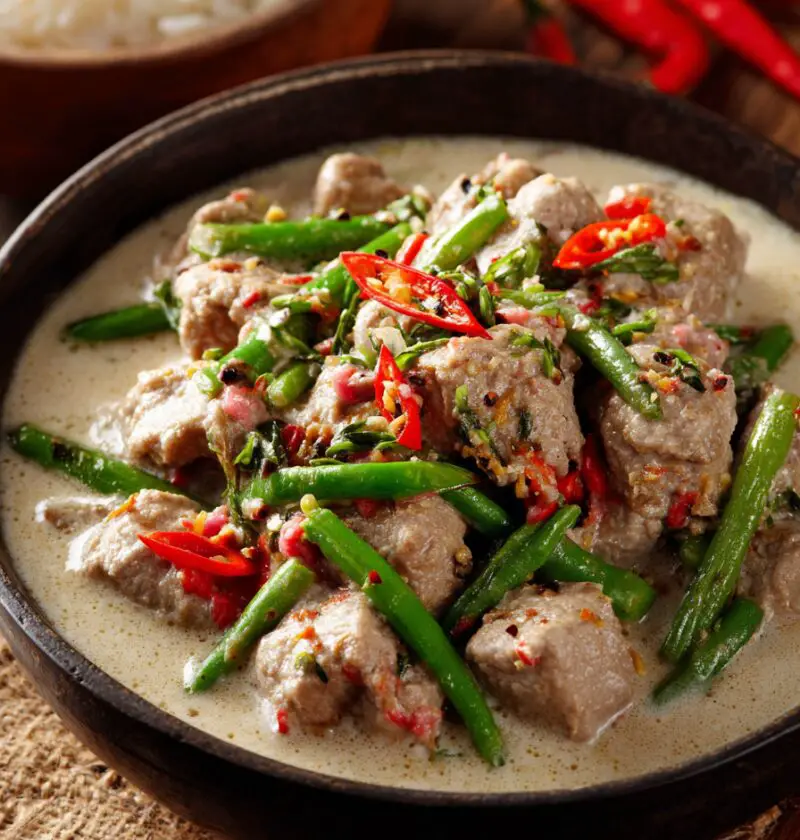
Bicol Express Recipe (Creamy, Spicy, and Comforting Pork in Coconut Milk)
This Bicol Express Recipe is a rich, creamy, and fiery Filipino coconut milk dish made with tender pork, coconut cream, and plenty of chili—comfort food with a kick that’s perfect for weeknights or family gatherings.
I still remember the first time I tasted an authentic Bicol Express at a little carinderia (mom-and-pop eatery) run by a Bicolano couple. I was in my 20s, thought I could handle spice, and… let’s just say my eyes watered, my nose ran, and I went back for seconds anyway. Now, in my 50s, I’ve mellowed the heat just enough so my kids and friends can enjoy it too—but it still has that bold, hot chili pork stew personality that makes this dish so loved.
This Bicol Express Recipe is a classic Filipino spicy recipe made with pork belly in coconut milk, shrimp paste, and chilies. It’s hearty, naturally gluten-free, and can easily be made milder or extra spicy. I like to serve it on rainy nights, for Sunday lunch, or when I need something cozy that still wakes up my taste buds. Think of it as the food version of a warm blanket—with a mischievous little kick.
Why You’ll Love This Bicol Express Recipe
You know what? There are a lot of reasons this creamy, spicy pork will find a permanent spot in your rotation:
- Bold, restaurant-level flavor at home – Deep, layered flavors from coconut milk, shrimp paste, and chilies without fussy techniques.
- Customizable heat – Make it mild for spice-shy eaters or super hot for chili lovers—same Bicolano pork dish, different fire level.
- Weeknight-friendly – Around 45 minutes on the stove, and most of that is gentle simmering.
- Budget-conscious – Uses affordable cuts like pork belly or shoulder and pantry staples.
- Great for meal prep – The flavor of this spicy pork stew actually gets better the next day as the coconut and chilies mingle.
- Comforting yet exciting – Creamy coconut mellows out the spice, so you get both comfort and a little thrill in every bite.
- Versatile serving options – Serve over rice, with cauliflower rice, or even spoon it over noodles or mashed potatoes.
- Authentic vibe with friendly shortcuts – Classic taste of traditional Bicol Express with step-by-step guidance anyone can follow.
Ingredients
Here’s everything you need to make this rich and creamy Bicol Express Recipe at home. I’ll note a few simple swaps as we go.
For the Bicol Express:
- 2 pounds (900 g) pork belly, cut into 1-inch cubes
- (You can use pork shoulder or pork butt for a leaner version.)
- 1 tablespoon neutral oil (canola, vegetable, or avocado oil)
- 1 medium yellow onion, finely chopped
- 6 cloves garlic, minced
- 1-inch piece ginger, peeled and minced (about 1 tablespoon)
- 3–4 tablespoons bagoong alamang (Filipino fermented shrimp paste), sauteed style if possible
- (If using raw shrimp paste, you may need to cook it a bit longer to tame the funk.)
- 2 cups coconut milk (full-fat, canned; I like Chaokoh or Aroy-D)
- 1 cup coconut cream (or the thick part from 1 extra can of coconut milk)
- 6–10 long green chilies (siling pangsigang or similar), sliced on the bias
- 4–6 bird’s eye chilies (siling labuyo), sliced or left whole for easier removal
- (Use fewer if you prefer a milder Filipino coconut milk dish.)
- 1 teaspoon sugar (brown sugar adds nice depth)
- ½ teaspoon freshly ground black pepper
- ½–1 teaspoon salt, or to taste (go light at first because the shrimp paste is salty)
- 1–2 tablespoons fish sauce (patis), optional, to taste
- 1–2 tablespoons water, as needed, if sauce gets too thick
For Serving:
- Steamed jasmine rice (essential if you ask any Filipino auntie)
- Sliced green onions or extra chilies for garnish (optional)
A few quick ingredient tips:
- Pork cut: Pork belly gives that luxurious, creamy-spicy pork finish because of the fat. If you’re watching fat intake, mix half pork belly and half pork shoulder.
- Coconut milk vs. cream: Don’t use “light” coconut milk here. Full-fat makes a big difference in flavor and texture.
- Chilies: Traditional Bicol Express is spicy. If you’re nervous, start with more green chilies and fewer bird’s eye chilies, then adjust next time.
- Shrimp paste: Filipino-style sauteed bagoong (like Kamayan or Barrio Fiesta brands) is more rounded and less harsh than raw shrimp paste from the jar.
Directions
You don’t need fancy skills to make this chili coconut pork—just a bit of stirring and patience while it simmers. Here’s how I do it step by step.
-
Prep all your ingredients.
Chop the pork into 1-inch cubes. Mince the garlic and ginger, chop the onion, and slice your chilies. Having everything ready before you turn on the stove makes this go smoothly and keeps the garlic from burning while you scramble. -
Render the pork fat and brown slightly.
Place a large, heavy-bottomed pan or Dutch oven over medium heat. Add the pork belly and the neutral oil. Cook for 8–10 minutes, stirring occasionally, until some fat renders out and the edges of the pork start to turn lightly golden. This step builds a deep base flavor for your spicy pork stew. -
Sauté the aromatics.
Push the pork to one side of the pan. In the rendered fat, add the onion and cook for about 3 minutes, until translucent and soft. Add the garlic and ginger and cook for another 1–2 minutes, stirring constantly. You’ll know it’s ready when the kitchen smells amazing but the garlic is still pale, not brown. -
Add the shrimp paste and bloom it.
Stir in the bagoong alamang. Let it cook with the aromatics and pork for 2–3 minutes, scraping the bottom of the pan. This “blooms” the shrimp paste, softening its sharpness and creating that authentic Bicol Express flavor. -
Pour in the coconut milk and start simmering.
Add the coconut milk (not the cream yet), pepper, and sugar. Stir well, making sure the pork is mostly submerged. Bring the mixture to a gentle simmer—not a fierce boil—over medium heat. Once it starts to bubble, reduce the heat to low, cover partially, and simmer for 20–25 minutes, stirring every few minutes to prevent sticking. -
Add the chilies for flavor and heat.
After the pork has simmered and is starting to get tender, add the green chilies and bird’s eye chilies. Stir them into the coconut milk dish and continue cooking another 10–15 minutes, uncovered, so the sauce starts to thicken. Taste a little of the sauce (careful, it’s hot!) and adjust the number of chilies next time based on your comfort level. -
Finish with coconut cream and adjust seasoning.
Pour in the coconut cream and stir well. Let the Bicolano pork dish simmer gently for 5–10 more minutes, or until the sauce is thick and glossy and the pork is tender but not falling apart. At this point, taste and adjust with salt, fish sauce, or a pinch more sugar as needed. If it’s too thick, add 1–2 tablespoons of water; if it’s too thin, let it simmer a few more minutes. -
Rest briefly and serve.
Turn off the heat and let the Bicol Express rest for about 5 minutes. This helps the sauce settle and cling beautifully to the pork. Spoon it over hot steamed rice, garnish with extra chilies or green onions if you like, and serve while it’s gloriously hot and aromatic.
Cook’s sensory cue: The finished pork in coconut milk should be glossy, thick, and clingy—not soupy. The aroma will be a mix of coconut, garlic, and a gentle fermented back note from the shrimp paste.
Servings & Timing
- Yield: Serves 6–8 as a main dish
- Prep Time: 15 minutes (mostly chopping)
- Cook Time: 40–45 minutes
- Total Time: About 55–60 minutes
For a “real life” note: If you’re like me and chatting in the kitchen or wrangling kids, budget a full hour. The good news? Most of that is simmering time while you tidy up or make rice.
Tasty Twists & Variations
Once you’ve nailed the base Bicol Express Recipe, you can have a little fun with it:
- Seafood Bicol Express: Swap half the pork for shrimp or squid and add them in the last 5–7 minutes of cooking so they don’t get tough.
- Chicken Bicol Express: Use boneless, skinless chicken thighs instead of pork and reduce the simmering time by about 10 minutes.
- Veggie-heavy version: Add green beans, eggplant slices, or sayote (chayote) during the last 10–15 minutes for extra fiber and color.
- Lower-fat creamy spicy pork: Use a 50/50 mix of pork shoulder and pork belly, and replace ½ cup of coconut cream with extra coconut milk.
- Super smoky version: Stir a teaspoon of smoked paprika into the aromatics along with the shrimp paste for a different but delicious twist.
- Extra-hot chili lover’s Bicol Express: Add more bird’s eye chilies and leave the seeds in; you can also drizzle with a bit of chili oil before serving.
Storage & Reheating
Here’s where this Filipino spicy recipe really shines: it keeps beautifully.
-
Fridge:
Transfer leftovers to an airtight container and refrigerate for up to 4 days. The coconut fat will solidify a bit on top—that’s normal and actually helps seal in flavor. -
Freezer:
Store in freezer-safe containers or zip-top bags for up to 2 months. Flatten the bags before freezing for faster thawing. -
Reheating:
Reheat gently on the stovetop over low to medium-low heat, adding a splash of water or coconut milk if the sauce seems too thick. You can also microwave in 30–45 second bursts, stirring between intervals. -
Make-ahead tips:
This chili coconut pork tastes even better the next day, so it’s perfect for parties or busy weeks. Cook it a day ahead, cool completely, then reheat just before serving. If you’re making it for guests, you can undercook the pork slightly, then finish it on serving day for perfectly tender meat.
Notes from My Kitchen to Yours
A few little things I’ve learned while testing and re-testing this traditional Bicol Express:
-
Respect the shrimp paste.
Bagoong is strong. Start with 3 tablespoons, taste, then add more if you want a deeper, saltier flavor. It’s easier to add than to fix an overly salty pot. -
Balance is everything.
You want a harmony of salty, creamy, spicy, and lightly sweet. That’s why a teaspoon of sugar matters more than you’d think—it rounds out the edges. -
Spice creeps up on you.
When you taste straight from the pot, remember the heat builds as it sits and when you’re eating full portions. If you’re serving kids or spice-sensitive folks, pull back just a bit. -
Don’t rush the simmer.
Giving the pork time to relax in the coconut milk means tender meat and a richer sauce. If you rush, you’ll get chewy pork and a thinner, less integrated sauce. -
Use good coconut milk.
This is not the place for watery or “lite” coconut milk. Full-fat, high-quality brands make this creamy spicy pork truly luscious. -
Resting time matters.
That 5-minute rest before serving lets the fat float less and the sauce cling more. It’s like letting a good steak rest—you get a better final result.
FAQs
1. Can I make this Bicol Express Recipe less spicy?
Yes. Use more long green chilies and only 1–2 bird’s eye chilies, or skip the bird’s eye entirely. You can also remove the seeds from the chilies to reduce heat.
2. What cut of pork works best for Bicol Express?
Pork belly is traditional and gives the creamiest result, but pork shoulder or pork butt works well if you want a slightly leaner Filipino coconut milk dish.
3. Can I use frozen pork?
You can, but fully thaw it in the fridge first. Partially frozen pork won’t brown properly and may release too much water, making the sauce less rich.
4. Is there a substitute for shrimp paste (bagoong)?
Shrimp paste is key for authentic Bicol Express, but if you can’t find it, use 1–2 tablespoons fish sauce plus a few mashed anchovy fillets. It won’t be exact, but it’ll still be deeply savory.
5. Can I make this dairy-free?
It’s already dairy-free—coconut milk and cream are plant-based. Just double-check your shrimp paste and fish sauce for any added ingredients if you’re very strict.
6. Why did my sauce curdle or separate?
The heat was likely too high. Keep the pot at a gentle simmer, not a rolling boil, especially after adding the coconut cream.
7. How can I thicken a runny Bicol Express?
Let it simmer uncovered for a few extra minutes, stirring often. If it’s still too thin, mash a few pork pieces in the sauce or add 2–3 tablespoons of coconut cream.
8. Can I cook this in a slow cooker?
Yes. Brown the pork and sauté the aromatics with shrimp paste on the stovetop first, then transfer everything (except coconut cream and chilies) to a slow cooker. Cook on LOW for 5–6 hours, then add chilies and coconut cream for the last 30–45 minutes.
Conclusion
This Bicol Express Recipe is everything I love about Filipino food: bold, comforting, a little dramatic, and perfect with a big bowl of rice. You get tender pork in coconut milk, that signature chili heat, and a sauce so good you’ll be tempted to lick the spoon.
If you try this traditional Bicol Express at home, let me know how spicy you made it and how it went over at your table—leave a comment, share your tweaks, or tag your photos so we can all drool together. And if you’re craving more cozy Filipino dishes, try pairing this with adobo, ginataang gulay, or a simple garlic fried rice next.

Bicol Express (Creamy Spicy Pork in Coconut Milk)
Ingredients
- 2 pounds pork belly cut into 1-inch cubes (or use pork shoulder/butt for a leaner version)
- 1 tablespoon neutral oil such as canola, vegetable, or avocado oil
- 1 medium yellow onion finely chopped
- 6 cloves garlic minced
- 1 inch ginger peeled and minced (about 1 tablespoon)
- 3-4 tablespoons bagoong alamang (Filipino fermented shrimp paste) sauteed style if possible; if using raw, cook a bit longer to tame the funk
- 2 cups coconut milk full-fat, canned (e.g., Chaokoh or Aroy-D), not light
- 1 cup coconut cream or the thick part from 1 extra can of coconut milk
- 6-10 long green chilies (siling pangsigang or similar) sliced on the bias
- 4-6 bird’s eye chilies (siling labuyo) sliced or left whole for easier removal; use fewer for milder heat
- 1 teaspoon sugar brown sugar adds nice depth
- 1/2 teaspoon freshly ground black pepper
- 1/2-1 teaspoon salt or to taste; go light at first because the shrimp paste is salty
- 1-2 tablespoons fish sauce (patis) optional, to taste
- 1-2 tablespoons water as needed, if sauce gets too thick
- steamed jasmine rice for serving
- sliced green onions or extra chilies optional, for garnish
Instructions
- Chop the pork into 1-inch cubes. Mince the garlic and ginger, chop the onion, and slice the chilies. Have everything ready before you start cooking so the aromatics don’t burn.
- Place a large, heavy-bottomed pan or Dutch oven over medium heat. Add the pork belly and neutral oil. Cook for 8–10 minutes, stirring occasionally, until some fat renders out and the edges of the pork start to turn lightly golden.
- Push the pork to one side of the pan. In the rendered fat, add the onion and cook for about 3 minutes, until translucent and soft. Add the garlic and ginger and cook for another 1–2 minutes, stirring constantly, until fragrant but not browned.
- Stir in the bagoong alamang and cook with the aromatics and pork for 2–3 minutes, scraping the bottom of the pan to prevent sticking. This blooms the shrimp paste and deepens the flavor.
- Pour in the coconut milk (reserve the coconut cream for later), then add black pepper and sugar. Stir well so the pork is mostly submerged. Bring to a gentle simmer over medium heat, then reduce to low, partially cover, and simmer for 20–25 minutes, stirring occasionally to prevent sticking.
- Add the long green chilies and bird’s eye chilies. Stir into the sauce and continue cooking uncovered for 10–15 minutes so the sauce starts to reduce and thicken and the chili flavor infuses.
- Stir in the coconut cream and let the Bicol Express simmer gently for 5–10 more minutes, until the sauce is thick, glossy, and clings to the pork and the meat is tender. Taste and adjust with salt, fish sauce, or a pinch more sugar as needed. If the sauce is too thick, add 1–2 tablespoons of water; if too thin, simmer a few more minutes.
- Turn off the heat and let the Bicol Express rest for about 5 minutes so the sauce settles. Serve hot over steamed jasmine rice and garnish with sliced green onions or extra chilies if desired.