Baked Salmon With Lemon Dill Recipe
If you need a simple, fresh, and healthy dinner that feels a little special without making a mess of your kitchen, this Baked Salmon With Lemon Dill Recipe is it. It’s bright, flaky, full of flavor, and perfect for a quick weeknight meal or a relaxed weekend supper.
A Simple Salmon Dinner That Feels Special
There’s something about baked salmon that always makes dinner feel a bit more put together, even when it took very little effort. This Baked Salmon With Lemon Dill Recipe pairs rich, buttery salmon with fresh lemon, fragrant dill, and a touch of garlic for a meal that tastes clean, comforting, and company-worthy all at once.
I make this dish year-round, but I especially love it in spring and summer when fresh dill is easy to find and lemony flavors sound extra appealing. Around my house, this is one of those dependable recipes I pull out when I want something healthy but don’t want to fuss. It’s also a lovely salmon dinner recipe for those evenings when you’re trying to eat a little lighter but still want real flavor on the plate.
From a nutrition standpoint, salmon is a smart pick. It’s packed with protein and omega-3 fatty acids, and when you bake it instead of frying it, you keep things simple and wholesome. That’s part of what makes this such a reliable healthy salmon dish—it feels like comfort food, but lighter.
And if you’ve ever felt nervous about cooking fish at home, let me reassure you: this is a very forgiving easy salmon recipe. A hot oven, a good lemon dill topping, and a close eye on doneness go a long way.
Why You’ll Love This Recipe
- Ready in about 25 minutes from start to finish
- Uses simple, fresh ingredients you can find anywhere
- A wonderful oven baked salmon recipe for beginners
- Light, bright flavor that doesn’t feel heavy
- Naturally high in protein and healthy fats
- Easy enough for weeknights, pretty enough for guests
- Works with salmon fillets or one larger side of salmon
- Pairs well with rice, potatoes, or a green salad
- The lemon, dill, and garlic bring big flavor with little effort
- Great for meal prep and leftovers the next day
Ingredients
Here’s what you’ll need for this lemon dill salmon recipe. These amounts serve about 4 people.
-
4 salmon fillets (6 ounces each)
Try to choose fillets that are similar in thickness so they bake evenly. Skin-on works beautifully because it helps protect the fish from drying out. -
2 tablespoons olive oil
Use a good everyday olive oil, such as California Olive Ranch or Kirkland Signature, for a clean, balanced flavor. -
2 tablespoons fresh lemon juice
Fresh squeezed really does make a difference here. Bottled lemon juice can taste a bit flat. -
1 teaspoon lemon zest
This adds that extra citrus aroma that makes the whole dish smell wonderful. -
3 cloves garlic, minced
Fresh garlic gives this garlic lemon salmon its savory backbone. If needed, use 1 teaspoon garlic paste. -
2 tablespoons fresh dill, chopped
Fresh dill is best for this fresh dill salmon recipe. If you only have dried, use 2 teaspoons dried dill. -
1/2 teaspoon kosher salt
Adjust slightly based on the size of your fillets and your taste. -
1/4 teaspoon black pepper
Freshly cracked pepper gives the nicest flavor. -
1/4 teaspoon paprika
Optional, but it adds a little color and gentle warmth. -
Lemon slices, for topping
Thin slices help perfume the salmon as it bakes. -
1 teaspoon Dijon mustard (optional)
Stir this into the lemon mixture if you want a slightly deeper, tangier finish. -
1 tablespoon melted butter (optional)
If you want richer flavor, a little butter mixed with the lemon and dill is lovely.

A few shopping notes, because they matter more than people think: look for salmon that smells mild and fresh, not overly “fishy.” Atlantic salmon tends to be richer and fattier, while sockeye is leaner and a deeper red. Both work here. If you’re feeding picky eaters, Atlantic is often the crowd-pleaser.
Directions
-
Preheat the oven and prepare your pan.
Set your oven to 400°F. Line a baking dish or sheet pan with parchment paper or lightly grease it with oil. Parchment makes cleanup easier, and honestly, I’m always in favor of fewer dishes. -
Pat the salmon dry.
Use paper towels to blot the salmon fillets dry. This helps the seasoning stick better and keeps the fish from steaming too much in the oven. -
Make the lemon dill mixture.
In a small bowl, stir together the olive oil, lemon juice, lemon zest, minced garlic, chopped dill, salt, pepper, and paprika. If you’re using Dijon or melted butter, add them here too. The mixture should smell bright and fresh right away. -
Season the salmon.
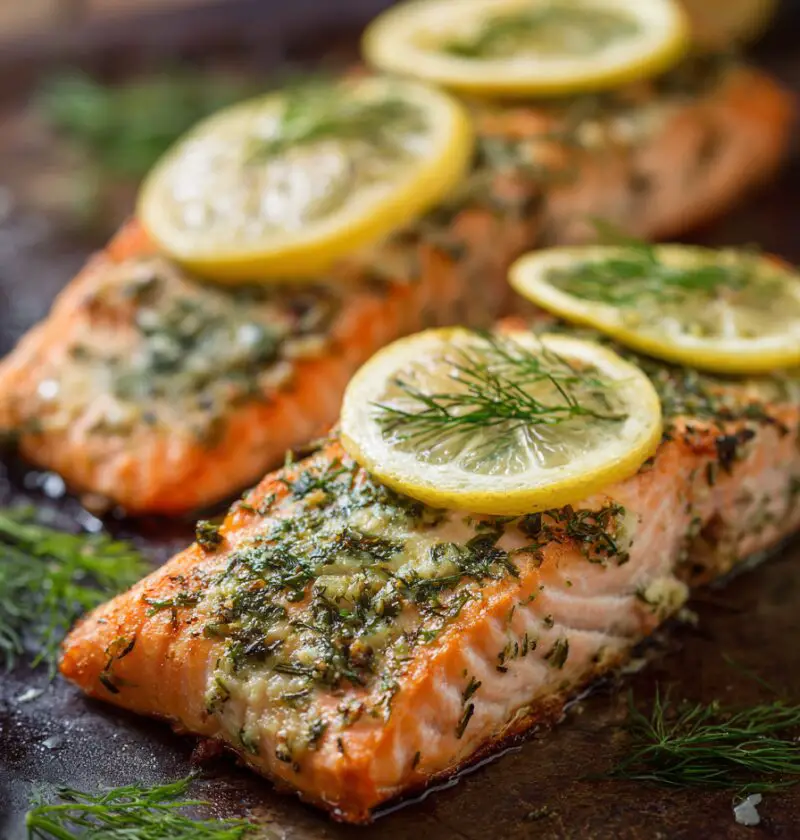
Place the fillets skin-side down on the prepared pan. Spoon or brush the lemon dill mixture evenly over each piece. Top with a slice or two of lemon. Let it sit for 5 minutes if you have time; that little rest gives the flavors a head start. -
Bake until just cooked through.
Put the salmon in the oven and bake for 12 to 15 minutes, depending on thickness. A thinner fillet may be done in 10 to 12 minutes, while thicker pieces can take closer to 15. The salmon should flake easily with a fork and look slightly translucent in the center before resting. -
Check for doneness carefully.
If you use an instant-read thermometer, aim for 125°F to 130°F in the thickest part for moist salmon, or 145°F if you prefer it fully done according to USDA guidance. Personally, I pull it a little earlier and let carryover heat finish the job. -
Rest and serve.
Let the salmon rest for 3 to 5 minutes before serving. Spoon any juices from the pan over the top and add an extra sprinkle of dill if you like. That final touch makes it look restaurant-pretty with almost no effort.
Servings & Timing
- Yield: 4 servings
- Prep Time: 10 minutes
- Cook Time: 15 minutes
- Rest Time: 5 minutes
- Total Time: 30 minutes
That makes this an excellent baked fish recipe for busy nights. Half an hour, give or take, and dinner is done.
Variations
Sometimes it’s fun to change the tune a little while keeping the same easy framework. Here are a few ways to switch up this dill salmon recipe:
- Add honey: Stir in 1 teaspoon honey for a sweet-tart lemon glaze.
- Make it creamy: Add a spoonful of Greek yogurt to the sauce after baking for a cool, creamy finish.
- Use another herb: Swap part of the dill for parsley or chives if that’s what you have.
- Try foil packets: Bake each fillet in foil for an extra juicy result and easy cleanup.
- Add capers: Sprinkle capers over the top for a briny, punchy twist.
- Go a little spicy: Add a pinch of crushed red pepper flakes to the lemon mixture.
These small changes keep the recipe fresh without turning it into a whole new production.
Storage & Reheating
Store leftover salmon in an airtight container in the refrigerator for up to 3 days. It will still taste good on day three, especially flaked into a salad, grain bowl, or wrap.
For reheating, place the salmon in a covered baking dish and warm it in a 275°F oven for about 10 to 15 minutes, just until heated through. You can also microwave it in short bursts at 50% power, though the oven gives a gentler result. Fish can dry out quickly, so low and slow is the way to go.
To freeze, let the salmon cool completely, wrap tightly, and freeze for up to 2 months. Thaw overnight in the refrigerator before reheating.
If you want to make it ahead, mix the lemon dill topping several hours in advance and keep it in the fridge. Then all you have to do at dinnertime is season and bake.
Notes
One thing I’ve learned after making baked salmon more times than I can count: don’t overbake it. Really, that’s the whole ball game. Salmon goes from tender and silky to dry faster than you’d think, especially if the fillets are thin.
Another tip—fresh dill gives this recipe its signature flavor. Dried dill works in a pinch, and I’ve used it plenty of times, but fresh dill makes the whole dish taste brighter and more polished.
If your salmon has a thick end and a thin end, tuck the thin side under just a bit. It’s a small trick, but it helps the fillet bake more evenly. Also, if there’s a white substance on top after baking, that’s albumin, a natural protein that comes out when salmon cooks. It’s perfectly fine to eat. It may not win a beauty contest, but it’s harmless.
For a more complete meal, serve this salmon recipe with roasted asparagus, baby potatoes, couscous, or a crisp cucumber salad. If you’re trying to build a balanced plate, salmon plus a green vegetable and a whole grain is hard to beat.
FAQs
Can I use frozen salmon for this recipe?
Yes, absolutely. Thaw it overnight in the refrigerator and pat it very dry before baking so the seasoning sticks and the fish roasts instead of steaming.
What temperature should salmon be baked at?
I like 400°F for this recipe because it cooks the salmon quickly while keeping it moist. It’s a sweet spot for most fillets.
How do I know when baked salmon is done?
The fish should flake easily with a fork and look tender, not chalky. An internal temperature of 125°F to 130°F gives a moist center; 145°F is the USDA guideline.
Can I make this lemon dill recipe with dried dill?
Yes. Use about 2 teaspoons dried dill in place of the fresh dill. The flavor will be a bit less lively, but still very good.
Is this a healthy salmon dish?
It is. Salmon is rich in protein and omega-3s, and this recipe uses simple ingredients with very little added fat.
What sides go best with lemon dill salmon?
Rice pilaf, roasted vegetables, steamed green beans, mashed potatoes, or a simple salad all pair beautifully. For a lighter dinner, try cauliflower rice and sautéed spinach.
Can I bake one large salmon fillet instead of individual pieces?
Yes, and it works very well for guests. Just increase the baking time slightly and start checking around the 15-minute mark, depending on thickness.
Why did white stuff come out of my salmon?
That’s albumin, a natural protein that firms up as salmon cooks. It’s completely normal and often shows up more when the fish is cooked a bit longer.
Conclusion
This Baked Salmon With Lemon Dill Recipe is one of those dependable meals that checks all the boxes: easy, fresh, healthy, and full of flavor. It’s a simple oven baked salmon dish that feels elegant enough for guests but is easy enough for a Tuesday night.
If you try it, I’d love for you to leave a comment and share how you served it. And if you’re looking for more comforting, fuss-free ideas, be sure to check out my other easy salmon recipe, baked fish recipe, and weeknight dinner favorites.