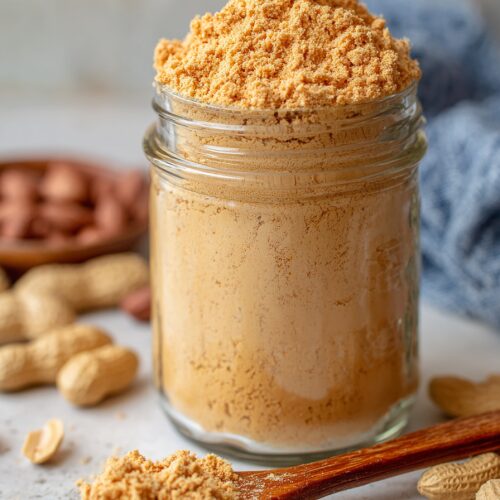
Homemade Peanut Butter Powder
This homemade Peanut Butter Powder is a lighter, lower-fat way to enjoy classic peanut flavor. Dry roasted peanuts are ground, pressed to remove excess oil, then blended with optional sweetener, salt, and protein powder for a clean, customizable pantry staple perfect for smoothies, baking, and quick spreads.
Ingredients
- 2 cups dry roasted peanuts unsalted, no added oil
- 1 tablespoon coconut sugar or light brown sugar up to 2 tablespoons, to taste; optional
- 1/2 teaspoon fine sea salt up to 1 teaspoon, to taste
- 2 tablespoons unflavored or vanilla protein powder up to 3 tablespoons; optional
- cheesecloth or clean thin kitchen towel for pressing out oil
Instructions
- Set up a high-speed blender, spice grinder, or food processor. Make sure the container and blades are completely dry. Have a fine-mesh sieve and cheesecloth or a clean thin kitchen towel ready for pressing out oil.
- Add about 1 cup of dry roasted peanuts to the blender or food processor. Pulse in short bursts of 5–10 seconds, scraping down the sides as needed. Do not overfill the container; work in 1-cup batches so the peanuts don’t quickly turn into peanut butter.2 cups dry roasted peanuts
- Continue pulsing until the peanuts go from coarse crumbs to a slightly sticky, damp sand-like texture. Stop processing once they reach this stage to avoid turning them into a paste.2 cups dry roasted peanuts
- Transfer the ground peanuts to a fine-mesh sieve lined with cheesecloth or a clean kitchen towel. Fold the cloth over the peanut mixture and press firmly with your hands or the back of a measuring cup to squeeze out as much oil as possible. Let the mixture sit in the sieve for 5–10 minutes so additional oil can drip out.2 cups dry roasted peanuts, cheesecloth or clean thin kitchen towel
- Return the pressed peanut solids to the dry blender or food processor. Pulse again in short bursts until the mixture is finer and drier-looking. It may still appear slightly clumpy at this point.2 cups dry roasted peanuts
- Add the fine sea salt, coconut sugar or light brown sugar (if using), and protein powder (if using) to the blender. Pulse or blend in short bursts until everything is very finely ground and evenly combined.1 tablespoon coconut sugar or light brown sugar, 1/2 teaspoon fine sea salt, 2 tablespoons unflavored or vanilla protein powder
- Turn off the machine and let the powder settle before opening the lid. The mixture should resemble a fine, loose flour. If it still feels damp or clumpy, spread it out on a parchment-lined baking sheet and let it air-dry at room temperature for 30–60 minutes, stirring once or twice, until completely dry.
- For an ultra-fine powder, return the dried mixture to the blender or pulse in a clean spice grinder in small batches until very smooth. This helps it dissolve better in liquids and mix smoothly into spreads.
- Make sure the peanut butter powder is completely cool and dry. Transfer it to an airtight jar or container, label with the date, and store in a cool, dry cupboard away from direct sunlight.
- To make a quick peanut butter-style spread, whisk 2 tablespoons of peanut butter powder with 1–2 tablespoons of water, adding the water gradually until you reach your desired consistency.
- For smoothies or shakes, add 1–3 tablespoons of peanut butter powder per serving, adjusting to taste for a stronger or milder peanut flavor.
Notes
Yield: About 1 1/2–2 cups peanut butter powder, depending on how much oil is pressed out (roughly 24–32 tablespoons).
Timing: About 20 minutes active prep plus 10–20 minutes resting/pressing and optional air-drying.
Storage: Store in an airtight container in a cool, dry pantry for 2–3 months. For warmer or more humid kitchens, refrigerate for up to 4–5 months, or freeze for up to 6 months and let come to room temperature before using.
Tips: Grind in short pulses and in small batches to avoid turning the peanuts into butter. The pressing step is essential for lowering the fat content. Taste and adjust salt and sweetness before bottling, and let your blender rest if it gets hot.
Substitutions: Sweetener can be omitted or replaced with powdered low- or no-calorie sweeteners such as monk fruit or allulose. Any neutral or vanilla protein powder works, but flavored powders will change the taste.
Baking: Use this powder to add peanut flavor to batters and doughs by whisking it into the dry ingredients; it does not directly replace the fat or structure of regular peanut butter in recipes.
Timing: About 20 minutes active prep plus 10–20 minutes resting/pressing and optional air-drying.
Storage: Store in an airtight container in a cool, dry pantry for 2–3 months. For warmer or more humid kitchens, refrigerate for up to 4–5 months, or freeze for up to 6 months and let come to room temperature before using.
Tips: Grind in short pulses and in small batches to avoid turning the peanuts into butter. The pressing step is essential for lowering the fat content. Taste and adjust salt and sweetness before bottling, and let your blender rest if it gets hot.
Substitutions: Sweetener can be omitted or replaced with powdered low- or no-calorie sweeteners such as monk fruit or allulose. Any neutral or vanilla protein powder works, but flavored powders will change the taste.
Baking: Use this powder to add peanut flavor to batters and doughs by whisking it into the dry ingredients; it does not directly replace the fat or structure of regular peanut butter in recipes.
Nutrition
Calories: 45kcal
Love this recipe?Follow us at @thenandnowspace for more