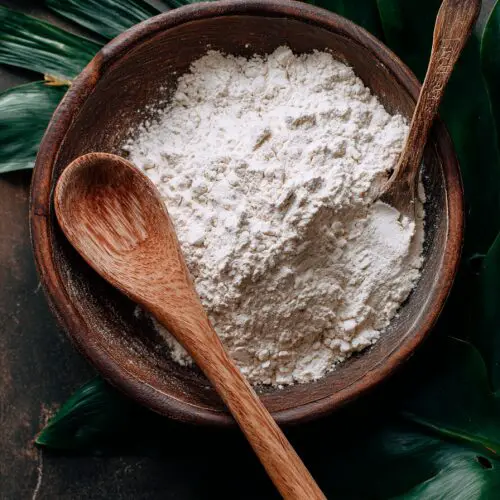
Everyday Cassava Flour Flatbread (Master Dough for Flatbread, Tortillas & Pizza Crust)
A simple, flexible cassava flour dough that’s naturally gluten-free, grain-free, and dairy-free. Use this master recipe for soft flatbread, tortillas, or a crisp pizza crust, with easy flavor and texture variations.
Ingredients
- 1 1/2 cups cassava flour about 180 g; brands vary (e.g., Otto’s Naturals, Bob’s Red Mill)
- 1 teaspoon fine sea salt or kosher salt; avoid large flaky salt
- 1/2 teaspoon baking powder aluminum-free if possible
- 2 tablespoons olive oil or avocado oil mild-flavored; melted coconut oil also works
- 1 cup warm water plus 1–3 tablespoons more as needed; warm but not hot
- 1 teaspoon garlic powder optional flavor booster
- 1 teaspoon dried Italian herbs optional; such as oregano, basil, thyme
- 1/4 teaspoon black pepper optional
- 1 tablespoon ground flaxseed optional; for extra fiber and structure
- 1 teaspoon apple cider vinegar optional; for a slightly tangy, more bread-like result
Instructions
- In a medium bowl, whisk together the cassava flour, fine sea salt, baking powder, and any optional dry add-ins (garlic powder, dried Italian herbs, black pepper, ground flaxseed). Make sure the baking powder is evenly distributed.1 1/2 cups cassava flour, 1 teaspoon fine sea salt, 1/2 teaspoon baking powder, 1 teaspoon garlic powder, 1 teaspoon dried Italian herbs, 1/4 teaspoon black pepper, 1 tablespoon ground flaxseed
- Drizzle in the olive or avocado oil. Use a fork or your fingers to rub the oil into the cassava flour mixture until it resembles slightly damp sand.2 tablespoons olive oil or avocado oil
- Pour in about 3/4 cup of the warm water (and apple cider vinegar if using). Stir with a spoon or spatula; the dough will look shaggy at first. Add more warm water 1 tablespoon at a time until the dough comes together into a soft, smooth ball. It should feel like play-dough—pliable but not sticky. If crumbly, add a bit more water; if sticky, sprinkle in 1–2 teaspoons more cassava flour.1 cup warm water, 1 teaspoon apple cider vinegar
- Cover the bowl with a towel and let the dough rest for 5–10 minutes to fully hydrate and reduce cracking when you roll or press it.
- For flatbread or tortillas, heat a cast-iron or nonstick skillet over medium to medium-high heat. For pizza crust, preheat the oven to 425°F (220°C) and place a sheet pan or pizza stone inside to heat.
- Turn the dough out onto parchment paper or a lightly floured surface (use a light dusting of cassava flour). For flatbread or tortillas, divide the dough into 6–8 equal pieces for smaller rounds or 4 pieces for thicker ones. Roll each piece into a ball, flatten with your palm, then roll or press into a 5–6 inch circle. For pizza crust, roll or press all (or half) of the dough into a 10–12 inch circle or rectangle on parchment, about 1/4 inch thick.
- Working one at a time, place a dough round into the hot dry skillet. Cook 1–2 minutes, until bubbles form and the underside has light golden-brown spots. Flip and cook another 1–2 minutes. For softer, wrap-style tortillas, keep the bread lightly colored and stack cooked pieces in a clean towel to steam. For heartier flatbread, cook until more deeply browned but still soft in the center.
- For pizza crust, transfer the rolled dough on its parchment to the preheated sheet pan or stone. Bake 8–10 minutes, until the edges are set and just turning golden. Remove, add sauce and toppings, then return to the oven for another 8–10 minutes, until the toppings are cooked and the crust is browned around the edges.
- Break off a small piece of cooked flatbread and taste. If needed, sprinkle with a bit more salt or brush with olive oil and garlic while warm.
- Serve the cassava flour flatbread warm. Use as a side with soups and stews, as a wrap, as soft tortillas, or as a base for pizza or sweet toppings.
Notes
SERVINGS & TIMING:
- Yield: 6–8 flatbreads or tortillas (5–6 inches each), OR one 10–12 inch pizza crust (or two smaller ones).
- Prep Time: 10–15 minutes.
- Rest Time: 5–10 minutes.
- Cook Time: 10–15 minutes depending on batch size.
- Total Time: about 30–35 minutes. DELICIOUS VARIATIONS:
- Garlic Herb Flatbread: Add 2 teaspoons Italian seasoning and 1–2 cloves minced garlic to the dough; brush hot flatbread with olive oil and sea salt.
- Cassava Flour Pizza Crust: Make one large round, pre-bake, then top with sauce, cheese or vegan cheese, and veggies; bake again until crisp and bubbly.
- Cinnamon Dessert Rounds: Omit savory herbs/garlic; add 1 tablespoon sugar or maple syrup and 1 teaspoon cinnamon. Serve with sliced bananas or berries.
- Cheesy Cassava Flatbread (not vegan): Stir 1/4 cup finely shredded cheese into the dough for richer, more biscuit-style rounds.
- Vegan Version: Use olive or avocado oil, skip cheese and dairy, and top with hummus, avocado, or roasted vegetables.
- Cassava Flour Crackers: Roll the dough thinner, prick with a fork, brush lightly with oil and salt, and bake at 350°F (175°C) for 10–15 minutes, until crisp. STORAGE & REHEATING:
- Room temperature: Store cooled flatbread in an airtight container or bag for up to 24 hours.
- Refrigerator: Store 3–4 days; separate layers with parchment.
- Freezer: Freeze flatbread, tortillas, or pre-baked pizza crusts for up to 2 months, with parchment between pieces.
- Reheating: Warm in a skillet over medium heat 30–60 seconds per side; or in a 300°F (150°C) oven wrapped in foil for 8–10 minutes; microwave 15–20 seconds if needed (skillet gives better texture).
- Make-ahead: Form dough balls and refrigerate up to 24 hours, covered. Bring to room temperature 15–20 minutes before rolling and cooking. TIPS:
- Cassava flour brands vary in absorbency; add water gradually until you get a soft, smooth, non-sticky dough.
- If the dough is sticky, add cassava flour 1 teaspoon at a time; if dry or cracking, add warm water 1 tablespoon at a time.
- A hot pan is key for good color and texture; pale or tough flatbread often means the pan is too cool.
- Gluten-free and grain-free recipes can taste flat if under-salted—adjust to taste.
- For pancakes or crepes, thin this dough with extra water or plant milk to a pourable batter and cook like regular pancakes or crepes. FAQ HIGHLIGHTS:
- Cassava flour is more absorbent than wheat flour, so it is not always a 1:1 substitute in baking.
- This recipe can be paleo and Whole30-friendly if you skip sugar and cheese and use compliant oils.
- Already dairy-free and egg-free; easy to keep fully vegan.
- Gumminess usually indicates too much water, undercooking, or a very starchy brand; add a bit more flour and cook over medium-high heat until well browned.
- For biscuit-style rounds, add 1–2 tablespoons extra oil and 1/2 teaspoon more baking powder, shape thicker, and bake at 375°F (190°C) until puffed and golden.
- For waffles, thin to a batter and add a bit more oil and, if desired, an egg or flax egg for structure.
- Yield: 6–8 flatbreads or tortillas (5–6 inches each), OR one 10–12 inch pizza crust (or two smaller ones).
- Prep Time: 10–15 minutes.
- Rest Time: 5–10 minutes.
- Cook Time: 10–15 minutes depending on batch size.
- Total Time: about 30–35 minutes. DELICIOUS VARIATIONS:
- Garlic Herb Flatbread: Add 2 teaspoons Italian seasoning and 1–2 cloves minced garlic to the dough; brush hot flatbread with olive oil and sea salt.
- Cassava Flour Pizza Crust: Make one large round, pre-bake, then top with sauce, cheese or vegan cheese, and veggies; bake again until crisp and bubbly.
- Cinnamon Dessert Rounds: Omit savory herbs/garlic; add 1 tablespoon sugar or maple syrup and 1 teaspoon cinnamon. Serve with sliced bananas or berries.
- Cheesy Cassava Flatbread (not vegan): Stir 1/4 cup finely shredded cheese into the dough for richer, more biscuit-style rounds.
- Vegan Version: Use olive or avocado oil, skip cheese and dairy, and top with hummus, avocado, or roasted vegetables.
- Cassava Flour Crackers: Roll the dough thinner, prick with a fork, brush lightly with oil and salt, and bake at 350°F (175°C) for 10–15 minutes, until crisp. STORAGE & REHEATING:
- Room temperature: Store cooled flatbread in an airtight container or bag for up to 24 hours.
- Refrigerator: Store 3–4 days; separate layers with parchment.
- Freezer: Freeze flatbread, tortillas, or pre-baked pizza crusts for up to 2 months, with parchment between pieces.
- Reheating: Warm in a skillet over medium heat 30–60 seconds per side; or in a 300°F (150°C) oven wrapped in foil for 8–10 minutes; microwave 15–20 seconds if needed (skillet gives better texture).
- Make-ahead: Form dough balls and refrigerate up to 24 hours, covered. Bring to room temperature 15–20 minutes before rolling and cooking. TIPS:
- Cassava flour brands vary in absorbency; add water gradually until you get a soft, smooth, non-sticky dough.
- If the dough is sticky, add cassava flour 1 teaspoon at a time; if dry or cracking, add warm water 1 tablespoon at a time.
- A hot pan is key for good color and texture; pale or tough flatbread often means the pan is too cool.
- Gluten-free and grain-free recipes can taste flat if under-salted—adjust to taste.
- For pancakes or crepes, thin this dough with extra water or plant milk to a pourable batter and cook like regular pancakes or crepes. FAQ HIGHLIGHTS:
- Cassava flour is more absorbent than wheat flour, so it is not always a 1:1 substitute in baking.
- This recipe can be paleo and Whole30-friendly if you skip sugar and cheese and use compliant oils.
- Already dairy-free and egg-free; easy to keep fully vegan.
- Gumminess usually indicates too much water, undercooking, or a very starchy brand; add a bit more flour and cook over medium-high heat until well browned.
- For biscuit-style rounds, add 1–2 tablespoons extra oil and 1/2 teaspoon more baking powder, shape thicker, and bake at 375°F (190°C) until puffed and golden.
- For waffles, thin to a batter and add a bit more oil and, if desired, an egg or flax egg for structure.
Love this recipe?Follow us at @thenandnowspace for more