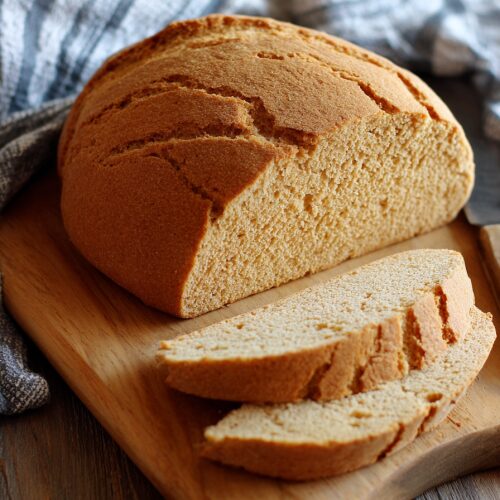
Einkorn Bread
A soft, golden, sliceable einkorn bread loaf made with simple pantry ingredients. Perfect for sandwiches, toast, or serving warm with meals, this recipe showcases the gentle flavor and tender crumb of ancient grain einkorn.
Ingredients
- 3 1/4 cups all-purpose einkorn flour 390 g; or use 2 3/4 cups all-purpose + 1/2 cup whole grain einkorn for more flavor
- 1 teaspoon fine sea salt or table salt; use a heaping teaspoon if using kosher salt
- 2 1/4 teaspoons active dry yeast 1 packet (7 g); instant yeast can be used and mixed directly into the flour
- 1 1/4 cups warm water 295 ml; 105–110°F, like very warm bath water
- 2 tablespoons honey 30 g; or use maple syrup or sugar
- 2 tablespoons neutral oil or melted butter 28 g; such as avocado, light olive, or grapeseed oil; butter gives richer flavor
- 1 tablespoon vital wheat gluten 8 g; optional but helps with lift and texture
- einkorn flour extra, for dusting hands and work surface
- oil or butter for greasing the loaf pan
- parchment paper optional, to line the bottom of the loaf pan
Instructions
- In a medium bowl or large measuring cup, whisk together the warm water, honey, and active dry yeast. Let the mixture sit for 5–10 minutes, until the surface looks foamy and creamy. If it does not foam, the yeast may be expired or the water temperature may be incorrect.2 1/4 teaspoons active dry yeast, 1 1/4 cups warm water, 2 tablespoons honey
- In a large mixing bowl, stir together the all-purpose einkorn flour, fine sea salt, and optional vital wheat gluten. Use a whisk or fork to distribute the salt and gluten evenly throughout the flour.3 1/4 cups all-purpose einkorn flour, 1 teaspoon fine sea salt, 1 tablespoon vital wheat gluten
- Make a well in the center of the dry ingredients and pour in the yeast mixture along with the oil or melted butter. Using a sturdy wooden spoon or spatula, stir until a shaggy, sticky dough forms. The dough should come together in a ball but still cling slightly to the sides of the bowl.3 1/4 cups all-purpose einkorn flour, 2 1/4 teaspoons active dry yeast, 1 1/4 cups warm water, 2 tablespoons honey, 2 tablespoons neutral oil or melted butter, 1 tablespoon vital wheat gluten
- Lightly flour your hands with a bit of einkorn flour. Still working in the bowl, gently fold the dough over itself 8–10 times. Avoid aggressive kneading; the dough should remain tacky but manageable with lightly floured hands.einkorn flour
- Shape the dough into a rough ball in the bowl. Cover the bowl with a clean kitchen towel or plastic wrap and let it rise in a warm, draft-free spot for 45–75 minutes, until it looks puffed and about 50–75% larger. Einkorn dough may not fully double, so rely on appearance rather than exact volume.
- While the dough is rising, lightly grease a 9×5-inch loaf pan with oil or butter. For extra insurance against sticking, line the bottom with a strip of parchment paper.oil or butter, parchment paper
- After the first rise, lightly flour your work surface. Gently turn the dough out onto the surface without punching it down. Pat it into a rough rectangle about as long as your loaf pan. Fold the long edges toward the center, then roll the dough up from the short end to form a log. Pinch the seam closed and tuck the ends under. Place the dough seam side down in the prepared loaf pan.einkorn flour
- Cover the loaf pan loosely with a kitchen towel or lightly greased plastic wrap. Let the dough rise in a warm spot for 30–45 minutes, or until it crowns about 1/2 inch above the edge of the pan in the center. The dough may dome more in the middle than at the edges.
- During the second rise, preheat your oven to 375°F (190°C). Allow at least 15–20 minutes for the oven to fully preheat. For a slightly thicker, chewier crust, preheat a baking stone or inverted baking sheet on the middle rack.
- Place the risen loaf on the middle oven rack. Bake for 30–35 minutes, until the top is deep golden brown and the loaf sounds hollow when tapped on the bottom. If using an instant-read thermometer, the internal temperature should be 200–205°F (93–96°C).
- Remove the loaf from the oven and let it cool in the pan for about 10 minutes. Loosen the edges with a butter knife, then transfer the bread to a wire rack. Allow it to cool for at least 45–60 minutes before slicing to prevent a gummy crumb.
Notes
Einkorn absorbs water more slowly and remains stickier than modern wheat dough; avoid adding too much extra flour, as a slightly sticky dough yields a more tender crumb. Do not over-knead—gentle folding is enough. Watch the dough rather than the clock when proofing. The flavor improves by the second day, and a sharp serrated bread knife will give the cleanest slices.
Nutrition
Calories: 150kcal
Love this recipe?Follow us at @thenandnowspace for more