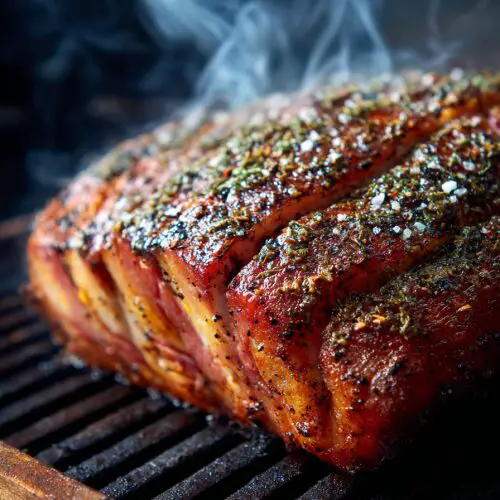
Beginner-Friendly Smoked Pork Shoulder (Flexible BBQ Smoking Method)
A flexible, beginner-friendly recipe for smoking pork shoulder low and slow, with options and timing notes for brisket, ribs, chicken, and turkey. Uses a simple dry rub, optional brine, and clear temperature and time guidelines that work on most backyard smokers.
Ingredients
- 1 pork shoulder, bone-in 6–8 lb; also called Boston butt (or use 8–10 lb packer brisket, 2 racks of pork ribs, or 2 whole chickens)
- 8 cups cold water for brine (optional)
- 1/3 cup kosher salt Diamond Crystal; use about 1/4 cup if using Morton (it’s saltier) for brine
- 1/4 cup brown sugar packed, for brine
- 2 tablespoons apple cider vinegar for brine
- 2 teaspoons black peppercorns for brine
- 2-3 cloves garlic smashed, for brine
- 1 small onion quartered, optional, for brine
- 1/4 cup brown sugar packed, for dry rub
- 2 tablespoons kosher salt for dry rub
- 2 tablespoons smoked paprika regular paprika works, but smoked adds depth
- 1 tablespoon black pepper freshly ground if possible
- 1 tablespoon garlic powder
- 1 tablespoon onion powder
- 2 teaspoons chili powder
- 1-2 teaspoons cayenne pepper use less for mild heat, more for spicy
- 1 teaspoon dried thyme or oregano or a mix—use what you have, for rub
- oil optional, a thin layer to help rub stick
- 3-4 cups wood chunks or large handfuls of wood chips hickory for classic BBQ; mix with applewood or pecan for sweetness; use mesquite lightly (strong flavor)
- water for smoker water pan (or use apple juice / apple cider for sweeter aroma)
- 1 cup apple juice or equal parts apple cider vinegar and water in a spray bottle for spritzing, optional
- soft sandwich buns or slider rolls for serving
- barbecue sauce for serving
- coleslaw, pickles, sliced onions, or potato salad for serving on the side
Instructions
- In a large pot or container, stir together 8 cups cold water, 1/3 cup kosher salt (Diamond Crystal; use 1/4 cup if Morton), and 1/4 cup packed brown sugar until mostly dissolved. Add 2 tablespoons apple cider vinegar, 2 teaspoons black peppercorns, 2–3 smashed garlic cloves, and the quartered onion if using. Submerge the pork shoulder, cover, and refrigerate for 8–12 hours. If you’re short on time, you can skip this step, but brining helps with moisture and seasoning deep into the meat.8 cups cold water, 1/3 cup kosher salt, 1/4 cup brown sugar, 2 tablespoons apple cider vinegar, 2 teaspoons black peppercorns, 2-3 cloves garlic, 1 small onion, 1 pork shoulder, bone-in
- Remove the pork shoulder from the brine (if brined), rinse briefly under cool water, and pat completely dry with paper towels. Trim any thick, hard fat cap down to about 1/4 inch, leaving a thin layer of fat to help keep the meat moist and flavorful during the long smoke.1 pork shoulder, bone-in
- In a medium bowl, combine 1/4 cup packed brown sugar, 2 tablespoons kosher salt, 2 tablespoons smoked paprika, 1 tablespoon black pepper, 1 tablespoon garlic powder, 1 tablespoon onion powder, 2 teaspoons chili powder, 1–2 teaspoons cayenne pepper, and 1 teaspoon dried thyme or oregano. Stir until evenly mixed and no clumps remain. Taste a small pinch and adjust salt or heat to your liking.1/4 cup brown sugar, 2 tablespoons kosher salt, 2 tablespoons smoked paprika, 1 tablespoon black pepper, 1 tablespoon garlic powder, 1 tablespoon onion powder, 2 teaspoons chili powder, 1-2 teaspoons cayenne pepper, 1 teaspoon dried thyme or oregano
- Lightly coat the pork shoulder with a thin layer of oil if desired to help the rub stick. Sprinkle the dry rub all over the meat, covering every surface and gently pressing it in with your hands. Use all of the rub. For extra flavor, wrap the rubbed meat in plastic wrap and refrigerate for 2–12 hours before smoking.1 pork shoulder, bone-in, 1/4 cup brown sugar, 2 tablespoons kosher salt, 2 tablespoons smoked paprika, 1 tablespoon black pepper, 1 tablespoon garlic powder, 1 tablespoon onion powder, 2 teaspoons chili powder, 1-2 teaspoons cayenne pepper, 1 teaspoon dried thyme or oregano, oil
- Set up your smoker for low and slow indirect cooking with a water pan in place. • Charcoal smoker: Light a chimney of charcoal. When the coals are ashy, dump them on one side of the smoker for indirect heat and place a water pan on the other side or below the grate. Add a few chunks or a large handful of wood chips on top of the hot coals. • Pellet smoker: Fill the hopper with your favorite pellets (a hickory–apple blend works well) and preheat to 225–250°F. Ensure a water pan is in the smoker if your design allows. • Electric smoker: Preheat to 225°F and add wood chips to the tray per the manufacturer’s instructions. Place a water pan in the smoker if it doesn’t already have one.3-4 cups wood chunks or large handfuls of wood chips, water
- Bring the smoker to a steady 225–250°F. Let it run for 15–30 minutes to stabilize. Look for clean, thin blue or almost invisible smoke rather than thick white billows, which can make the meat taste bitter.
- Set the pork shoulder on the smoker grate over indirect heat, fat side up. Insert a thermometer probe into the thickest part of the meat, avoiding the bone. Close the lid and try not to open it frequently, as each peek lets heat and smoke escape.1 pork shoulder, bone-in
- Maintain the smoker temperature between 225–250°F throughout the cook. Plan for about 1.5 to 2 hours per pound of pork shoulder as a guide; a 7 lb shoulder typically takes around 10–14 hours. Add wood chunks or chips every hour or so during the first 3–4 hours, when the meat absorbs the most smoke flavor. For other meats: ribs usually take 5–6 hours, whole chickens 3–4 hours, and brisket about 1–1.5 hours per pound.3-4 cups wood chunks or large handfuls of wood chips
- After the first 2–3 hours of smoking, spritz the surface of the meat lightly every hour with apple juice or an equal-parts mix of apple cider vinegar and water from a spray bottle. This helps keep the surface from drying out and encourages a flavorful bark.1 cup apple juice
- Around 150–170°F internal temperature, the meat may hit a stall where the temperature stops rising for a while. This is normal as surface moisture evaporates and cools the meat. You can ride it out for the firmest bark, or wrap the pork shoulder tightly in foil or unwaxed butcher paper (the “Texas crutch”) and return it to the smoker to speed cooking and keep it very moist, knowing the bark will soften slightly.
- Continue smoking until the pork shoulder reaches an internal temperature of 195–203°F. At this point the connective tissue has fully broken down and the meat should shred easily. For brisket, also aim for around 200°F, but test doneness by sliding a probe into the meat—it should go in with almost no resistance, like soft butter. For smoked chicken, cook to 165°F in the thickest part of the breast; for ribs, look for the meat to pull back from the bones and for the rack to bend easily.
- When the pork shoulder reaches the target temperature, remove it from the smoker. Keep it wrapped (or wrap it now if it isn’t already), then place it in a clean cooler, a warm turned-off oven, or an oven set to low and let it rest for at least 1 hour and up to 3–4 hours. Resting allows the juices to redistribute and makes pulling or slicing much easier, and it gives you a buffer if guests are running late.
- Unwrap the rested pork shoulder. Use two forks or meat claws to shred the meat into tender pulled pork, discarding large pockets of fat. Taste and add a pinch of extra rub or salt if needed. Serve the smoked pork on soft buns or rolls with barbecue sauce, and add coleslaw, pickles, sliced onions, or your favorite sides. For other meats: slice brisket against the grain, cut ribs between the bones, and carve smoked chicken or turkey as you would a roasted bird.1 pork shoulder, bone-in, soft sandwich buns or slider rolls, barbecue sauce, coleslaw, pickles, sliced onions, or potato salad
Notes
Yield: About 10–12 servings from a 6–8 lb pork shoulder, more if served with plenty of sides.
Timing overview: 20–30 minutes active prep, plus optional 8–12 hours for brining or rub rest; 10–14 hours smoking for a 7 lb shoulder; 1–3 hours resting. Total time is roughly 12–20 hours, most of it hands-off.
Variations:
• Classic Texas-Style Brisket – Skip the sugar in the rub and use mostly salt, black pepper, and a touch of garlic powder. Smoke with oak and a bit of pecan.
• Sweet & Smoky Ribs – Use baby back or spare ribs, remove the membrane, apply rub, smoke with applewood, and glaze lightly with barbecue sauce in the last 30 minutes.
• Herb-Lemon Smoked Chicken – Add dried rosemary, thyme, and lemon zest to the rub and smoke at 250–275°F for crisper skin.
• Holiday Smoked Turkey – Brine overnight with extra herbs, rub under the skin with butter and seasoning, then smoke with a mix of apple and hickory.
• Spicy Cajun Pulled Pork – Increase cayenne, add about 1 tablespoon Cajun seasoning to the rub, and serve with a tangy vinegar-based sauce.
Storage & Reheating: Refrigerate cooled smoked meat in airtight containers for 3–4 days, or freeze for up to 3 months with a splash of juices or broth in the bag. Reheat gently on the stovetop with a bit of liquid, in the oven covered at 275°F, or in the microwave in short bursts with a damp paper towel.
General tips: Steady temperature is more important than chasing a perfect 225°F—anything in roughly the 225–275°F zone works. Weather can affect cooking time; windbreaks help. For electric smokers using chips, soak chips 20–30 minutes so they smolder instead of burning quickly. A good instant-read thermometer is one of the best tools you can buy, and don’t stress about a perfect smoke ring—tenderness and flavor matter most.
Timing overview: 20–30 minutes active prep, plus optional 8–12 hours for brining or rub rest; 10–14 hours smoking for a 7 lb shoulder; 1–3 hours resting. Total time is roughly 12–20 hours, most of it hands-off.
Variations:
• Classic Texas-Style Brisket – Skip the sugar in the rub and use mostly salt, black pepper, and a touch of garlic powder. Smoke with oak and a bit of pecan.
• Sweet & Smoky Ribs – Use baby back or spare ribs, remove the membrane, apply rub, smoke with applewood, and glaze lightly with barbecue sauce in the last 30 minutes.
• Herb-Lemon Smoked Chicken – Add dried rosemary, thyme, and lemon zest to the rub and smoke at 250–275°F for crisper skin.
• Holiday Smoked Turkey – Brine overnight with extra herbs, rub under the skin with butter and seasoning, then smoke with a mix of apple and hickory.
• Spicy Cajun Pulled Pork – Increase cayenne, add about 1 tablespoon Cajun seasoning to the rub, and serve with a tangy vinegar-based sauce.
Storage & Reheating: Refrigerate cooled smoked meat in airtight containers for 3–4 days, or freeze for up to 3 months with a splash of juices or broth in the bag. Reheat gently on the stovetop with a bit of liquid, in the oven covered at 275°F, or in the microwave in short bursts with a damp paper towel.
General tips: Steady temperature is more important than chasing a perfect 225°F—anything in roughly the 225–275°F zone works. Weather can affect cooking time; windbreaks help. For electric smokers using chips, soak chips 20–30 minutes so they smolder instead of burning quickly. A good instant-read thermometer is one of the best tools you can buy, and don’t stress about a perfect smoke ring—tenderness and flavor matter most.
Love this recipe?Follow us at @thenandnowspace for more